
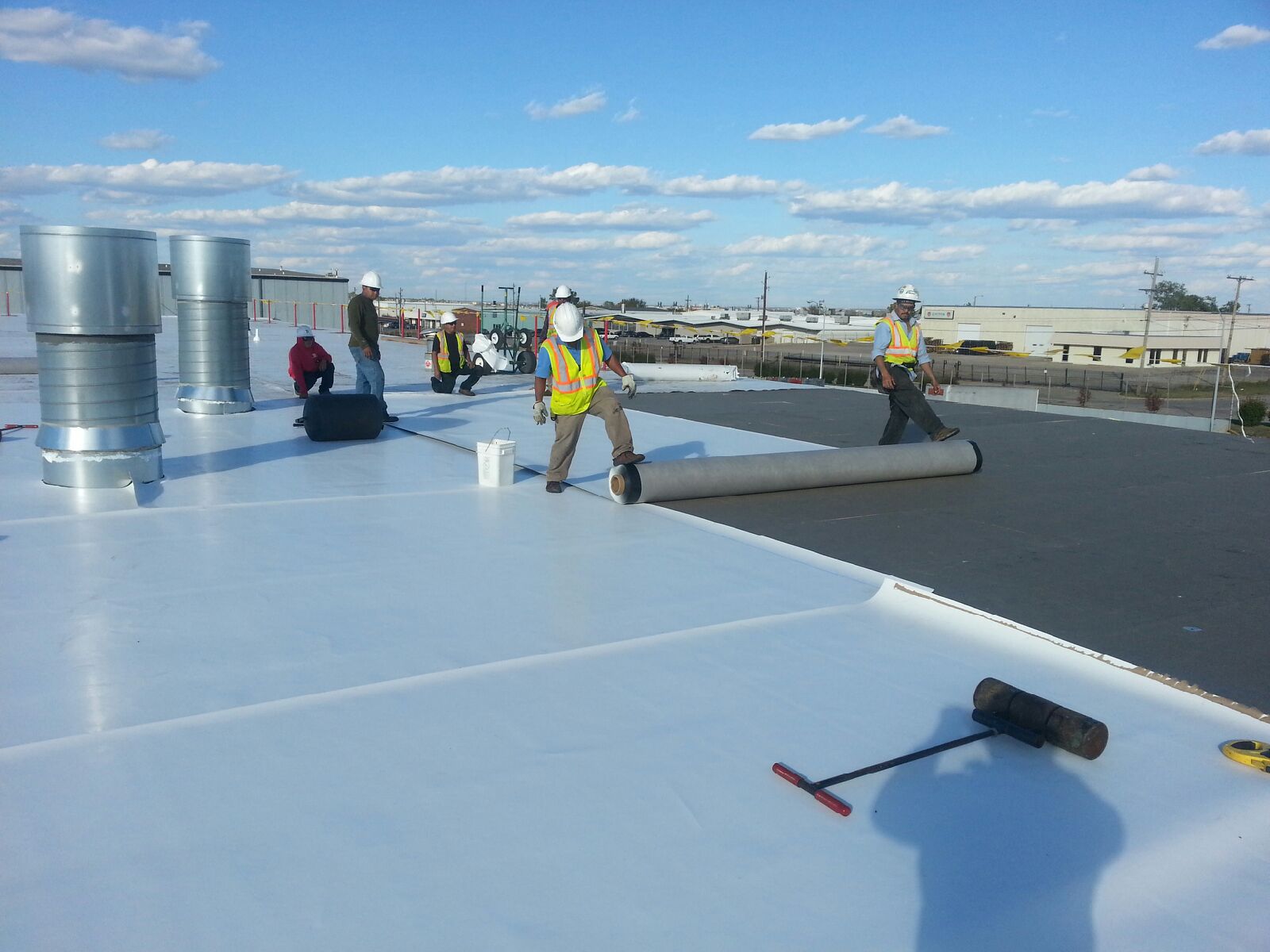
Multifamily and Apartment Building Roofing.
Multifamily and Apartment Building Roofing support in New Orleans, LA, with documented inspections, written scopes, and practical roof planning for commercial properties.
What this roof work solves
Multifamily and Apartment Building Roofing in New Orleans should begin with a documented roof walk. The first job is to identify active water entry, drainage problems, membrane condition, edge details, rooftop equipment conflicts, and weather exposure before a price or schedule is discussed.
For commercial owners, the useful answer is rarely a one-line recommendation. The roof file should explain the work area, the reason for the scope, the access constraints, and the next maintenance decision.
How the scope is built
The scope is based on service scope, building use, roof age, visible defects, and the cost difference between immediate repair and longer-range planning. When repair is enough, the work stays focused. When replacement or recover planning is the responsible move, the reasoning is written plainly.
Each finished project should leave behind before-and-after photos, service notes, and follow-up items so the owner keeps a record for future inspections, budgeting, and vendor conversations.
Roofing for apartment complexes, multifamily housing, and HOA-managed communities throughout New Orleans, LA.
New Orleans presents one of the most demanding and distinctive multifamily roofing environments in the United States: a city where the legacy of Hurricane Katrina and subsequent storm seasons has permanently elevated the standards by which property owners, insurers, and building officials evaluate roof system performance, while simultaneously creating a real estate investment landscape shaped by the ongoing tension between the city's historic building stock, its subtropical climate, and the flood and wind risk that defines insurance economics throughout Southeast Louisiana. Property managers overseeing apartment buildings from Uptown to Mid-City to the Bywater deal with a combination of high annual rainfall, intense summer humidity, intermittent hurricane and tropical storm threats, and a building inventory that ranges from shotgun double conversions to early 20th-century brick apartment buildings to post-Katrina reconstruction.
Hurricane and tropical storm preparedness has fundamentally changed how New Orleans apartment building owners approach roofing. Following Katrina's devastation and subsequent storms including Isaac in 2012, property owners who experienced catastrophic roof failures on apartment buildings, losing tenant income, facing extended insurance claim timelines, and dealing with mold remediation costs that exceeded the roof replacement itself, have developed a different relationship with roof maintenance than owners in lower-risk markets. Proactive roof inspection and maintenance before each hurricane season, clear documentation of pre-storm roof condition, and pre-established relationships with contractors who can mobilize promptly after storm events are now standard practice for sophisticated New Orleans apartment operators rather than exceptional ones.
The New Orleans multifamily market includes a substantial segment of investor-owned small apartment buildings, 2 to 20 units, that are often managed by individual owners rather than professional management companies. These properties, concentrated in neighborhoods like Gentilly, Lakeview, and New Orleans East, carry roofing maintenance practices that vary dramatically based on individual owner engagement and financial capacity. Many of these buildings were rebuilt or repaired after Katrina with roofing materials and installation quality that reflected the availability constraints of the post-disaster recovery period rather than best-practice specifications. Fifteen to twenty years later, those post-Katrina roof systems are approaching or reaching end of life simultaneously across the city's inventory, creating a wave of replacement demand that is already creating contractor capacity constraints in the New Orleans market.
HOA-managed condominium communities in New Orleans' more affluent neighborhoods, the Garden District, Warehouse District, and the newer mixed-use developments in the Central Business District and along Magazine Street, face insurance-driven pressure to maintain documented roof condition records that is more intense than in most other American cities. Louisiana's property insurance market has experienced severe contraction since Katrina, with multiple insurers exiting the state entirely and remaining carriers imposing requirements about roof age, condition documentation, and wind resistance compliance that did not exist two decades ago. For New Orleans condo associations, maintaining current professional inspection documentation and ensuring roof systems meet current wind uplift standards isn't optional: it's a prerequisite for maintaining insurance coverage at all.
New Orleans' year-round high humidity creates moisture management challenges in roofing assemblies that are more severe than virtually any market outside of tropical coastal Florida. The combination of warm ambient temperatures, near-daily afternoon rainfall during summer months, and minimal temperature differential between interior and exterior conditions means that any penetration in a roofing membrane or flashing system allows moisture entry that quickly reaches saturation equilibrium in the insulation layer. This moisture then creates conditions for biological growth, progressive deck deterioration, and eventually structural damage that can occur rapidly compared to the same failure pattern in a drier climate. Regular professional inspections that identify membrane and flashing integrity issues before moisture infiltration establishes in the assembly are essential for New Orleans multifamily buildings.
Real estate investors who have been attracted to New Orleans' multifamily market, where cap rates and gross yields remain among the highest of any major Louisiana city: should account for roofing capital expenses with a New Orleans-specific lens. The combination of subtropical climate acceleration of membrane aging, hurricane season risk, insurance requirements that effectively mandate higher-specification systems on any replacement project, and the post-Katrina building inventory's aging condition means that roofing capital reserves calibrated to national benchmarks will consistently underestimate actual replacement needs. Investors building acquisition models for New Orleans multifamily should consult with local commercial roofing contractors to develop climate and building-type specific capital reserve assumptions.
The architectural preservation requirements that apply to many New Orleans multifamily buildings in historic districts, including the Vieux Carré, the Garden District historic district, and the Esplanade Ridge and Treme-Lafitte districts, create roofing constraints that don't exist in non-historic markets. The Historic District Landmarks Commission and the Vieux Carré Commission have jurisdiction over roofing materials and visible roof components on regulated properties, and owners of apartment buildings in these districts must obtain approvals that address historic compatibility before undertaking roof replacement. Commercial roofing contractors working in New Orleans' historic neighborhoods need familiarity with these approval processes and with the limited palette of approved materials, which typically excludes highly reflective white membrane systems that would be the first choice for energy performance in a non-regulated context.
For New Orleans apartment complex owners, property managers, and HOA boards, effective roofing management requires integrating hurricane preparedness, insurance compliance, historic preservation constraints where applicable, and the fundamental subtropical climate demands that make moisture management a year-round operational priority. A commercial roofing contractor with proven New Orleans multifamily experience, who understands Louisiana's unique insurance landscape, the city's vernacular building types, the historic district regulatory environment, and the post-storm claim management process: is an essential operational partner for any property owner serious about protecting apartment assets in one of the country's most beautiful and most challenging built environments.
Can you repair a leaking BUR roof on a New Orleans building without full replacement?
Sometimes. If the leak source is an isolated failed flashing at a penetration or parapet, and core cuts show the BUR field plies are otherwise dry and intact: targeted repair is the appropriate scope. If the leak is coming from degraded plies in the roof field, patching the visible wet spot without addressing the ply failure produces another leak nearby within a season or two. In a market where the next tropical rain event may arrive before the targeted repair has time to prove out, that distinction matters more than it does in other markets. We tell you which situation you are in before we propose a scope.
How do you manage gravel removal during BUR tear-off in a dense urban New Orleans location?
Gravel-surfaced BUR tear-off is labor-intensive and generates significant debris volume. On CBD, French Quarter, and Warehouse District buildings with constrained street access, we use rooftop vacuum systems that collect the gravel without staging loose aggregate at the curb. Street-use permits for dumpster placement in the French Quarter and the Downtown Development District require advance coordination with the City of New Orleans: we handle that permitting before mobilization.
Is built-up roofing still installed new in New Orleans?
Questions to settle early
Where is the risk?
Locate leaks, wet-insulation indicators, open seams, weak flashing, and drainage restrictions across the roof.
What can wait?
Separate immediate work from maintenance items that can be tracked for the next service window.
What should be funded?
Build a practical recommendation for repair, coating, recover, or replacement planning.
Need help with multifamily and apartment building roofing?
Send the building address, known roof age, access notes, and what changed. We will respond with the right next step.