
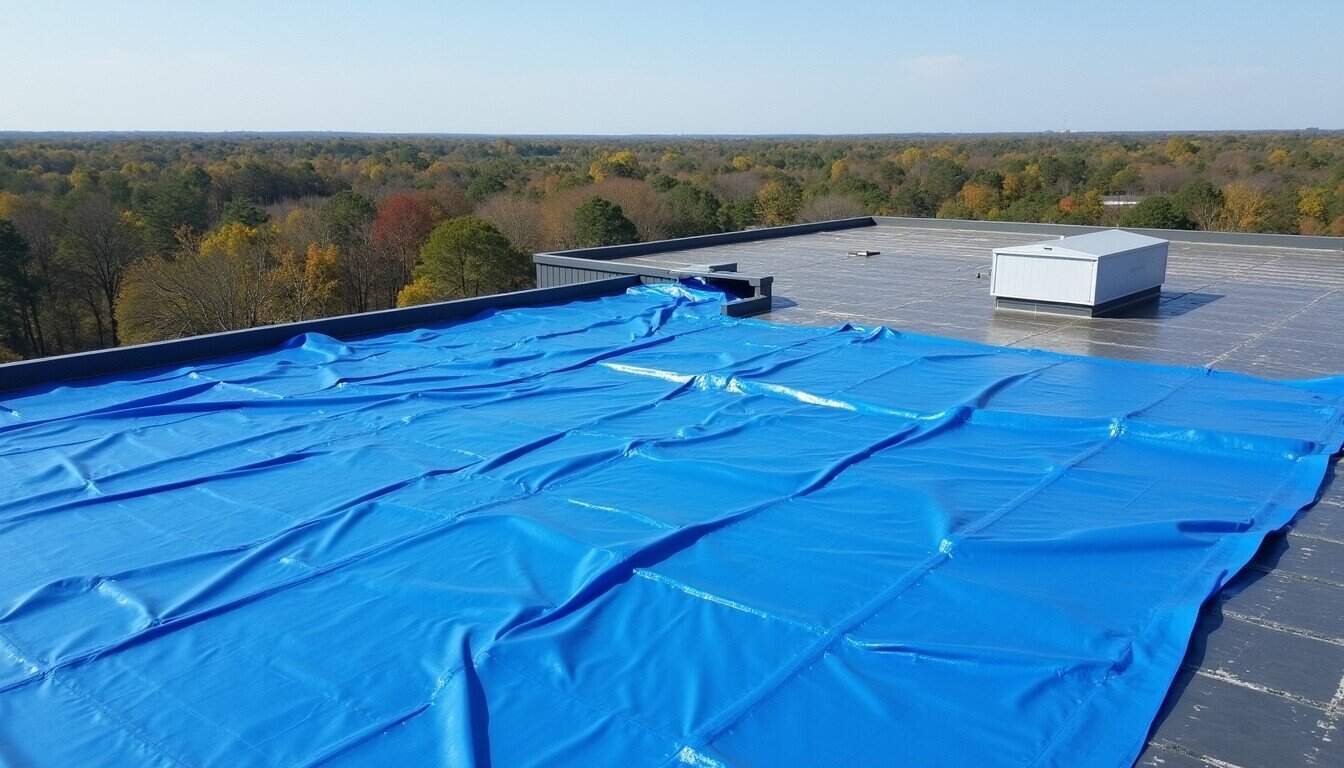
Storm Damage Roof Repair.
Storm Damage Roof Repair support in New Orleans, LA, with documented inspections, written scopes, and practical roof planning for commercial properties.
What this roof work solves
Storm Damage Roof Repair in New Orleans should begin with a documented roof walk. The first job is to identify active water entry, drainage problems, membrane condition, edge details, rooftop equipment conflicts, and weather exposure before a price or schedule is discussed.
For commercial owners, the useful answer is rarely a one-line recommendation. The roof file should explain the work area, the reason for the scope, the access constraints, and the next maintenance decision.
How the scope is built
The scope is geared to damage response, building use, roof age, visible defects, and the cost difference between immediate repair and longer-range planning. When repair is enough, the work stays focused. When replacement or recover planning is the responsible move, the reasoning is written plainly.
Each finished project should leave behind before-and-after photos, service notes, and follow-up items so the owner keeps a record for future inspections, budgeting, and vendor conversations.
Hurricanes and tropical storms in the Gulf rarely produce just one type of roof damage. Ida in 2021 brought sustained 150-mph winds, embedded supercell activity, and 15 inches of rain across the metro in 48 hours. We document all of it: separated by peril, keyed to your Louisiana carrier's documentation requirements.
New Orleans commercial roofs operate in a multi-peril storm environment unlike any other US market. A Gulf Coast hurricane at Category 3 or above simultaneously loads the roof with wind uplift at the perimeter and corners, drives horizontal rain at seam and penetration details, and in some cases embeds convective cells that produce hail on top of the primary wind event. Hurricane Zeta's October 2020 track through Jefferson Parish documented all three perils on commercial buildings along the Veterans Boulevard corridor in a single six-hour event window.
Documenting multi-cause storm damage as a single undifferentiated scope is how insurance claims get complicated in the Louisiana market. State Farm, Allstate, USAA, and Louisiana Citizens Property Insurance Corporation each work within a regulatory framework shaped by the Louisiana Department of Insurance's post-Katrina claim-handling reforms. Those reforms require clear peril attribution in commercial wind claims. A scope that conflates wind and water damage, or that fails to distinguish hurricane-caused damage from pre-existing conditions: creates claim disputes that take months to resolve.
We scope multi-peril Gulf storm damage by walking the roof systematically and documenting each peril's signature separately. We produce the scope package in a format your Louisiana-licensed adjuster or public adjuster can use to build a line-item claim. We are roofers. The claim process is yours.
The Multi-Peril Reality of Gulf Coast Hurricanes
Katrina's 2005 landfall at the Louisiana-Mississippi border generated storm surge, sustained 125-mph winds, and embedded supercell activity across Orleans and Jefferson parishes. Ida's 2021 Cat-4 landfall at Port Fourchon produced 150-mph sustained winds, record-breaking rainfall rates across the metro, and a secondary severe weather outbreak as the system tracked northeast. Each of those named storms inflicted multi-cause damage on commercial buildings where the wind damage, the water infiltration, and the debris impact happened simultaneously and interacted at every compromised roof zone.
Insurance policies for commercial properties in Louisiana commonly distinguish named perils with different deductibles, different coverage limits, and in some cases different policy forms for wind versus flood versus other water damage. A scope package that separates each peril's contribution to the roof damage, with evidence that supports the attribution, is the documentation tool that the people managing your claim need to match the damage to the correct coverage provisions.
We document multi-cause hurricane damage with separate photo indexes for wind uplift evidence, water infiltration paths, and any impact damage from wind-driven debris or embedded hail. Each peril gets its own zone footprint on the roof diagram. The written scope separates repair quantities by peril. The adjuster sees clearly what each cause contributed.
Common Multi-Cause Scenarios After Gulf Storms
Perimeter wind damage followed by sustained rain infiltration: The most common multi-cause pattern after a Gulf hurricane is perimeter or corner membrane lift from the wind event followed by sustained water intrusion through the compromised edge during the storm's rain band. New Orleans's subtropical humidity means the water that infiltrates during a storm event does not dry out between subsequent rain events. Moisture damage at the deck and interior ceilings compounds over days and weeks after the storm passage. We document the wind-caused entry point and the moisture propagation separately: they may be covered under different policy provisions.
Pre-existing drainage failure compounded by tropical rainfall: New Orleans commercial flat roofs that had documented ponding before the storm come into a hurricane event with standing water already loading the membrane. Ida's 15-inch rain total across the metro in 48 hours placed extreme drainage demand on every commercial roof in Orleans and Jefferson parishes. A roof with inadequate slope-to-drain or clogged drains before the storm sustained damage from the combined load that is more severe than wind alone would have produced. We document drainage conditions as a separate pre-existing item, distinct from the storm-caused damage, because conflating the two creates attribution problems.
Embedded hail within the hurricane system: Gulf Coast hurricanes and major tropical storms regularly carry embedded supercell activity that produces hail on the storm's leading edge or in outer rain bands. Zeta's October 2020 track through Jefferson Parish produced documented hail on commercial corridors in Metairie while the primary wind event was still in progress. Buildings in those corridors sustained both wind-uplift damage and hail impact damage in a single event window. We document each peril's signature separately even when they occurred simultaneously.
What the Louisiana Carrier Documentation Package Includes
Roof zone diagram with each peril's damage footprint mapped by zone: field, perimeter, and corner classification per ASCE 7, with directional wind-damage orientation noted relative to the storm track on record. Photo log with separate indexes for wind damage, water infiltration, and impact damage: each photo GPS-tagged and cross-referenced to the zone diagram. Core sample results where insulation damage beneath the membrane surface is suspected.
Questions to settle early
Where is the risk?
Locate leaks, wet-insulation indicators, open seams, weak flashing, and drainage restrictions across the roof.
What can wait?
Separate immediate work from maintenance items that can be tracked for the next service window.
What should be funded?
Build a practical recommendation for repair, coating, recover, or replacement planning.
Need help with storm damage roof repair?
Send the building address, known roof age, access notes, and what changed. We will respond with the right next step.