
Hurricane Wind-Uplift Roofing.
Hurricane Wind-Uplift Roofing support in New Orleans, LA, with documented inspections, written scopes, and practical roof planning for commercial properties.
What this roof work solves
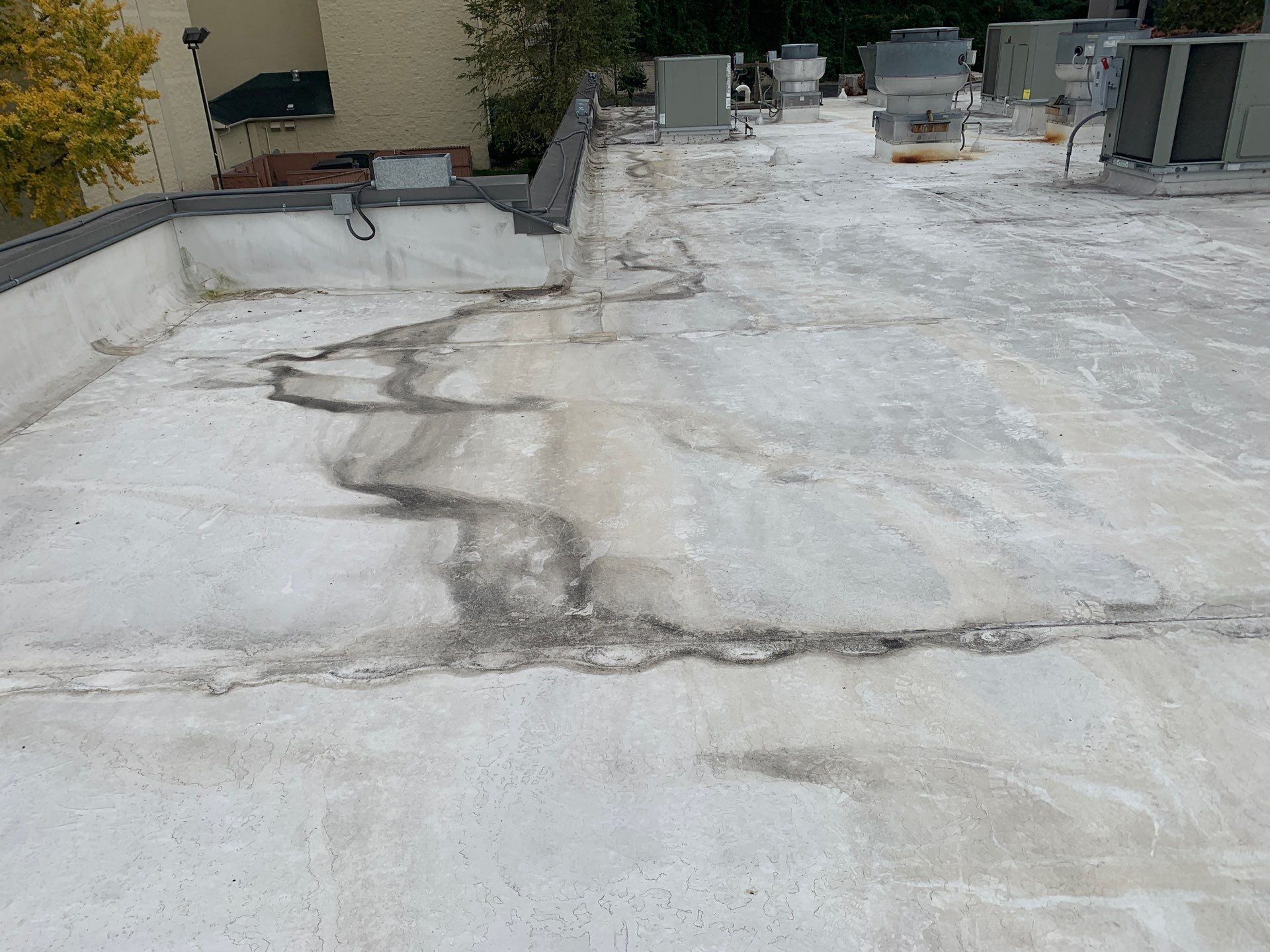
Hurricane Wind-Uplift Roofing in New Orleans should begin with a documented roof walk. The first job is to identify active water entry, drainage problems, membrane condition, edge details, rooftop equipment conflicts, and weather exposure before a price or schedule is discussed.
For commercial owners, the useful answer is rarely a one-line recommendation. The roof file should explain the work area, the reason for the scope, the access constraints, and the next maintenance decision.
How the scope is built
The scope is based on service scope, building use, roof age, visible defects, and the cost difference between immediate repair and longer-range planning. When repair is enough, the work stays focused. When replacement or recover planning is the responsible move, the reasoning is written plainly.
Each finished project should leave behind before-and-after photos, service notes, and follow-up items so the owner keeps a record for future inspections, budgeting, and vendor conversations.
Hurricane Katrina in 2005, Hurricane Zeta in 2020, and Hurricane Ida in 2021 reshaped the commercial roofing market in Orleans and Jefferson parishes. Commercial roofs in this market are not designed to a wind speed on paper: they are engineered for a Gulf Coast environment where major hurricane landfalls recur on a 10 to 20 year cycle. We specify, install, and document accordingly.
No US commercial roofing market east of the Louisiana coast carries more documented hurricane wind-uplift context than New Orleans. Hurricane Katrina made landfall on August 29, 2005 as a Category 3 storm at the Louisiana-Mississippi border, producing sustained winds of 125 mph and storm surge that inundated 80 percent of Orleans Parish. Commercial roof failures during Katrina were catalogued extensively by the insurance and structural engineering communities: the documented failure modes drove code changes that hardened ASCE 7 wind-uplift requirements for hospitals, schools, and government facilities in Louisiana's hurricane-prone region designation.
Hurricane Ida made landfall near Port Fourchon on August 29, 2021 as a Category 4 storm with 150 mph sustained winds: exactly 16 years after Katrina to the day. Ida's track through Jefferson and Orleans parishes stripped membrane systems from commercial buildings across Metairie, Kenner, and eastern New Orleans. Hurricane Zeta's October 2020 Category 3 landfall near Cocodrie added another documented dataset of commercial roof failures in light-adhesive and mechanically attached systems that were not specified for the actual uplift environment. These are not historical events: they are the design context for every commercial roof we install in this market.
What Post-Storm Analysis Tells Us About NOLA Roof Failures
The most common commercial roof failure pattern in hurricane events is not membrane puncture from debris: it is uplift-driven perimeter and corner failure where the fastener density or adhesive coverage met the code minimum but not the actual pressure generated at building corners in Category 3 and 4 conditions. Post-Ida damage surveys in Jefferson Parish documented repeated instances of mechanically attached TPO systems lifting at the perimeter before center-field membrane was affected, consistent with the pressure coefficient distribution that ASCE 7 predicts for hurricane-prone-region exposure.
The second most common failure pattern in the New Orleans market is parapet-to-roof-membrane separation. Parapets on pre-Katrina commercial buildings in Orleans and Jefferson parishes were often detailed to pre-2005 code wind specifications that predated the hardened ASCE 7 hurricane-prone-region requirements. When Ida and Zeta produced peak gust pressures at parapet corners, the wall-to-deck transition flashings separated first. We specify reinforced parapet transition details and through-wall flashing on every project where the building's risk category or proximity to open water elevates the corner pressure coefficients beyond standard Code minimums.
The third failure pattern is moisture intrusion that begins during the storm and continues for weeks afterward. New Orleans's subtropical humidity means a compromised roof envelope after a hurricane does not dry out between post-storm rain events. Interior damage from prolonged moisture intrusion commonly exceeds the original storm damage in dollar terms. Our post-storm rapid assessment and emergency dry-in work is designed to stop this secondary damage cycle within 72 hours of the storm event.
How We Engineer NOLA Hurricane Wind-Uplift Specifications
Every replacement project starts with a wind-uplift design from the membrane manufacturer's structural design software, using the actual building dimensions, occupancy category, ASCE 7 exposure category, and deck type. New Orleans buildings in open-terrain exposure, the New Orleans East warehouse corridor, the lakefront commercial zone, the Veterans Boulevard corridor in Metairie, carry Exposure C designations that increase corner and perimeter pressure coefficients significantly over a sheltered urban site.
For Risk Category III and IV buildings, hospitals, emergency operations facilities, schools above 250-person occupancy, and government facilities, we specify full-adhered TPO or PVC systems on every replacement project. Full-adhered systems eliminate the fastener withdrawal risk at the field of the roof and reduce the perimeter uplift risk by distributing attachment load across the full membrane contact area. We document the attachment method, the ASCE 7 design calculation, and the FM approval number in every project closeout file.
Edge metal and perimeter restraint is specified to FM 4435 and ANSI/SPRI ES-1 standards on every project. Lightweight aluminum edge metal that meets only pre-Katrina code minimums is not an acceptable specification for New Orleans commercial buildings: we use FM-rated edge metal systems with documented uplift ratings and clip spacing specified in the project file.
Post-Storm Assessment and Insurance Documentation
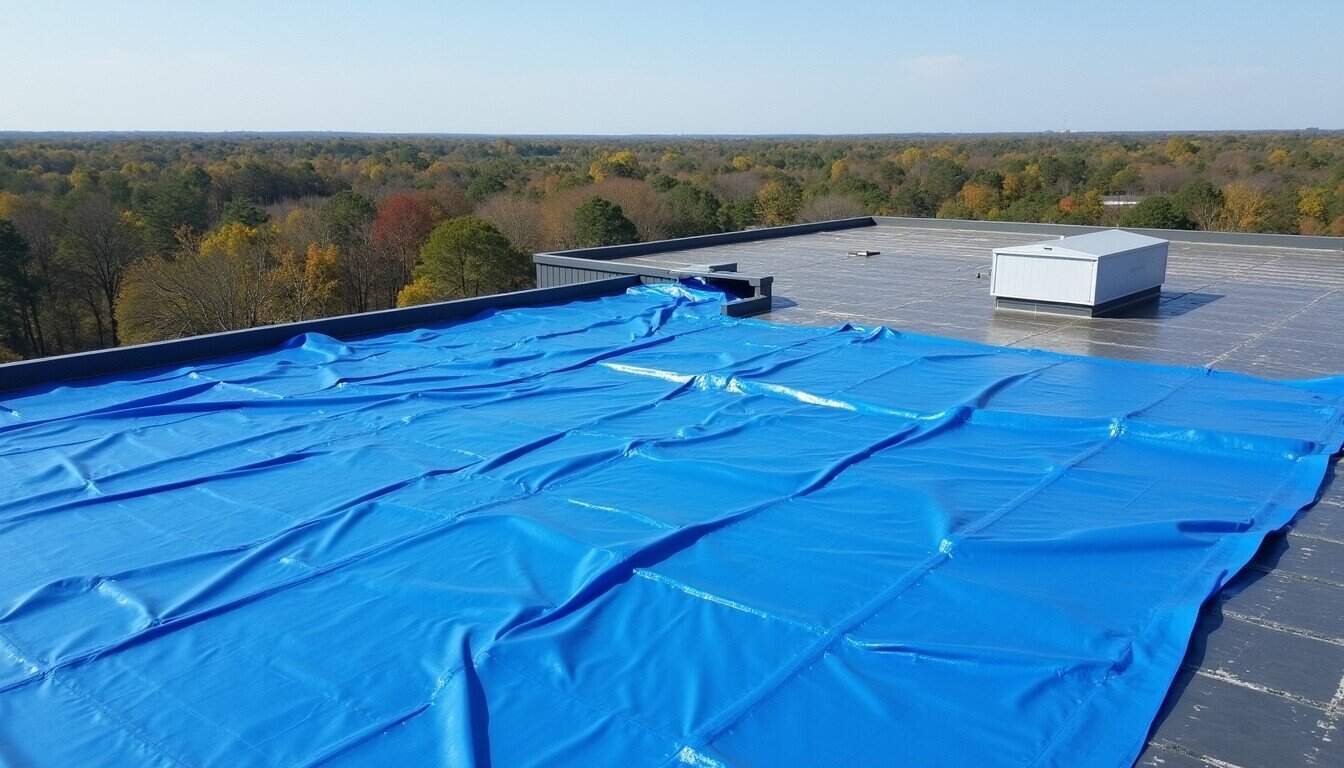
After a tropical storm or hurricane event, the first 72 hours are critical for commercial buildings in Orleans and Jefferson parishes. Water infiltration through a damaged roof envelope in New Orleans's humidity quickly becomes a mold and air-quality issue on top of the structural damage. We provide post-storm rapid assessment for commercial buildings in our service area: documented roof-zone condition survey with photos, written scope distinguishing event-related from pre-existing damage, and emergency dry-in where the building is actively taking water.
For Louisiana Department of Insurance wind-damage claims, our documentation is keyed to a roof zone diagram, dated to the storm event with cross-reference to NWS storm data and Louisiana Governor's Office of Homeland Security and Emergency Preparedness event records, and written to the documentation standard that adjusters and public adjusters require to advance the claim. We do not act as public adjusters or represent insureds: we provide the technical documentation that moves the claim forward on accurate facts.
Questions to settle early
Where is the risk?
Locate leaks, wet-insulation indicators, open seams, weak flashing, and drainage restrictions across the roof.
What can wait?
Separate immediate work from maintenance items that can be tracked for the next service window.
What should be funded?
Build a practical recommendation for repair, coating, recover, or replacement planning.
Need help with hurricane wind-uplift roofing?
Send the building address, known roof age, access notes, and what changed. We will respond with the right next step.