
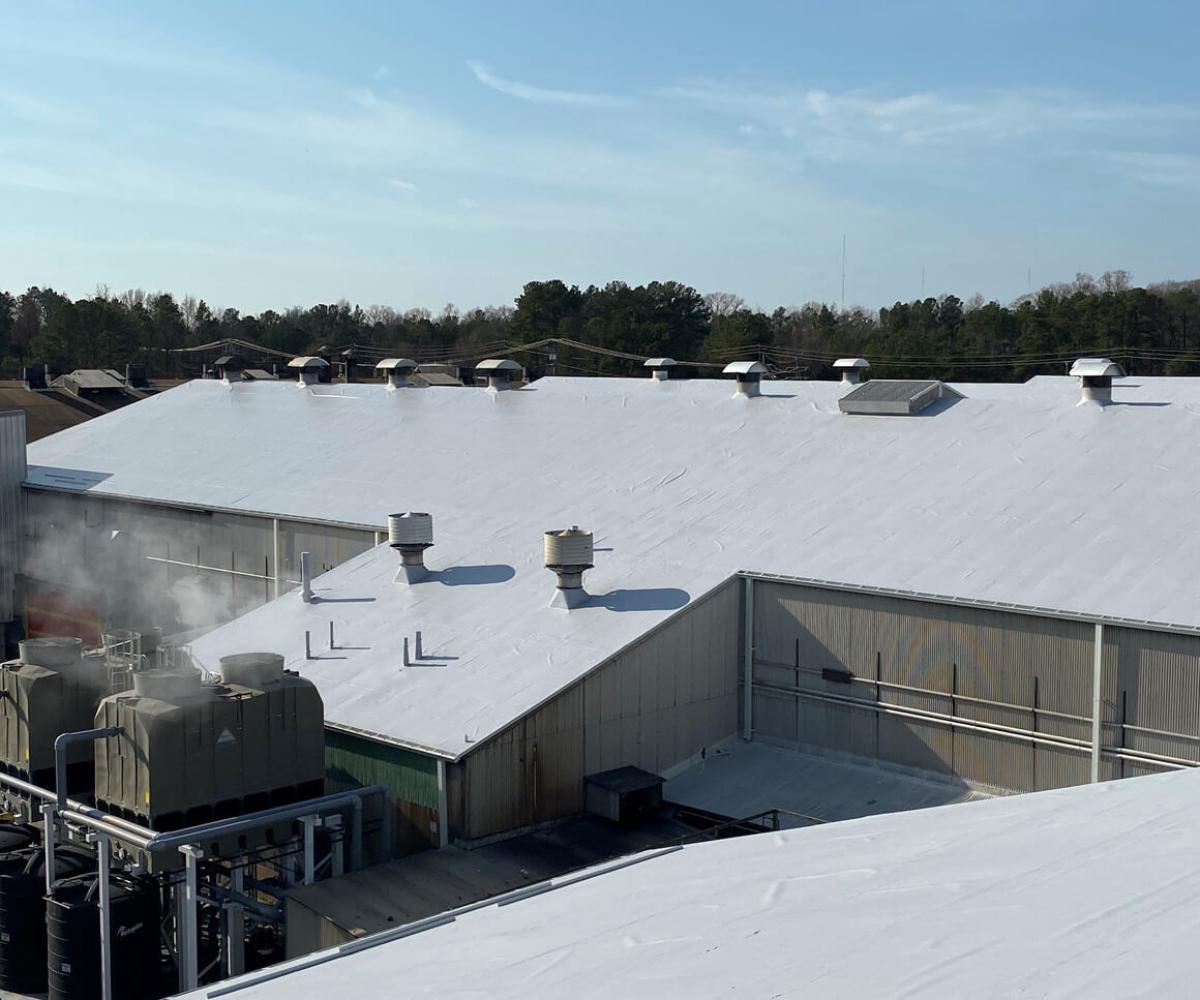
Manufacturing & Industrial Roofing.
Manufacturing & Industrial Roofing support in New Orleans, LA, with documented inspections, written scopes, and practical roof planning for commercial properties.
What this roof work solves
Manufacturing & Industrial Roofing in New Orleans should begin with a documented roof walk. The first job is to identify active water entry, drainage problems, membrane condition, edge details, rooftop equipment conflicts, and weather exposure before a price or schedule is discussed.
For commercial owners, the useful answer is rarely a one-line recommendation. The roof file should explain the work area, the reason for the scope, the access constraints, and the next maintenance decision.
How the scope is built
The scope is matched to operating requirements, building use, roof age, visible defects, and the cost difference between immediate repair and longer-range planning. When repair is enough, the work stays focused. When replacement or recover planning is the responsible move, the reasoning is written plainly.
Each finished project should leave behind before-and-after photos, service notes, and follow-up items so the owner keeps a record for future inspections, budgeting, and vendor conversations.
Greater New Orleans's manufacturing base spans food processing, aerospace assembly, heavy industry, and the legacy shipyard corridor along the West Bank: industrial buildings with large-span roofs, chemical exhaust penetrations, and hurricane wind-uplift requirements that reflect their open-terrain riverfront and industrial corridor exposures.
The Folgers Coffee plant on South Peters Street in Algiers has been roasting coffee in New Orleans and operates as one of the largest coffee processing facilities in the United States. Domino Sugar's Chalmette Refinery in St. Bernard Parish is the largest sugar refinery in the country, running a continuous-process operation that cannot tolerate moisture intrusion into its electrical infrastructure. The Lockheed Martin Michoud Assembly Facility in New Orleans East is a 43-acre, 1.8-million-square-foot manufacturing complex where NASA's Space Launch System and Orion crew module components are produced: a facility whose roof area is among the largest in the Gulf South and whose tenant operations carry federal program continuity requirements.
The Avondale Shipyard complex on the West Bank of Jefferson Parish, which operated as a major U.S. Navy shipbuilding facility through 2014, has transitioned through multiple industrial tenants and represents a generation of large-span industrial roofing in the riverfront open-terrain exposure corridor that faces some of the most demanding ASCE 7 hurricane wind-uplift conditions in the metro. The New Orleans East industrial zone along Chef Menteur Highway and I-10 East houses additional food processing, chemical storage, and light manufacturing buildings in open-terrain exposure that experienced significant roof damage in both Katrina and Ida.
Industrial manufacturing roofs in this market carry constraints that standard commercial projects do not: chemical exhaust penetrations that require chemical-resistant flashing materials, continuous-process production schedules that compress the available work windows, large-span structural systems that respond differently to rooftop load and vibration, and open-terrain exposure that elevates hurricane wind-uplift pressure coefficients above what sheltered urban buildings face. We scope and sequence manufacturing roof projects around all of these constraints.
Chemical Exhaust and High-Temperature Penetration Details
Food processing facilities in the New Orleans market, roasting operations like the Folgers plant, refinery exhaust from Domino Sugar's Chalmette complex, and the processing facility stacks in the New Orleans East industrial corridor, produce exhaust that can degrade standard TPO flashing at penetration interfaces where temperatures exceed the membrane's rated service range or where chemical content is outside the standard ASTM envelope. We identify each exhaust penetration type in the pre-construction inspection, test the exhaust temperature profile where the facility will provide access, and specify PVC or silicone flashing materials at penetrations where the chemical or thermal profile exceeds standard TPO flashing performance.
Michoud Assembly Facility's roofing environment is unique in the Gulf South: an 1.8-million-square-foot manufacturing building with a complex of exhaust systems serving both aerospace manufacturing operations and the facility's industrial HVAC plant. Any roofing work on the Michoud campus operates under federal contractor protocols: access control, security clearance coordination for crew members working in restricted areas, and coordination with NASA's facility management team on any penetration work that involves systems tied to active manufacturing operations. We build the pre-construction timeline to accommodate federal contractor coordination requirements.
Large-Span Industrial Roof Systems in Hurricane-Prone Exposure
Large-span industrial buildings, the Michoud complex, the Avondale-corridor West Bank industrial facilities, the Chalmette refinery support buildings, carry roof systems that behave differently under wind-uplift loading than standard commercial buildings. Metal deck span dimensions, purlin spacing, and deck gauge all affect the effective pull-through resistance of mechanical fasteners and the adhesive bond area available for adhered systems. We verify deck condition and measure deck gauge as part of the pre-replacement assessment on large-span industrial buildings before specifying any attachment method.
Open-terrain exposure along the New Orleans East I-10 corridor, the West Bank riverfront, and the Chalmette industrial corridor produces ASCE 7 Exposure C wind-uplift pressure coefficients that post-Ida damage surveys confirmed were the primary failure driver on large-footprint industrial buildings in these zones. Corner and perimeter zone wind-uplift pressures on a 500,000-square-foot industrial building in Exposure C are substantially higher than what pre-storm fastener documentation assumed on many of these structures. Our replacement specifications include a building-specific wind-uplift calculation documented in the closeout file.
Production-Schedule Coordination on Continuous-Process Facilities
Continuous-process manufacturing facilities, sugar refining, coffee processing, and aerospace manufacturing, cannot pause production for a roofing contractor's scheduling convenience. Pre-construction coordination with the plant's operations and facilities management teams establishes which roof zones overlie production-sensitive areas, what the planned maintenance shutdown windows are, and what the emergency-response protocol is if a roof failure event occurs during production. We build the production sequence around the plant's schedule, not around optimal roofing weather windows.
During hurricane season, continuous-process facilities in New Orleans have an additional operational vulnerability: a moisture intrusion event during a tropical storm can contaminate product batches, damage electrical infrastructure in a facility that cannot shut down quickly, and trigger SLA or supply-contract penalties. Our standing same-day dry-in protocol is especially critical on continuous-process manufacturing roofs: no section is left open overnight during the June through November tropical weather season.
Can you work on a manufacturing facility that operates on a continuous production schedule?
Questions to settle early
Where is the risk?
Locate leaks, wet-insulation indicators, open seams, weak flashing, and drainage restrictions across the roof.
What can wait?
Separate immediate work from maintenance items that can be tracked for the next service window.
What should be funded?
Build a practical recommendation for repair, coating, recover, or replacement planning.
Need help with manufacturing & industrial roofing?
Send the building address, known roof age, access notes, and what changed. We will respond with the right next step.