
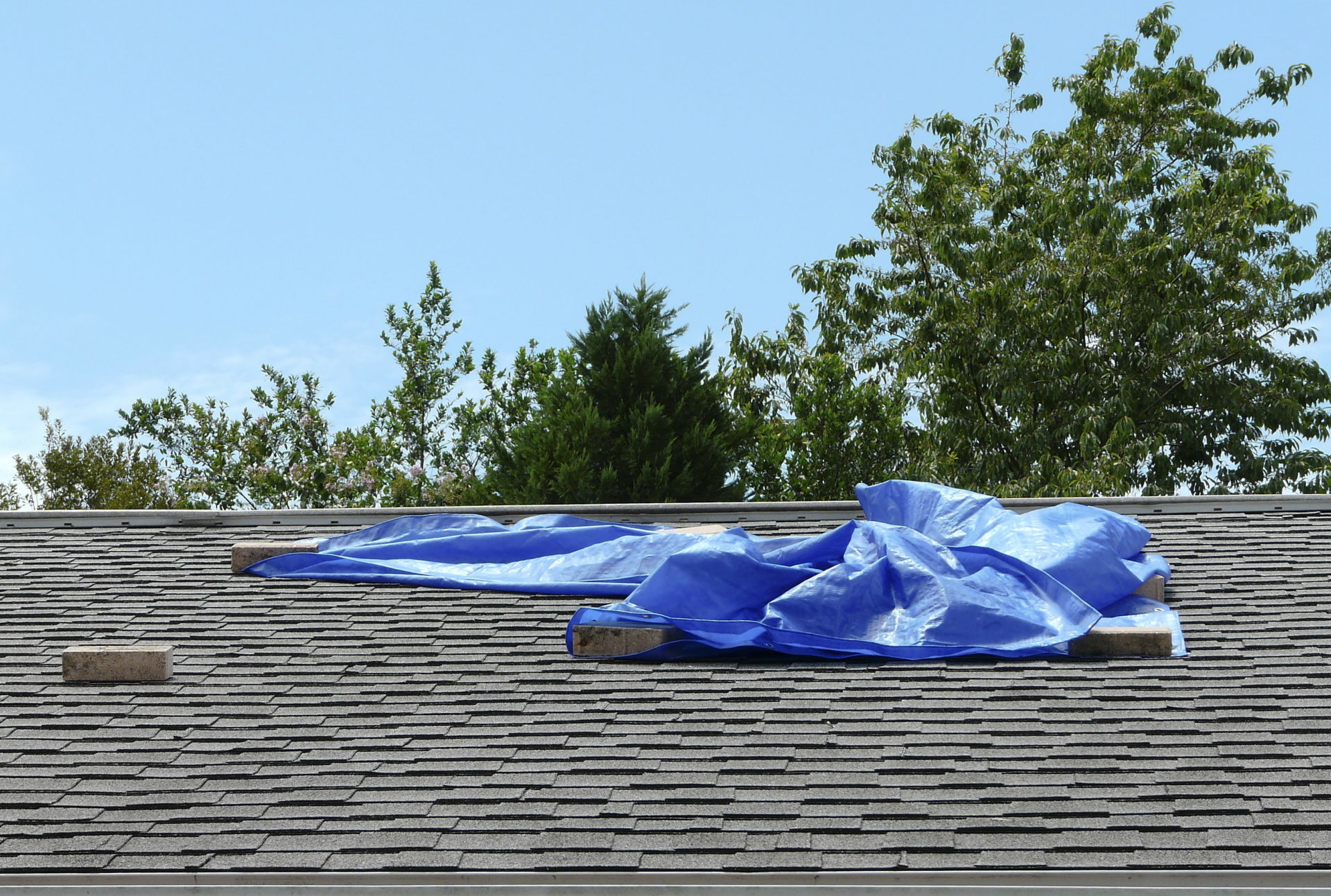
Commercial Roof Repair.
The scope documents leak sources, repair boundaries, photos, and priorities so New Orleans owners can separate immediate stabilization from longer-term capital work. Commercial Roof Repair support in New Orleans, LA, with documented inspections, written scopes, and practical roof planning for commercial properties.
What this roof work solves
Commercial Roof Repair in New Orleans should begin with a documented roof walk. The first job is to identify active water entry, drainage problems, membrane condition, edge details, rooftop equipment conflicts, and weather exposure before a price or schedule is discussed.
For commercial owners, the useful answer is rarely a one-line recommendation. The roof file should explain the work area, the reason for the scope, the access constraints, and the next maintenance decision.
How the scope is built
The scope is based on service scope, building use, roof age, visible defects, and the cost difference between immediate repair and longer-range planning. When repair is enough, the work stays focused. When replacement or recover planning is the responsible move, the reasoning is written plainly.
Each finished project should leave behind before-and-after photos, service notes, and follow-up items so the owner keeps a record for future inspections, budgeting, and vendor conversations.
Many facility managers and building owners who contact us have been told by a prior contractor that the entire roof needs replacement. We verify that recommendation with cores and a moisture survey. When full replacement is the correct call, we say so and explain why. When targeted repair can extend useful roof life by eight to twelve years at a fraction of replacement cost, we say that instead, and put it in writing.
Common New Orleans Flat Roof Failure Modes
Parapet flashing separation: Pre-Katrina commercial buildings across Orleans Parish frequently carry parapet flashing details designed to pre-2005 code standards that did not account for the uplift forces generated in Category 3 and 4 hurricane conditions. Beyond wind damage, the combination of New Orleans's thermal cycling and year-round elevated humidity accelerates adhesive bond degradation at wall-to-membrane transitions. When the base flashing separates from the parapet wall face, rainwater enters the building envelope laterally: a failure mode that a surface bead of sealant will not address for more than a single storm season. Correct repair scope: remove the compromised base flashing, install a new flashing assembly with a slip-detail that accommodates differential movement between the masonry wall and the roof system, and terminate with a through-embedded counter-flashing at the parapet cap.
Seam separation on TPO and EPDM: Heat-welded TPO seams and adhesive-seamed EPDM laps fail at installation defect locations or at areas of elevated membrane stress; equipment curb corners, drain pans, perimeter zones where gulf-driven wind events deposit cyclic uplift loads. Post-Ida assessments across Metairie and eastern New Orleans documented perimeter seam failures on mechanically attached TPO systems where the original seam welds were undersized for the actual uplift pressure in open-terrain Exposure C corridors. Repair scope varies by failure extent: localized seam failures are addressed with compatible seam tape or re-weld; failures concentrated across more than 50 continuous linear feet in a perimeter zone shift the conversation toward membrane field section replacement with a revised fastener pattern.
Drain failures and ponding: New Orleans's flat commercial roof inventory carries a higher proportion of undersized and debris-clogged drains than most markets of comparable size, because the combination of high annual rainfall volume and abundant organic debris from the city's mature urban tree canopy overwhelms drains that are only marginally adequate in dry-season conditions. During tropical rain events that can deposit three or more inches per hour, blocked drains produce ponding that loads both the structural deck and accelerates membrane aging at the pond perimeter. Repair scope: core-cut and replace drain body and overflow ring, re-flash with a compatible membrane sump, verify the connection to the storm line is unobstructed, and document the as-corrected slope-to-drain for the building's maintenance file.
- Parapet flashing separation: aggravated by hurricane uplift history and year-round humidity
- Seam separation: elevated failure rate at perimeter zones in open-terrain Exposure C corridors
- Drain failure and ponding: organic debris loading plus peak tropical rainfall intensity
- Penetration flashing failures: pipe boots, conduit sleeves, HVAC curb corners
- Membrane surface degradation: UV exposure combined with subtropical moisture cycling
How We Make the Repair-Versus-Replace Decision
We pull moisture cores in five to ten representative locations on any roof where insulation saturation is suspected: parapet corners, drain fields, areas with ceiling stains reported below, and any location showing membrane deflection or surface bubble formation. In New Orleans's subtropical climate, saturated polyiso or perlite insulation does not dry out between rain events the way it might in a lower-humidity market. If more than 25 percent of our cores come back wet, the economics of repair change fundamentally: recovering over saturated insulation traps moisture, corrodes light-gauge steel decks that are common in the post-Katrina rebuild inventory, and voids any manufacturer warranty applied above it. In that situation, we recommend replacement and we state the reasoning in writing.
When cores read dry and the failure is spatially contained, a parapet run, a cluster of failed seams near a single drain zone, a localized ponding area correctable with a tapered insulation fill, repair is the right scope and we write it that way. Our repair clients do not pay for replacement on roofs that have remaining useful life. The relationship we are building with facility managers and building owners depends on accurate diagnosis, not on maximizing individual project revenue.
Documentation We Deliver With Every Repair
Every repair closes out with a photo-keyed repair location map referenced to the roof plan, before-and-after photos at each repair point, product data sheets for every material applied, and a written service record for the building's roof asset file. Manufacturer warranty claims for NDL policies require evidence of documented maintenance and repair: a stack of receipts does not satisfy the documentation standard that manufacturer warranty reviewers apply. We produce closeout packages that
For buildings on our maintenance contracts, repair documentation feeds into the annual condition report so the building owner has a continuous, legible roof asset record rather than a series of disconnected service calls. That record is particularly valuable in the New Orleans market, where post-storm insurance claims require documentation that clearly distinguishes event-related damage from pre-existing conditions.
How do you price commercial roof repairs: by the hour or a fixed scope?
Fixed scope after a written inspection. We do not run time-and-materials repair on commercial roofs. After we walk the roof, pull cores where saturation is suspected, and document the failure locations, we deliver a fixed-price written scope. If we open a repair area and find additional damage not visible at inspection, we stop, photograph it, and call you before proceeding. No surprises on the invoice.
Questions to settle early
Where is the risk?
Locate leaks, wet-insulation indicators, open seams, weak flashing, and drainage restrictions across the roof.
What can wait?
Separate immediate work from maintenance items that can be tracked for the next service window.
What should be funded?
Build a practical recommendation for repair, coating, recover, or replacement planning.
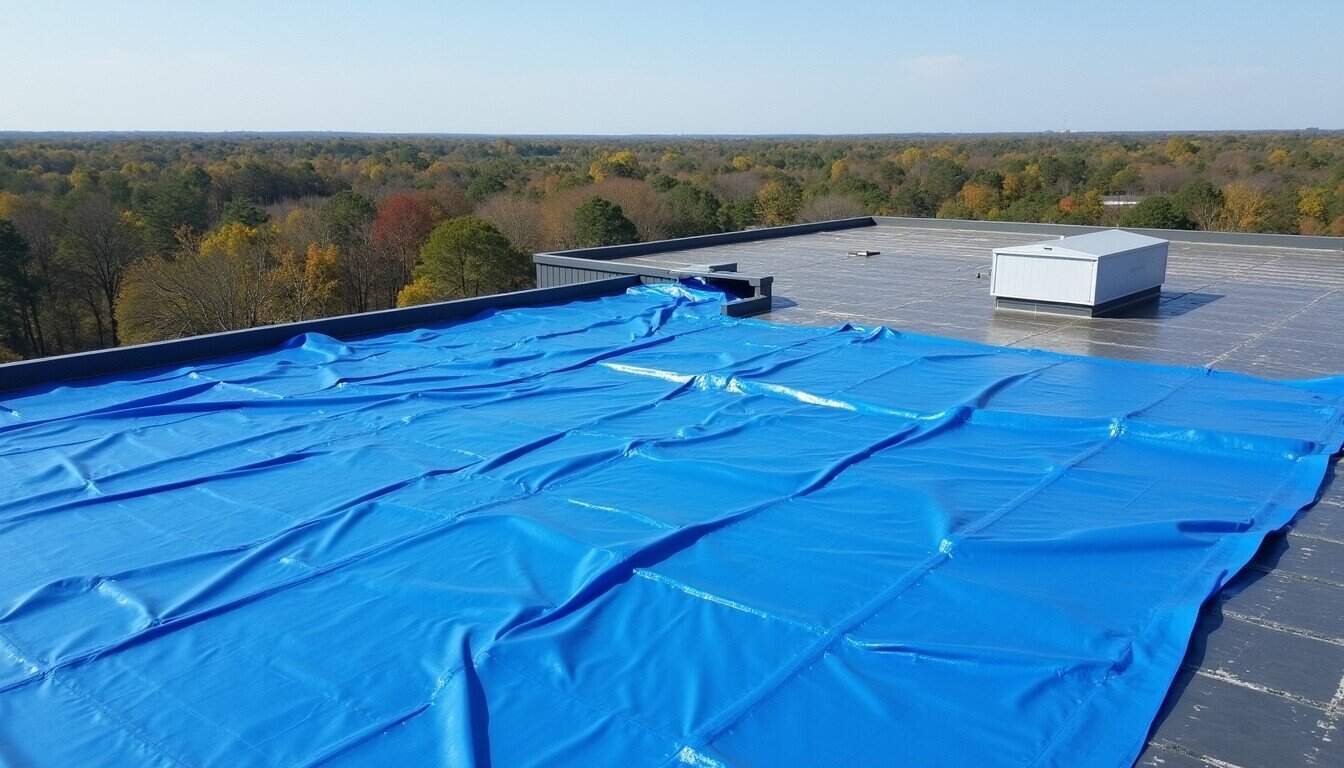
Need help with commercial roof repair?
Send the building address, known roof age, access notes, and what changed. We will respond with the right next step.