
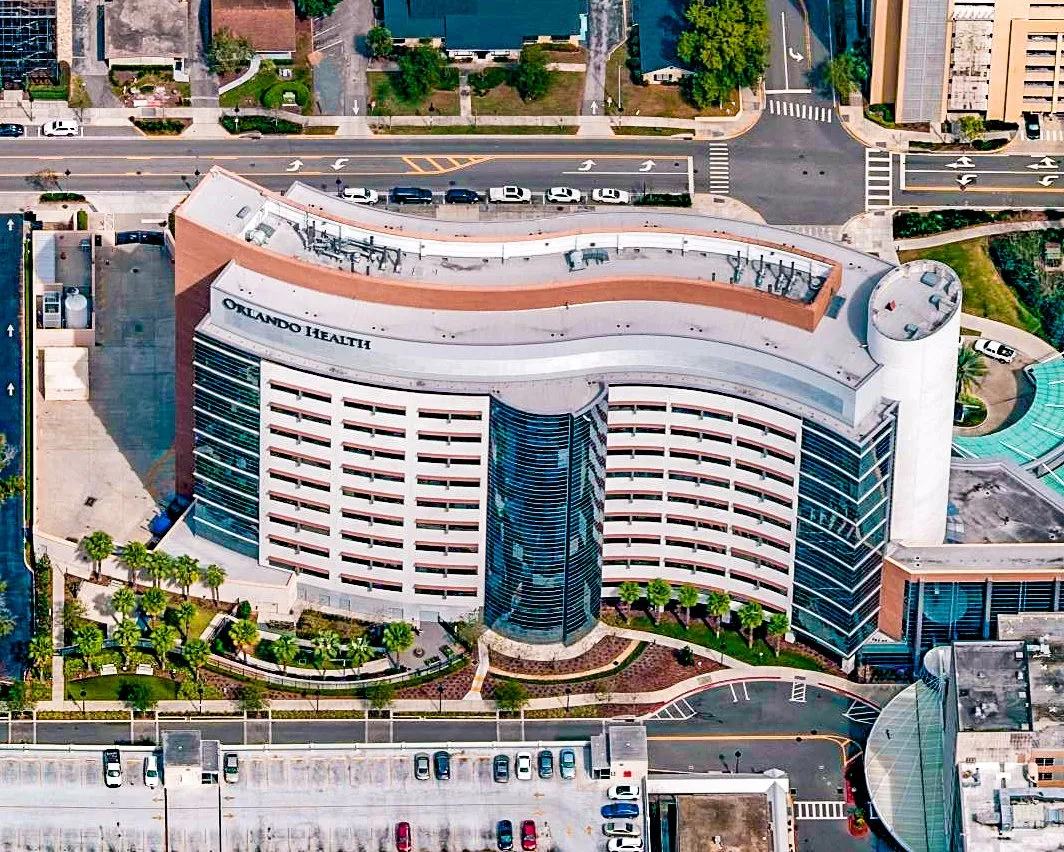
Healthcare Roofing.
Healthcare Roofing support in New Orleans, LA, with documented inspections, written scopes, and practical roof planning for commercial properties.
What this roof work solves
Healthcare Roofing in New Orleans should begin with a documented roof walk. The first job is to identify active water entry, drainage problems, membrane condition, edge details, rooftop equipment conflicts, and weather exposure before a price or schedule is discussed.
For commercial owners, the useful answer is rarely a one-line recommendation. The roof file should explain the work area, the reason for the scope, the access constraints, and the next maintenance decision.
How the scope is built
The scope is matched to operating requirements, building use, roof age, visible defects, and the cost difference between immediate repair and longer-range planning. When repair is enough, the work stays focused. When replacement or recover planning is the responsible move, the reasoning is written plainly.
Each finished project should leave behind before-and-after photos, service notes, and follow-up items so the owner keeps a record for future inspections, budgeting, and vendor conversations.
Medical campuses in Orleans and Jefferson parishes carry two layers of operational constraint that standard commercial roofing does not: infection-control requirements that the Joint Commission enforces, and hurricane wind-uplift specifications that the Louisiana State Licensing Board for Contractors mandates. We run both at the same time, on occupied facilities, without interrupting patient care.
The New Orleans healthcare campus is one of the most concentrated and complex in the Gulf South. Ochsner Health's main campus in Jefferson Parish anchors a system of eleven hospitals and more than operates a Level I trauma program inside the Tulane-Gravier medical district alongside University Medical Center, the 450-bed public hospital that opened in 2015 after Katrina destroyed the Charity Hospital complex. LSU Health Sciences Center occupies a campus of interconnected academic medical and research buildings along Perdido Street and Gravier Street that presents some of the most complex rooftop mechanical environments in the metro. East Jefferson General Hospital in Metairie runs its outpatient and surgical programs from a campus that has been substantially rebuilt and expanded.
Infection control is the non-negotiable constraint on every one of these projects. Any roofing work above occupied patient areas, and particularly above oncology floors, surgical suites, bone marrow transplant units, and NICU: requires a formal Infection Control Risk Assessment completed before production begins. The ICRA tier assigned by the facility's infection-control officer defines the containment level our crew operates under: negative-pressure barriers, HEPA-filtered vacuums at debris pick-up points, crew decontamination before re-entering the building. We have completed ICRA coordination on hospital projects across Orleans and Jefferson parishes and we know how to build a production sequence around the risk tier.
Rooftop equipment density on a New Orleans hospital is a discipline in itself. These roofs carry chillers, cooling towers, medical air compressors, surgical exhaust fans, emergency generator fuel vents, pneumatic tube system risers, and in the post-Katrina construction wave, rooftop-mounted emergency power infrastructure that did not exist on pre-2005 buildings. Every penetration has to be re-flashed cleanly without interrupting the system it serves. Hurricane wind-uplift specifications on Risk Category IV healthcare buildings add a layer that most markets do not face: the attachment design, edge metal, and parapet details all carry hardened requirements under ASCE 7 Louisiana hurricane-prone-region classification.
Infection Control Risk Assessment on New Orleans Medical Campuses
The Joint Commission evaluates healthcare construction infection control under the Environment of Care standard. An ICRA is not discretionary documentation: it is the document that defines what protective measures our crew is legally and contractually required to follow before the first fastener goes into the deck. At Tulane Medical Center's main campus on Tulane Avenue, that means coordinating the ICRA tier with the hospital's infection-control officer, signing the contractor acknowledgment form, and designating an on-site infection-control lead who is responsible for daily containment compliance before production starts each morning. If the hospital's IC officer issues a stop-work, we stop.
University Medical Center New Orleans, operated by LCMC Health, opened in 2015 on a campus designed post-Katrina with significant infrastructure redundancy built into its mechanical systems. Roofing work on the UMC campus requires pre-construction coordination with both the LCMC facilities management team and the Louisiana Office of Risk Management, because the state owns the facility. The paperwork chain is longer than a private hospital and we build the pre-construction timeline accordingly. LSU Health Sciences Center's research buildings carry fume exhaust stacks from laboratory environments that cannot be interrupted during production: we scope those penetrations for after-hours work windows and coordinate shutdowns with the facilities engineering director at the LSU Health campus office on Tulane Avenue.
Hurricane Risk Category IV Requirements for Hospital Buildings
Hospitals are Risk Category IV buildings under ASCE 7: the highest occupancy category, carrying the most stringent wind-uplift requirements in the Louisiana hurricane-prone-region designation. The hardening of these requirements after Hurricane Katrina's 2005 documentation of hospital roof failures across the metro was significant. Ochsner Baptist in the Garden District, East Jefferson General in Metairie, and several Tulane Medical buildings in the medical district sustained damage in Ida's 2021 track through the metro that highlighted the gap between pre-2005 specifications and post-2005 Risk Category IV requirements.
For every healthcare roof replacement we scope, the wind-uplift design starts from the building's actual dimensions, deck type, exposure category, and Risk Category IV classification. We do not pull fastener patterns from a standard manufacturer table: we run the ASCE 7 calculation specific to the building. On healthcare campuses near the lakefront, the river corridor, or in open-terrain exposure, Ochsner's Jefferson campus near Veterans Boulevard, the East Jefferson General campus near the lake, the corner and perimeter pressure coefficients carry Exposure D designations that tighten the fastener density beyond baseline Hurricane Region requirements. Full-adhered membrane systems are the standard specification for Risk Category IV replacement projects where the uplift calculation cannot be achieved with mechanical attachment.
Rooftop Equipment Sequencing on Hospital Roofs
Cooling towers on hospital roofs in New Orleans run at high utilization from May through October, the intersection of Gulf heat season and hurricane season. A cooling tower serving a surgical suite cannot be taken offline for a roofing contractor's production convenience. At Ochsner Medical Center's main Jefferson campus, the chiller plant and cooling tower configuration means that roofing work around tower bases and supply line penetrations has to be scheduled during the narrow windows when backup cooling capacity can absorb the load: a coordination that requires access to the facility's maintenance calendar months before the production start.
Legionella prevention protocols require that any cooling tower drainage event be documented by the facility's water management team before a roofing crew works directly around the towers. We do not begin work around a cooling tower environment without the water management log in hand. Generator exhaust stacks on post-Katrina hospital construction, a standard feature on the newer UMC and Tulane Medical buildings, which were designed to sustain operations through extended power grid outages, carry high-temperature exhaust that degrades standard TPO flashing at the penetration interface. We use PVC flashing material at generator stack penetrations on all healthcare projects where the stack temperature exceeds TPO's rated service range.
Do you have experience with Joint Commission infection-control requirements for hospital roofing?
Questions to settle early
Where is the risk?
Locate leaks, wet-insulation indicators, open seams, weak flashing, and drainage restrictions across the roof.
What can wait?
Separate immediate work from maintenance items that can be tracked for the next service window.
What should be funded?
Build a practical recommendation for repair, coating, recover, or replacement planning.
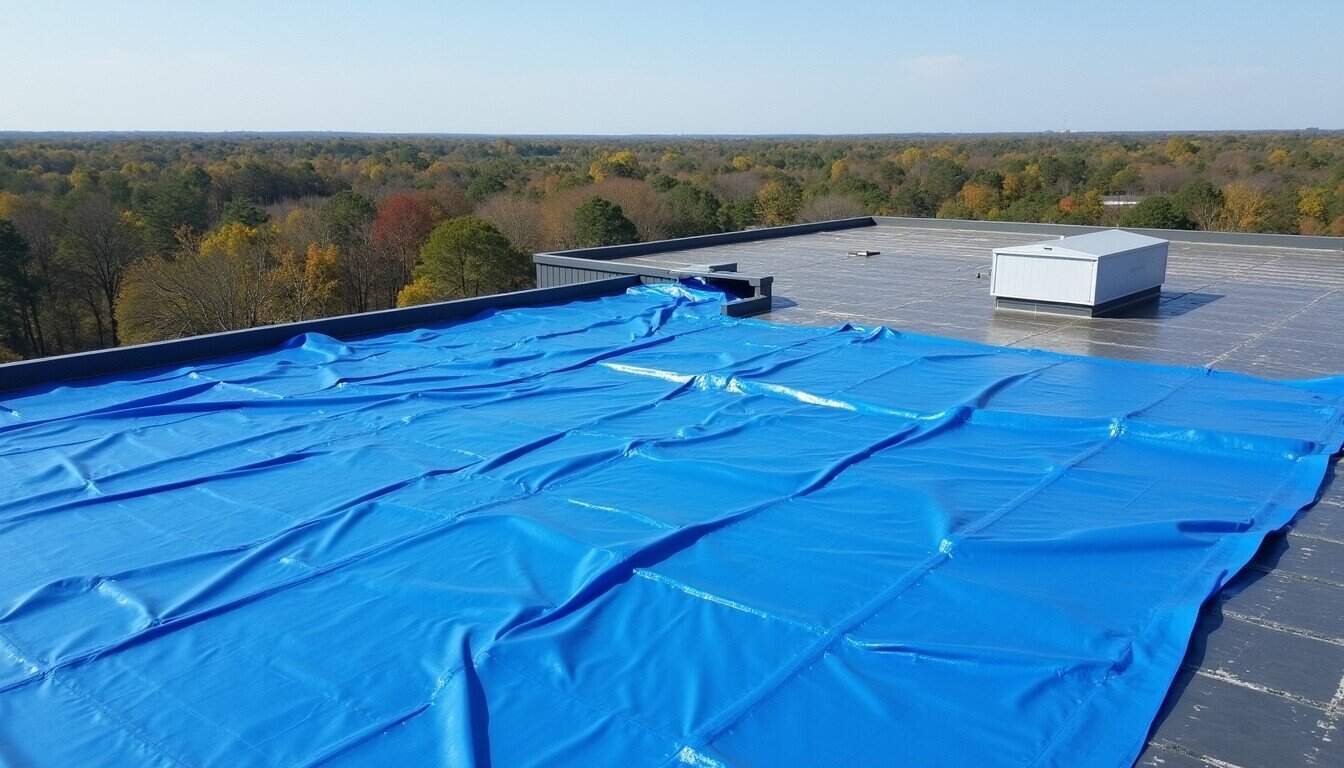
Need help with healthcare roofing?
Send the building address, known roof age, access notes, and what changed. We will respond with the right next step.