
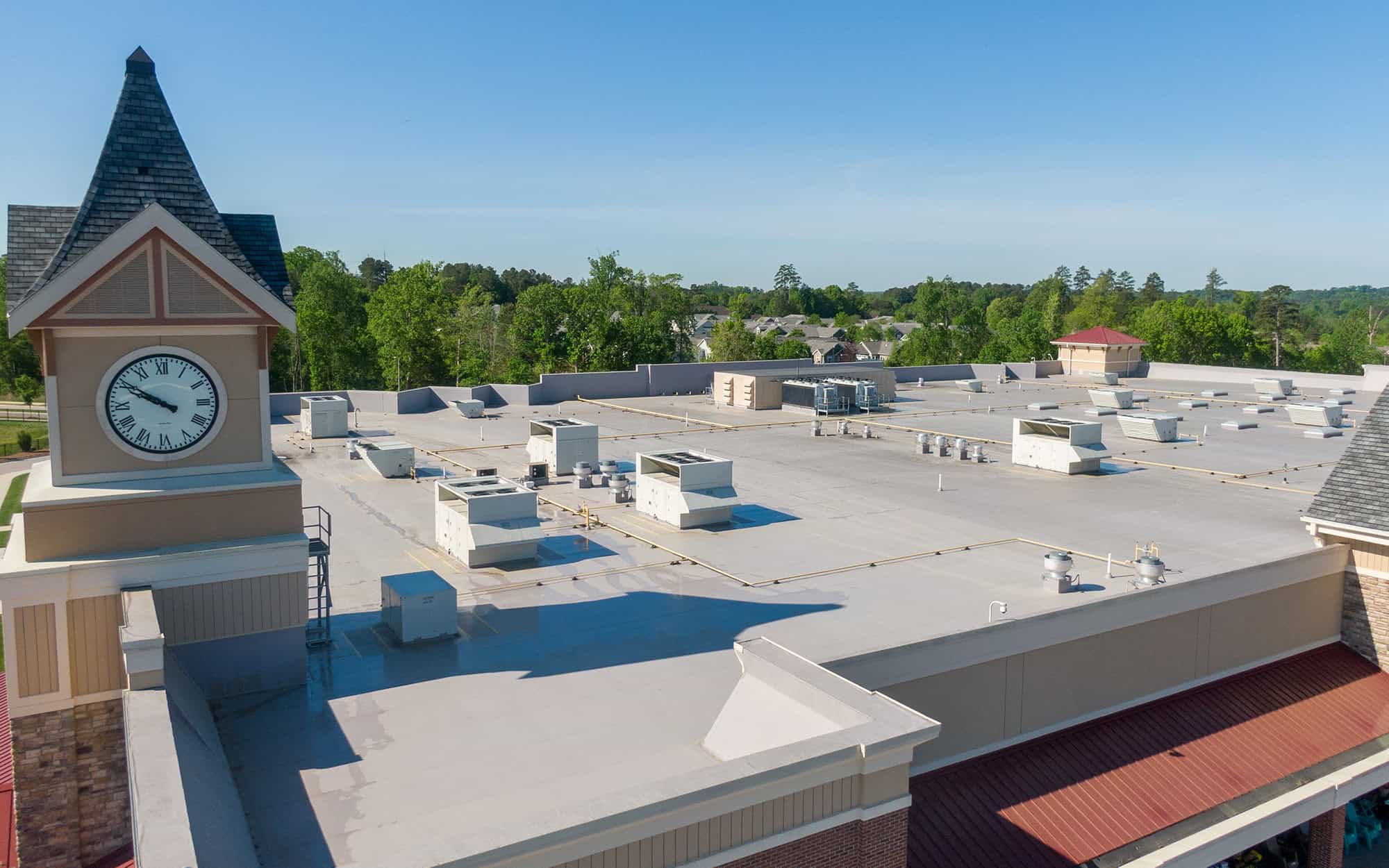
Government Facility Roofing.
Government Facility Roofing support in New Orleans, LA, with documented inspections, written scopes, and practical roof planning for commercial properties.
What this roof work solves
Government Facility Roofing in New Orleans should begin with a documented roof walk. The first job is to identify active water entry, drainage problems, membrane condition, edge details, rooftop equipment conflicts, and weather exposure before a price or schedule is discussed.
For commercial owners, the useful answer is rarely a one-line recommendation. The roof file should explain the work area, the reason for the scope, the access constraints, and the next maintenance decision.
How the scope is built
The scope is matched to operating requirements, building use, roof age, visible defects, and the cost difference between immediate repair and longer-range planning. When repair is enough, the work stays focused. When replacement or recover planning is the responsible move, the reasoning is written plainly.
Each finished project should leave behind before-and-after photos, service notes, and follow-up items so the owner keeps a record for future inspections, budgeting, and vendor conversations.
City of New Orleans, Orleans and Jefferson Parish, Louisiana state government, and the federal installations driven by Naval Air Station Joint Reserve Base New Orleans all operate commercial buildings that require prevailing-wage compliance, Risk Category III and IV hurricane wind-uplift engineering, and procurement processes that are categorically different from private-sector roofing work.
The City of New Orleans operates a diverse portfolio of municipal facilities: City Hall at Perdido and Loyola, the Civil District Courthouse on Poydras, public libraries across Orleans Parish, recreation centers, fire stations, and the Sewerage and Water Board infrastructure that keeps the city's drainage system running. Orleans Parish School Board buildings fall under public procurement rules. The Louisiana State Capitol campus in Baton Rouge is the center of state government, but state agencies maintain significant facility footprints in New Orleans: the Louisiana Commercial Roofers New Orleans Court on Royal Street, state office buildings in the CBD, and the regional facilities of agencies including Louisiana DOTD, Louisiana DCFS, and the Louisiana Workforce Commission.
Naval Air Station Joint Reserve Base New Orleans at Belle Chasse in Plaquemines Parish is the largest military installation in Louisiana, operating P-8 Poseidon maritime patrol aircraft, Air National Guard units, Marine Forces Reserve headquarters, and Coast Guard Air Station New Orleans from a campus of hangars, operations buildings, and support facilities that carry federal construction procurement requirements and ASCE 7 Risk Category IV hurricane wind-uplift design standards for mission-critical military construction.
Government facility roofing requires engagement with procurement processes, public bid requirements, prevailing-wage compliance, Davis-Bacon documentation, Louisiana Revised Statute 38 public bid law for state and municipal projects, and federal FAR compliance for NAS JRB and other federal facility work, that private-sector projects do not. We have completed government facility roofing projects under these procurement frameworks and we maintain the compliance documentation these contracts require.
Risk Category IV Requirements on Essential Government Facilities
Essential government buildings, police stations, fire stations, emergency operations centers, and public health facilities, are classified as Risk Category IV under ASCE 7. In Louisiana's hurricane-prone-region designation, Risk Category IV carries the most stringent wind-uplift requirements in the code. After Hurricane Katrina demonstrated that fire stations, police precincts, and emergency management facilities across Orleans and Jefferson parishes sustained roof damage that impaired emergency response capacity during the storm event, Louisiana code amendments tightened the wind-uplift requirements for these building types specifically. We design every essential-function government building replacement to Risk Category IV standards and document the wind-uplift calculation in the project closeout file.
NAS JRB New Orleans at Belle Chasse carries additional requirements beyond Risk Category IV: federal military construction standards (UFC documents), ATFP standoff design requirements for certain facility types, and NAVFAC coordination for major construction projects on the base. Hangar and operations building roofing at the base involves coordination with the Naval Facilities Engineering Command and compliance with Department of Defense construction quality management requirements. We build the federal procurement and quality-management documentation into the pre-construction schedule for NAS JRB projects.
Public Procurement and Prevailing-Wage Compliance
Louisiana Revised Statute 38 governs public bid law for state and municipal construction projects. Public school districts, municipal government, and state agencies must competitively bid construction work above statutory thresholds. We participate in public bid processes for government roofing projects, maintain the required license documentation, and carry the bonding required for public contracts. Our project managers are familiar with the bid package documentation: prevailing-wage schedules, minority participation certifications, insurance certificate requirements, and the closeout documentation packages that public agencies require.
Prevailing-wage compliance under Louisiana RS 23:921 for public construction requires certified payroll documentation, crew classification compliance, and documentation retention for post-project audit. Federal Davis-Bacon compliance for NAS JRB and other federally funded projects requires additional certified payroll documentation and crew classification review at each tier of the labor workforce. We maintain the documentation systems for both state prevailing-wage and federal Davis-Bacon compliance and deliver the certified payroll records in the format that contracting officers require.
Post-Katrina Public Building Reconstruction: Assessment and Verification
Public buildings across Orleans and Jefferson parishes were rebuilt or substantially renovated using FEMA Public Assistance funds in the years following Hurricane Katrina. The FEMA PA program produced a large volume of reconstruction work between 2006 and 2015 under post-disaster construction conditions: accelerated timelines, contractor capacity constraints, and in some cases specifications that were not fully implemented in the field. City of New Orleans public buildings, Orleans Parish School Board facilities, and municipal infrastructure buildings from this reconstruction wave are now entering their first major maintenance and replacement cycles.
Before presenting a recover or replacement scope on any post-Katrina public building reconstruction, we assess the existing system's actual attachment method and verify the fastener density against current Risk Category III or IV requirements. FEMA PA documentation for the original reconstruction may or may not include the wind-uplift design calculation. If it does not, we conduct the assessment and document the findings before the replacement scope is presented: providing the public agency with an accurate picture of what the replacement is correcting, which supports the capital justification for the project.
Are you qualified to bid on City of New Orleans or Orleans Parish public roofing projects?
Questions to settle early
Where is the risk?
Locate leaks, wet-insulation indicators, open seams, weak flashing, and drainage restrictions across the roof.
What can wait?
Separate immediate work from maintenance items that can be tracked for the next service window.
What should be funded?
Build a practical recommendation for repair, coating, recover, or replacement planning.
Need help with government facility roofing?
Send the building address, known roof age, access notes, and what changed. We will respond with the right next step.