
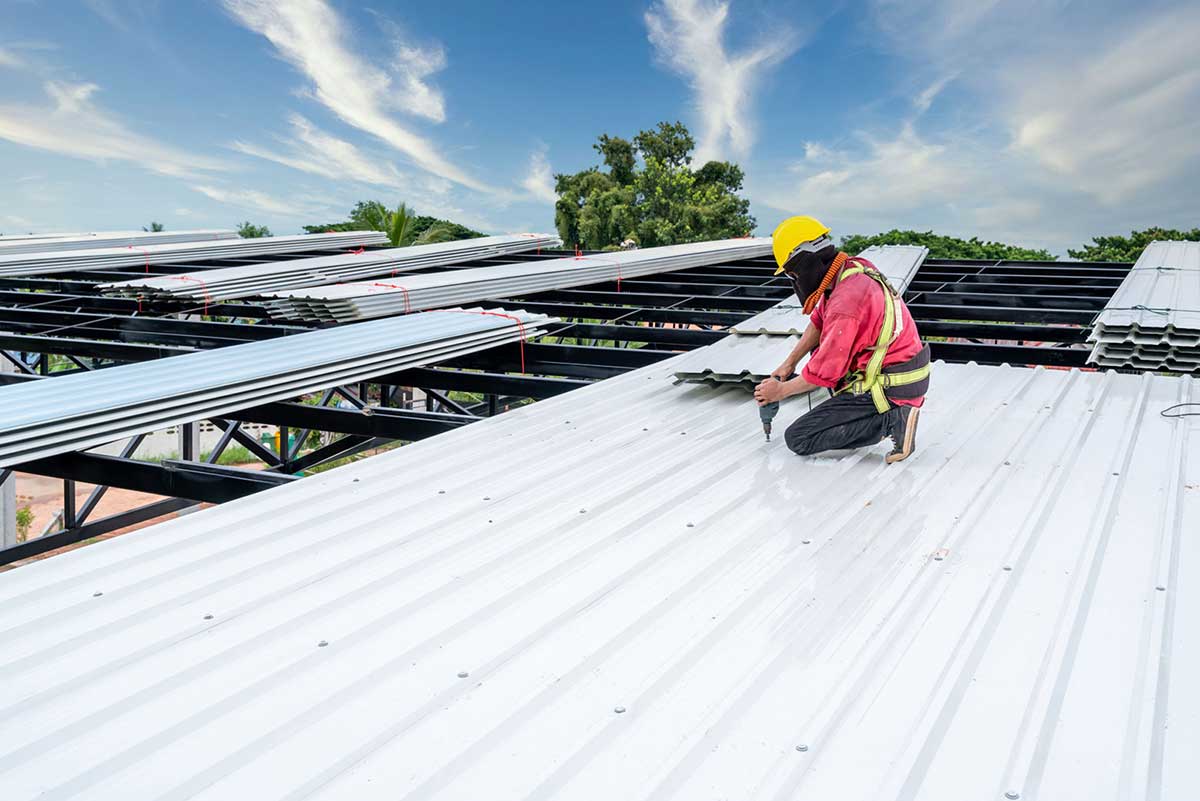
Commercial Re-Roofing.
Commercial Re-Roofing support in New Orleans, LA, with documented inspections, written scopes, and practical roof planning for commercial properties.
What this roof work solves
Commercial Re-Roofing in New Orleans should begin with a documented roof walk. The first job is to identify active water entry, drainage problems, membrane condition, edge details, rooftop equipment conflicts, and weather exposure before a price or schedule is discussed.
For commercial owners, the useful answer is rarely a one-line recommendation. The roof file should explain the work area, the reason for the scope, the access constraints, and the next maintenance decision.
How the scope is built
The scope is based on service scope, building use, roof age, visible defects, and the cost difference between immediate repair and longer-range planning. When repair is enough, the work stays focused. When replacement or recover planning is the responsible move, the reasoning is written plainly.
Each finished project should leave behind before-and-after photos, service notes, and follow-up items so the owner keeps a record for future inspections, budgeting, and vendor conversations.
Mid-City, Lakeview, Gentilly, New Orleans East, and Algiers: Same-day dispatch. Typical arrival is three to six hours from call depending on post-storm road conditions and crew availability. Post-hurricane events sometimes require route adjustments for debris or flooding that extends response windows: we communicate actively with the building contact on approach status.
Jefferson Parish: Metairie, Kenner, Harahan, and surrounding areas: Same-day dispatch from our CBD office via I- time under normal conditions. Post-storm interstate and local road conditions are monitored in real time: we advise alternate routing when major corridors are compromised.
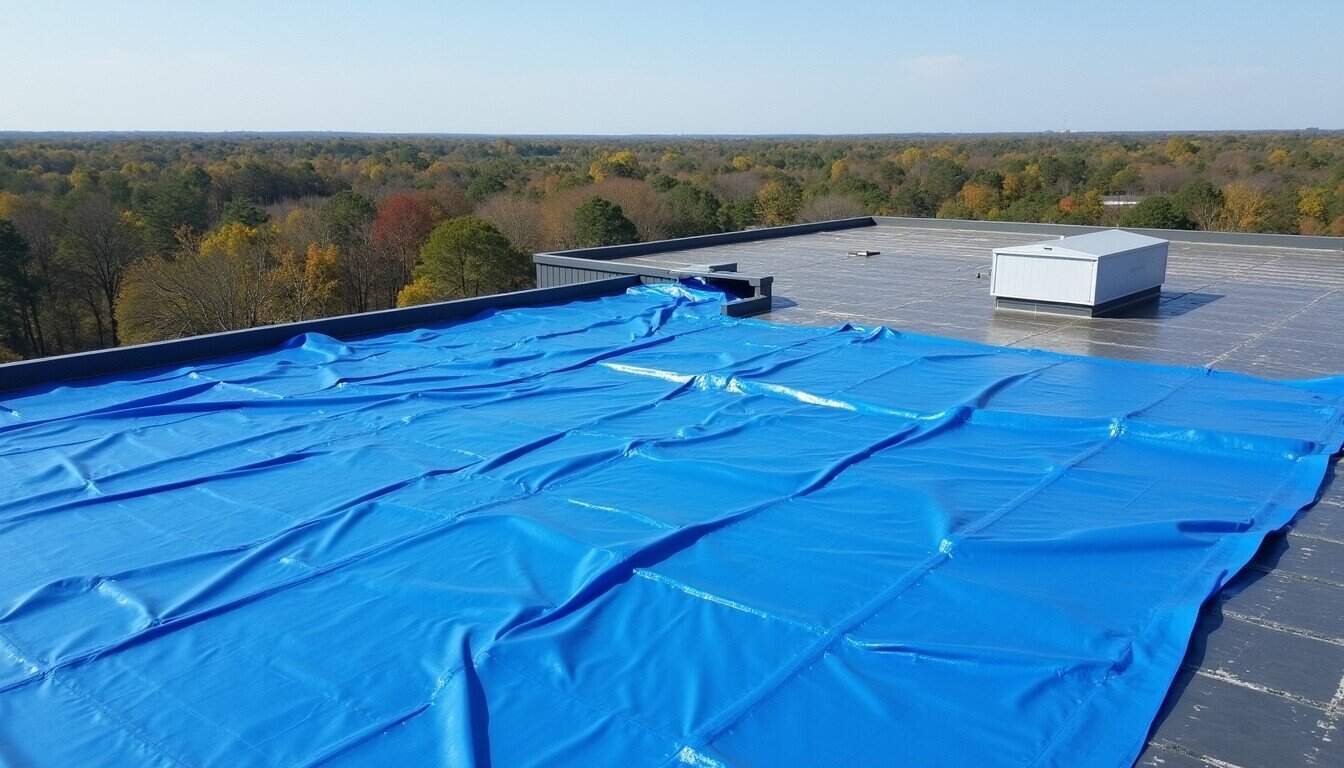
Emergency dry-in is a temporary, not permanent, repair. We cover the failure zone with a compatible membrane lap or a properly weighted tarp assembly fastened to the roof field with mechanical fasteners that do not penetrate the building interior, with perimeter edges secured against the post-storm wind gusts that continue through the trailing edge of tropical systems. We photograph the temporary installation, document the failure mode, and leave the building weathertight.
In New Orleans's subtropical climate, the urgency of emergency dry-in is elevated beyond most other markets. Post-storm humidity at 85 to 95 percent means that a commercial building left open to moisture intrusion for more than 24 to 48 hours faces accelerating mold colonization in wall cavities, above ceiling tiles, and in the insulation stack at the roof level. The secondary damage from delayed dry-in frequently exceeds the original storm damage in dollar terms. We treat the 72-hour window after storm passage as the critical response window for every commercial building in our service area.
The following day or once weather conditions allow a safe permanent-scope walk, we return for the documented inspection: core pulls if insulation saturation is suspected, full failure mapping with photos keyed to the roof plan, and a fixed-price permanent repair scope. The temporary dry-in invoice and the permanent repair scope are presented separately: you approve each independently. Nothing about the emergency response creates an obligation to use us for the permanent repair.
Post-Storm Documentation for Louisiana Insurance Claims
Louisiana commercial property wind-damage claims require documentation that the Louisiana Department of Insurance adjusters and public adjusters can act on. A general statement that the storm damaged the roof does not advance a claim. What advances a claim is a photo-documented condition survey keyed to a roof zone diagram, a written scope that clearly separates storm-event damage from pre-existing conditions, NWS storm data cross-reference for the event date and location, and material and labor documentation for emergency protective measures taken.
We produce all of this for every post-storm emergency response we run. The documentation package is formatted specifically for Louisiana wind-damage claim submission. We do not negotiate with insurers or act as public adjusters: that is not our role. We provide the technical documentation that moves the claim forward on accurate facts, and we make it available to the building owner, the property manager, and the public adjuster simultaneously if all three are involved.
Do I need to stop business operations while you perform emergency dry-in work?
Usually not for the dry-in phase. We work on the roof surface while the building operates below. If there is active ceiling collapse risk or water pooling near electrical equipment or server infrastructure, we coordinate with your facilities team on interior safety measures first. For buildings with occupied clinical space, food preparation areas, or sensitive operations: flag that when you contact us and we adjust the sequencing to protect those areas.
Can you handle emergency roof response for large commercial complexes: multiple buildings, high square footage?
Yes. We have run multi-building emergency dry-in operations across office parks in Metairie and warehouse complexes in eastern New Orleans. For large-complex post-storm emergencies, we deploy two crews simultaneously and set priority sequence: buildings with active interior penetration and occupied tenant space receive dry-in first, unoccupied or minimally damaged buildings are sequenced next.
Will my insurance adjuster accept your emergency dry-in invoice and documentation?
We format emergency dry-in documentation specifically for Louisiana wind-damage claim submission: itemized labor and materials, photo documentation of storm damage and dry-in installation, written failure-mode description, and NWS storm data cross-reference for the event date and location. This is the format Louisiana Department of Insurance adjusters require for emergency protective measures reimbursement. We do not file claims or negotiate with insurers: we give you clean, usable documentation to submit yourself or share with your public adjuster.
Questions to settle early
Where is the risk?
Locate leaks, wet-insulation indicators, open seams, weak flashing, and drainage restrictions across the roof.
What can wait?
Separate immediate work from maintenance items that can be tracked for the next service window.
What should be funded?
Build a practical recommendation for repair, coating, recover, or replacement planning.
Need help with commercial re-roofing?
Send the building address, known roof age, access notes, and what changed. We will respond with the right next step.