
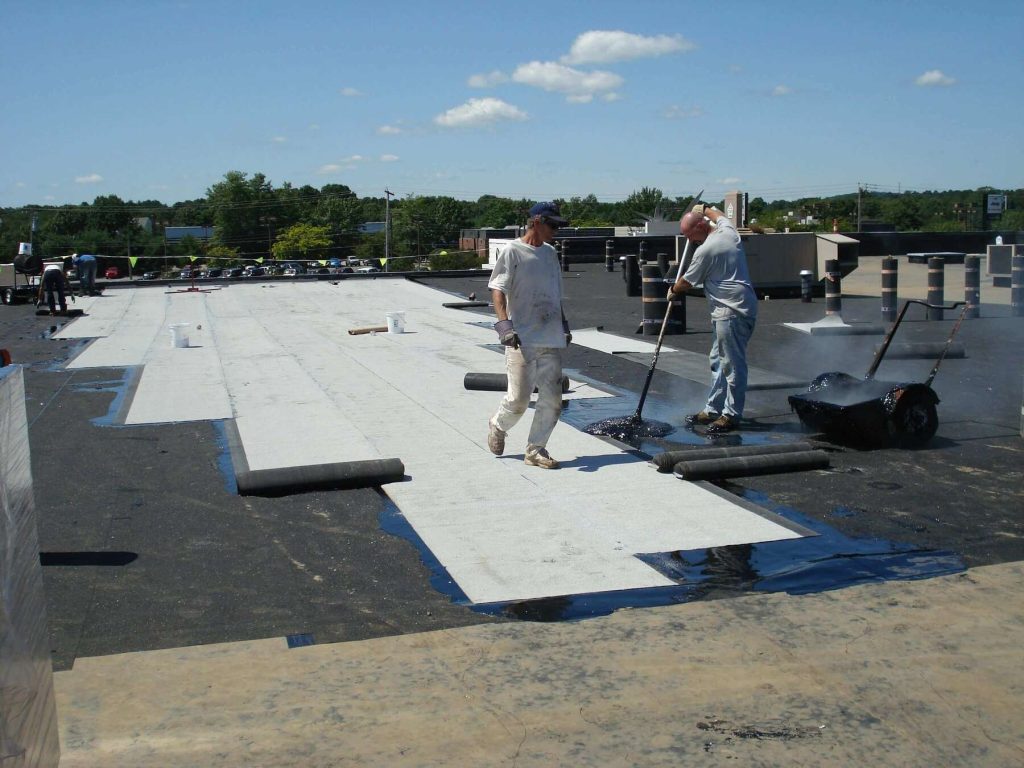
Built-Up Roof Systems.
Built-Up Roof Systems support in New Orleans, LA, with documented inspections, written scopes, and practical roof planning for commercial properties.
What this roof work solves
Built-Up Roof Systems in New Orleans should begin with a documented roof walk. The first job is to identify active water entry, drainage problems, membrane condition, edge details, rooftop equipment conflicts, and weather exposure before a price or schedule is discussed.
For commercial owners, the useful answer is rarely a one-line recommendation. The roof file should explain the work area, the reason for the scope, the access constraints, and the next maintenance decision.
How the scope is built
The scope is based on system selection, building use, roof age, visible defects, and the cost difference between immediate repair and longer-range planning. When repair is enough, the work stays focused. When replacement or recover planning is the responsible move, the reasoning is written plainly.
Each finished project should leave behind before-and-after photos, service notes, and follow-up items so the owner keeps a record for future inspections, budgeting, and vendor conversations.
New Orleans's historic commercial stock, the French Quarter's 19th-century hospitality buildings, the CBD's pre-war office towers, and the Garden District's commercial corridor, holds a significant inventory of coal-tar and asphalt built-up roofing. Most of it is old. We assess it, document it, and give you a written scope for what comes next.
Built-up roofing (BUR), multiple plies of asphalt-saturated felt mopped together with hot asphalt or coal tar, topped with gravel or mineral-surface cap sheet, was the standard commercial flat-roof system in New Orleans from the early 20th century through the early 1980s. The French Quarter's historic masonry buildings, the pre-war commercial towers on Canal Street, and the Garden District and Uptown commercial corridors were predominantly roofed with coal-tar or asphalt BUR systems during that period.
The New Orleans BUR inventory that survived Katrina in 2005 received varying levels of post-storm attention. Buildings in the Vieux Carré, which did not flood to the degree of Mid-City or Lakeview, often had BUR systems that remained nominally intact after the storm but sustained wind damage to parapet flashings and surface gravel: damage that was repaired hastily during the post-storm period and not always documented. Those systems are now 20 years further into their lifecycle with partial repair histories that complicate current-condition assessment.
We do not install new built-up roofing systems. We assess the existing BUR inventory on New Orleans commercial buildings, document the current condition with moisture cores and infrared scanning where warranted, and produce a written scope for the replacement system, TPO, EPDM, or modified bitumen, appropriate for the building's construction type, access constraints, and historic district requirements.
Coal-Tar vs Asphalt BUR: What's on New Orleans Legacy Buildings
New Orleans BUR systems from the 1920s through the 1960s were predominantly coal-tar pitch. Coal tar self-heals minor surface cracks through its fluid properties under heat, and has better inherent water resistance than asphalt BUR: properties that made it well-suited to New Orleans's wet subtropical climate and helped it outlast the building engineers' original design life in many cases. Buildings in the French Quarter and the CBD with coal-tar BUR from the 1940s through 1960s that have been maintained with periodic surface recoating are not unusual. The problem is that coal tar is carcinogenic to handle, requires Louisiana Department of Environmental Quality-compliant disposal protocols, and significantly increases removal cost and schedule on projects where the work involves an occupied historic building.
Asphalt BUR from the same period and from the 1970s through early 1980s shows more visible surface distress: alligatoring at the asphalt surface, granule loss on mineral-surface cap sheets, and pitch pocket failures around rooftop penetrations. In New Orleans's subtropical sun, asphalt BUR systems on south- and west-facing roof zones tend to show accelerated surface oxidation compared to sheltered or north-facing areas. We document which binder material is present during assessment because it determines the disposal protocol, the air-quality plan for occupied buildings, and the cost estimate for removal.
Recover Versus Full Replacement for New Orleans BUR Buildings
BUR recover, installing a new modified bitumen cap sheet or single-ply membrane over an existing built-up system, is a viable scope when the existing insulation is dry on core pulls, the deck is structurally sound, and the BUR surface is stable enough to serve as a base for the new system. For French Quarter and CBD buildings where full tear-off would require multi-story crane operations, street-side staging permits, and VCC or Downtown Development District coordination, recover economics often favor the option when the substrate supports it.
Full replacement is the honest recommendation when wet insulation accounts for more than 25% of core pulls, when deck deflection or corrosion is visible under wet areas, or when the accumulated weight of prior recovery layers has reached the structural load limit. New Orleans commercial buildings in the French Quarter and on Canal Street have been recovered multiple times on some roofs: layers of mod-bit over asphalt BUR over coal-tar BUR, and the aggregate assembly eventually requires a complete tear-off. We give owners the core-pull data and the deck condition report before asking for a contract commitment.
BUR Replacement in New Orleans Historic and Dense Urban Buildings
BUR replacement on a French Quarter or CBD commercial building involves building permit application with the City of New Orleans Department of Safety and Permits, an asbestos survey by a Louisiana-licensed asbestos consultant if the building pre-dates 1980 (asbestos felts were common in BUR installations through that period), coal-tar disposal protocol where applicable, and crane and street-staging coordination with the VCC or Downtown Development District for any project in those overlay districts.
Tear-off on occupied New Orleans historic buildings is staged in sections small enough to allow same-day dry-in: a discipline that is non-negotiable in a city that receives over 60 inches of annual rainfall and can experience afternoon convective storms with minimal warning in summer. We do not leave an open section of a French Quarter rooftop overnight during the June-through-November storm season. After removal, replacement systems are typically TPO or modified bitumen over new polyiso insulation, with a complete re-detail of all parapets, drains, and penetrations to current Louisiana building code and ASCE 7 hurricane-prone-region specifications.
Does my pre-1980 New Orleans building need an asbestos survey before BUR removal?
Questions to settle early
Where is the risk?
Locate leaks, wet-insulation indicators, open seams, weak flashing, and drainage restrictions across the roof.
What can wait?
Separate immediate work from maintenance items that can be tracked for the next service window.
What should be funded?
Build a practical recommendation for repair, coating, recover, or replacement planning.
Need help with built-up roof systems?
Send the building address, known roof age, access notes, and what changed. We will respond with the right next step.