
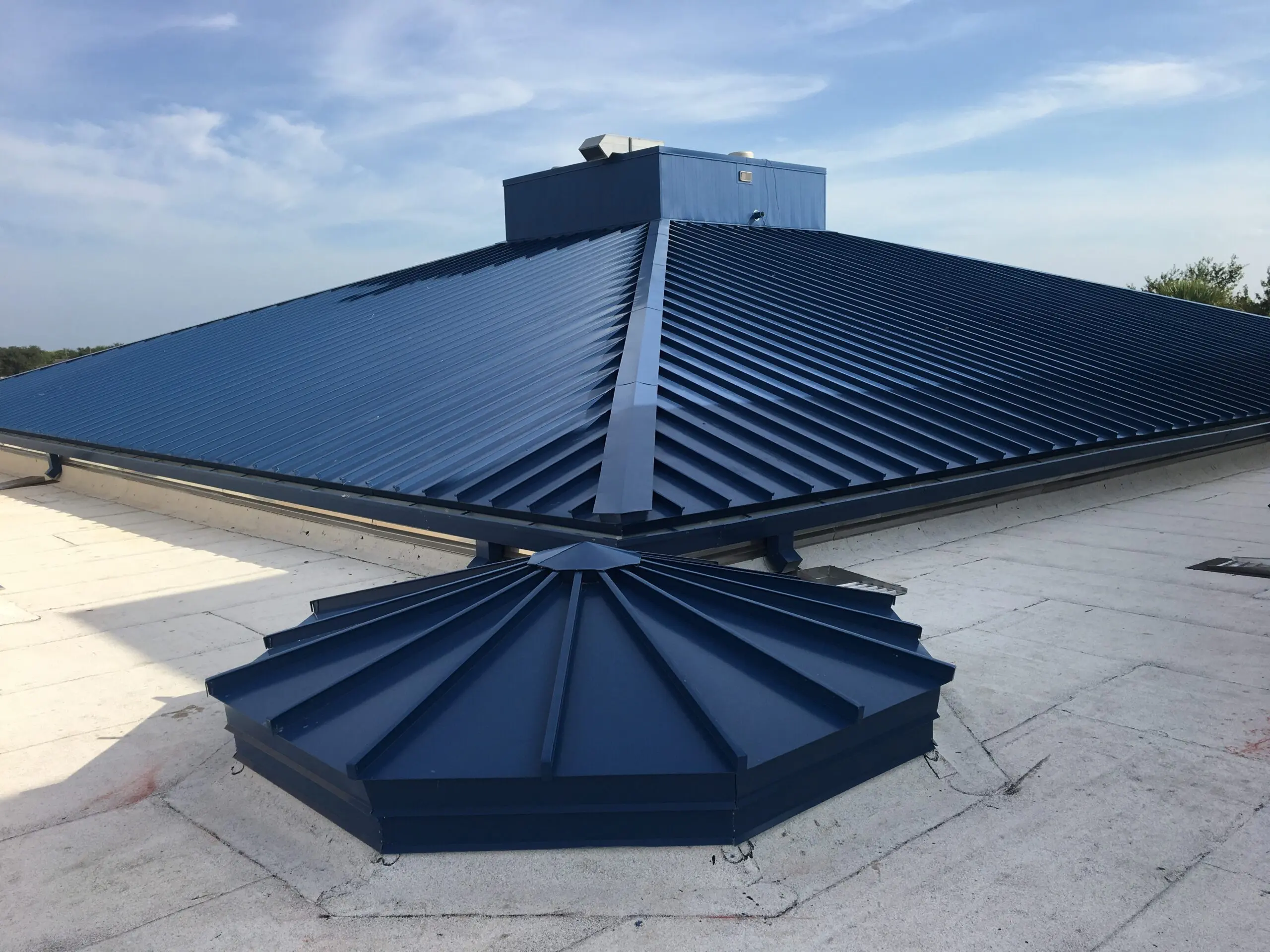
Standing Seam Metal Roof Systems.
Standing Seam Metal Roof Systems support in New Orleans, LA, with documented inspections, written scopes, and practical roof planning for commercial properties.
What this roof work solves
Standing Seam Metal Roof Systems in New Orleans should begin with a documented roof walk. The first job is to identify active water entry, drainage problems, membrane condition, edge details, rooftop equipment conflicts, and weather exposure before a price or schedule is discussed.
For commercial owners, the useful answer is rarely a one-line recommendation. The roof file should explain the work area, the reason for the scope, the access constraints, and the next maintenance decision.
How the scope is built
The scope is based on system selection, building use, roof age, visible defects, and the cost difference between immediate repair and longer-range planning. When repair is enough, the work stays focused. When replacement or recover planning is the responsible move, the reasoning is written plainly.
Each finished project should leave behind before-and-after photos, service notes, and follow-up items so the owner keeps a record for future inspections, budgeting, and vendor conversations.
Standing seam metal is the system specification for New Orleans buildings where the roof is part of the architectural character and the owner's planning horizon extends beyond a single membrane warranty cycle. The system has specific advantages in the Gulf Coast climate, and specific installation and design requirements that differ from drier markets.
Standing seam metal roofing is a smaller portion of New Orleans commercial work than single-ply membrane, but it is a relevant and growing specification on specific building types: religious facilities across the metro, schools and institutional buildings in Jefferson and Orleans parishes, Garden District and Uptown commercial buildings where the visible roof is part of the architectural character, and historically significant structures where the roof system needs to last 40 to 50 years without a full replacement cycle.
The Gulf Coast climate creates specific considerations for standing seam metal that are different from drier markets. New Orleans's annual rainfall, over 60 inches per year, puts more cumulative water volume on a metal roof system than comparable buildings in most of the country. Panel seam tightness, ridge cap and valley detail geometry, and drain integration are critical performance variables in this climate. The extreme summer heat, rooftop surface temperatures on dark metal can exceed 160°F from June through August, produces thermal movement demands that require properly engineered clip systems with generous float.
Hurricane wind loading is the design variable that most distinguishes standing seam specification in New Orleans from anywhere else. Standing seam systems in the hurricane-prone region must be engineered against ASCE 7 hurricane-prone-region wind-uplift requirements. Panel attachment clip density, edge metal specification, and parapet-to-panel transition details must be designed for the building's specific exposure and risk category. We do not apply generic clip-spacing tables: we engineer the attachment for the building.
Hurricane Wind-Uplift Engineering for New Orleans Metal Roofs
Metal panel systems fail in hurricanes at the same locations as membrane systems: perimeter and corner zones where the pressure coefficient distribution creates peak uplift demands, and parapet-to-roof transitions where the flashing is the weakest point in the assembly. Post-storm damage surveys after Ida documented standing seam systems on New Orleans-area commercial and institutional buildings where the field panel held but the edge metal and perimeter clip zones separated, because the clip spacing was not designed for the building's actual Exposure C or D classification.
We specify FM 4474 and ANSI/SPRI ES-1 edge metal on every standing seam project in the New Orleans metro, with clip spacing and seam height selected against the calculated corner pressure coefficients for the building. For Risk Category III and IV buildings, schools, churches with large assembly occupancy, medical facilities, we use conservative design factors that provide margin above the code minimum, because the consequences of envelope failure in hurricane conditions extend beyond the roof replacement cost.
Galvalume and Kynar-Painted Panels in the Gulf Coast Climate
Galvalume (aluminum-zinc alloy coated steel) is the corrosion-resistance baseline for standing seam metal in the New Orleans climate. The Gulf Coast marine-air environment, salt-laden humidity from the Gulf of Mexico and Lake Pontchartrain, driven by prevailing southern winds, is more corrosively aggressive than inland markets. Bare Galvalume performs well in this environment when properly installed and maintained, but buildings within a mile of the lake or the Gulf's open water are candidates for a Kynar-painted system with an additional corrosion-resistant coating layer.
Kynar 500 (PVDF) fluoropolymer-painted systems add color, a 40-year finish warranty from most manufacturers, and a second barrier against the salt-air corrosion that accelerates on Galvalume in the most exposed locations. For Garden District and Uptown buildings where the roof color is a design decision visible from the street, Kynar-painted panels are the standard specification. For institutional and school buildings where lifecycle cost is the primary driver, bare Galvalume is often the right balance of performance and budget.
Standing Seam for New Orleans Religious Facilities
Religious facilities across the New Orleans metro, Catholic parishes in the French Quarter and Uptown, Protestant congregations across Jefferson Parish, and the diverse faith communities in Mid-City and Gentilly, represent the largest single category of standing seam metal work we do in this market. The combination of long building-use horizons, architectural meaning, and congregation involvement in the decision process makes metal the natural specification for facilities that expect to be in continuous use for 50 years or more.
New Orleans's post-Katrina faith-community rebuilding effort produced a wave of church construction and renovation across Mid-City, Gentilly, and the lakefront corridor from 2007 through 2016. Some of those buildings specified standing seam metal and are performing well. Others specified membrane systems that are now approaching first replacement cycles. We have worked with congregations through both situations: initial installation and first-cycle replacement, and we understand the committee-based decision process that governs most faith-community capital projects.
Does standing seam metal hold up in New Orleans hurricanes?
Questions to settle early
Where is the risk?
Locate leaks, wet-insulation indicators, open seams, weak flashing, and drainage restrictions across the roof.
What can wait?
Separate immediate work from maintenance items that can be tracked for the next service window.
What should be funded?
Build a practical recommendation for repair, coating, recover, or replacement planning.
Need help with standing seam metal roof systems?
Send the building address, known roof age, access notes, and what changed. We will respond with the right next step.