
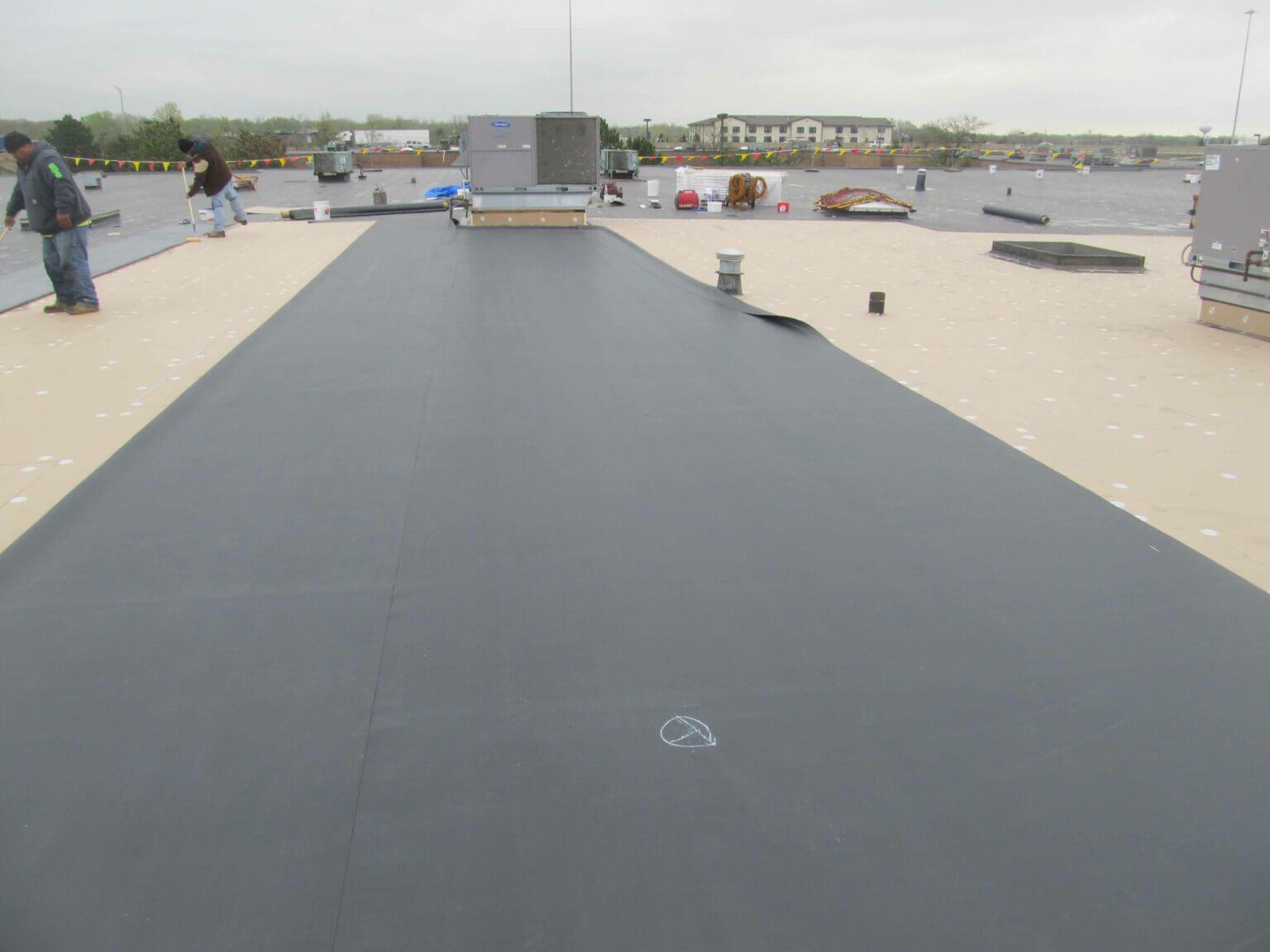
EPDM Roof Systems.
EPDM Roof Systems support in New Orleans, LA, with documented inspections, written scopes, and practical roof planning for commercial properties.
What this roof work solves
EPDM Roof Systems in New Orleans should begin with a documented roof walk. The first job is to identify active water entry, drainage problems, membrane condition, edge details, rooftop equipment conflicts, and weather exposure before a price or schedule is discussed.
For commercial owners, the useful answer is rarely a one-line recommendation. The roof file should explain the work area, the reason for the scope, the access constraints, and the next maintenance decision.
How the scope is built
The scope is based on system selection, building use, roof age, visible defects, and the cost difference between immediate repair and longer-range planning. When repair is enough, the work stays focused. When replacement or recover planning is the responsible move, the reasoning is written plainly.
Each finished project should leave behind before-and-after photos, service notes, and follow-up items so the owner keeps a record for future inspections, budgeting, and vendor conversations.
EPDM has the longest proven track record of any commercial single-ply membrane, and its elongation properties and chemical durability make it a legitimate specification for New Orleans industrial and legacy commercial buildings. The critical design variable in this market is attachment: EPDM's wind-uplift specification must be engineered for the hurricane-prone region, not pulled from a standard table.
EPDM (ethylene propylene diene monomer) rubber membrane has been installed on commercial buildings in the New Orleans area since the early 1980s. The industrial buildings along the River Road corridor, the warehouse stock in Jefferson Parish along the Earhart Expressway, and older commercial buildings throughout Orleans and St. Tammany parishes carry a generation of EPDM roofing that is now at various stages of its end-of-life cycle.
The post-Katrina and post-Ida damage records in the New Orleans market documented a pattern specific to EPDM in hurricane conditions: loosely attached and mechanically attached systems that were not designed for the building's actual ASCE 7 hurricane-prone-region exposure failed at the perimeter and corner zones before center-field membrane was affected; the same failure mode documented on TPO systems in the same events. EPDM's elongation and tear resistance are genuine material strengths, but they are not a substitute for the wind-uplift attachment design required for Louisiana commercial buildings.
New EPDM installations we specify in the New Orleans market are fully adhered on most Risk Category III and IV buildings, and mechanically attached with a documented ASCE 7 wind-uplift calculation on qualifying Risk Category II commercial and industrial buildings. We do not install ballasted EPDM on new or reroof work in the hurricane-prone region: that system is addressed separately in its own section.
EPDM's Fit for New Orleans Industrial and Legacy Buildings
EPDM's primary advantage over TPO in New Orleans industrial applications is chemical resistance. Buildings along the Mississippi River industrial corridor, petroleum-related operations, chemical processing facilities, and marine-supply warehouses in Algiers and the West Bank industrial zone, expose rooftop membranes to chemical fallout and petroleum-based compounds that degrade TPO and PVC over time. EPDM's rubber chemistry handles most petroleum-based and non-chlorinated solvent exposures that would attack a standard TPO membrane.
For New Orleans legacy commercial buildings, pre-Katrina construction that survived 2005 and 2021 intact and is entering its first planned reroof cycle since the original installation, EPDM's elongation properties are relevant in a specific way. Buildings that experienced minor structural movement during Katrina's storm surge or Ida's sustained winds may have deck and parapet conditions where a higher-elongation membrane accommodates substrate irregularities better than a stiffer single-ply. We assess each building's structural condition before specifying membrane type.
Fully Adhered EPDM for Hurricane Wind-Uplift in New Orleans
Fully adhered EPDM, bonded to the cover board or insulation substrate with contact adhesive or water-based bonding adhesive, distributes uplift load across the full membrane contact area rather than concentrating it at fastener points. For New Orleans buildings in the hurricane-prone region, this is the attachment method we specify on Risk Category III and IV structures: hospitals, schools, emergency operations facilities, and government buildings whose occupancy classification requires the hardened wind-uplift design.
The application challenge in New Orleans is the humidity window. Fully adhered EPDM requires adhesive application in conditions where the substrate is dry and the ambient dew point is low enough that the adhesive sets before moisture contamination degrades the bond. In July and August, with dew points frequently above 75°F, we schedule full-adhesive work in early-morning windows and monitor dew point continuously, not just air temperature. An adhered EPDM installation where the adhesive was applied in marginal dew-point conditions looks identical to a properly bonded installation until the first major uplift event.
End-of-Life EPDM Assessment in the New Orleans Metro
Pre-Katrina EPDM systems across the New Orleans metro that survived the 2005 storm, either because they were on buildings that were not in the inundation zone or because the storm track spared their location, are now 20 to 40 years old. We inspect these systems with the same core-pull and seam-probe approach we use on any aging membrane, but with additional attention to the flashings and parapet conditions that were most commonly affected by Katrina and Ida wind pressure, even on buildings that did not flood.
The most common findings on aging New Orleans EPDM are parapet flashing separation at the termination bar, seam delamination in areas where the original lap adhesive or seam tape has lost its bond after years of thermal cycling in Gulf Coast heat, and insulation saturation in the drain-pan areas where chronic ponding water has compromised the polyiso below the membrane. Buildings with wet insulation in more than 25% of cores are replacement candidates: recovering over saturated polyiso in 70% summer humidity traps moisture, accelerates deck corrosion, and voids the new manufacturer warranty from the first inspection.
Is EPDM appropriate for a New Orleans building in a hurricane zone?
Questions to settle early
Where is the risk?
Locate leaks, wet-insulation indicators, open seams, weak flashing, and drainage restrictions across the roof.
What can wait?
Separate immediate work from maintenance items that can be tracked for the next service window.
What should be funded?
Build a practical recommendation for repair, coating, recover, or replacement planning.
Need help with EPDM roof systems?
Send the building address, known roof age, access notes, and what changed. We will respond with the right next step.