
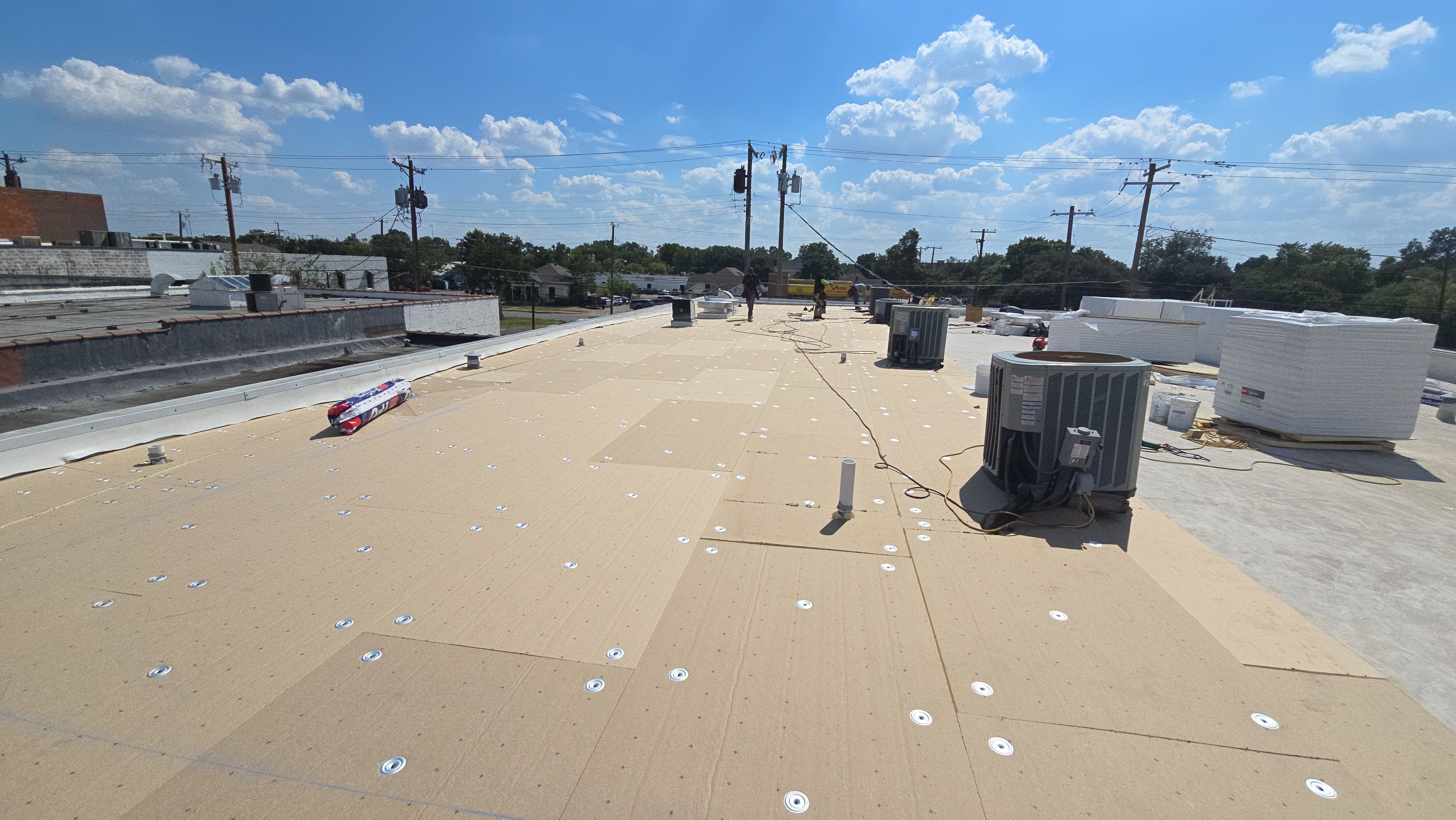
New Construction Roofing.
New Construction Roofing support in New Orleans, LA, with documented inspections, written scopes, and practical roof planning for commercial properties.
What this roof work solves
New Construction Roofing in New Orleans should begin with the architect's roof assembly drawings and the building's rooftop equipment plan. The first job is to confirm the specified system, deck type, and attachment method match the building's actual exposure category and roof geometry before materials are ordered.
For commercial owners, the useful answer is rarely a one-line recommendation. The roof file should explain the work area, the reason for the scope, the access constraints, and the next maintenance decision.
How the scope is built
The scope is based on service scope, building use, roof age, visible defects, and the cost difference between immediate repair and longer-range planning. When repair is enough, the work stays focused. When replacement or recover planning is the responsible move, the reasoning is written plainly.
Each finished project should leave behind before-and-after photos, service notes, and follow-up items so the owner keeps a record for future inspections, budgeting, and vendor conversations.
New construction roofing puts the roof into the building's overall design and schedule instead of treating it as a standalone trade called in after the fact. Coordination with the architect, the general contractor, and the roofing manufacturer during design development determines whether the finished roof performs the way the drawings intended.
On a new building we work from the architect's roof assembly drawings and the manufacturer's published wind-uplift and fire-rating data for the specified system, then confirm the deck type, insulation stack, and attachment method match the building's actual exposure category and roof geometry before materials are ordered. A system that is correct on paper can still fail an inspection if the rooftop equipment layout changes after the roof plan is locked.
Coordination During the Construction Schedule
New construction roofing in New Orleans runs on the general contractor's schedule, not a standalone service call. Blocking, curbs, and roof penetrations for rooftop equipment need to be set before the deck is dried in. Any change to the mechanical or electrical rooftop layout after the roof plan is finalized should go through the roofing contractor before the general contractor proceeds, so the penetration and flashing detail is correct the first time rather than corrected as a change order.
Hurricane season runs June through November in New Orleans, so a new construction roof schedule accounts for weather delay days rather than assuming an uninterrupted install window. Sections are dried in the same day they are opened, the same discipline used on replacement projects, so a partially completed new roof is never left exposed overnight during an active weather pattern.
Manufacturer Warranty Registration for New Buildings
A new roof only carries its full manufacturer warranty term if the installation is documented and registered correctly at closeout. We photograph the deck, insulation, and membrane at each stage of a new construction install, keep the manufacturer's field inspection on the schedule before the roof is covered by other trades, and deliver the registered warranty certificate and closeout package to the building owner, not only the general contractor, so the documentation survives past substantial completion.
Wind-Uplift and Code Compliance from Day One
New Orleans sits in ASCE 7 hurricane-prone region territory, so a new roof's fastening pattern, attachment method, and parapet details are specified against the building's actual wind-uplift design category rather than a generic manufacturer minimum. We confirm the wind-uplift design with the building's structural engineer of record before the roof system is ordered, so the roofing scope and the permit drawings match.
Working with the design team early avoids the two most common new construction roofing problems: a roof system specified before the rooftop equipment layout is finalized, and a roof installed correctly to the drawings but never registered for its full warranty term because closeout documentation was rushed at the end of the project.
Project Sequencing in the New Orleans Market
Pre-construction: Permits filed with the City of New Orleans Department of Safety and Permits, or the Jefferson Parish Inspection and Code Enforcement office for Metairie and Kenner projects. Pre-job meeting with the general contractor to confirm blocking, curb, and penetration locations before the deck is set, and to align the roofing schedule with the building's overall construction sequence. French Quarter and Warehouse District projects require coordination with the Vieux Carre Commission or the Downtown Development District for crane placement and street use permits.
Questions to settle early
Where is the risk?
Locate leaks, wet-insulation indicators, open seams, weak flashing, and drainage restrictions across the roof.
What can wait?
Separate immediate work from maintenance items that can be tracked for the next service window.
What should be funded?
Build a practical recommendation for repair, coating, recover, or replacement planning.
Need help with new construction roofing?
Send the building address, project timeline, and the rooftop equipment plan. We will respond with the right next step.