
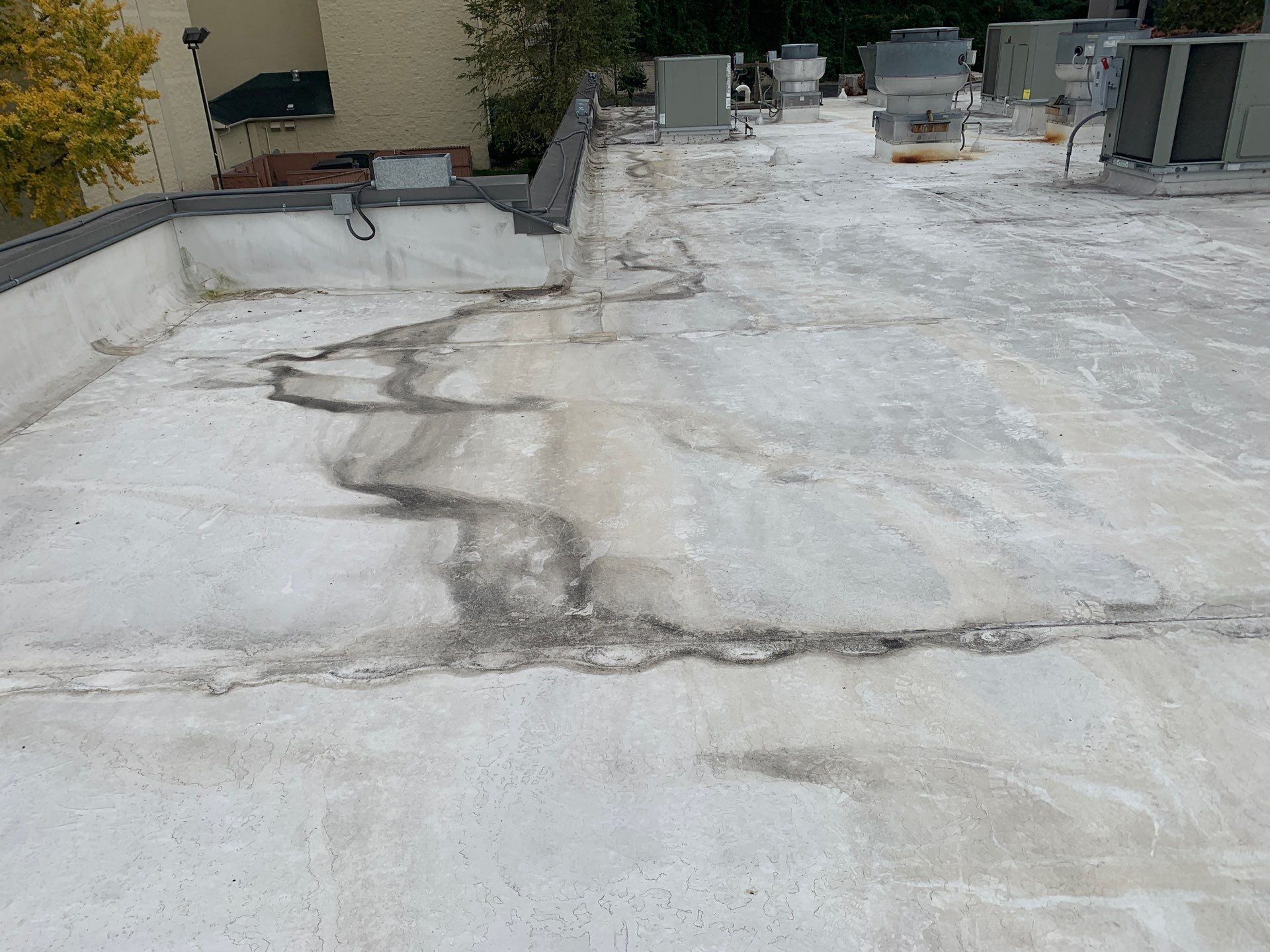
Hurricane Damage Roof Insurance Claims in New Orleans.
Hurricane Damage Roof Insurance Claims support in New Orleans, LA — documented roof inspections and complete-scope reporting for commercial buildings after a Gulf hurricane.
What this roof work solves
Hurricane Damage Roof Insurance Claims in New Orleans should begin with a documented roof walk as soon as it is safe to get on the roof. The first job is to identify wind-uplift zones, wind-driven water entry, and rooftop equipment damage, and to separate storm-caused failures from pre-existing wear before a claim is filed.
For commercial owners, the useful answer is rarely a one-line recommendation. The roof file should explain the work area, the reason for the scope, the access constraints, and the next maintenance decision.
How the scope is built
The scope is built from roof age, membrane type, the specific storm's track and intensity, and a zone-by-zone damage survey. When repair covers the damage, the scope stays repair-focused. When the damage points toward full replacement, that reasoning is written into the file plainly, with the evidence attached.
Each finished project should leave behind before-and-after photos, service notes, and follow-up items so the owner keeps a record for future inspections, budgeting, and vendor conversations.
Named-storm deductibles change the claim math
Louisiana commercial property policies typically carry a separate, percentage-based deductible that applies once a named storm triggers it — often once a hurricane watch or warning is declared for the parish, rather than only after landfall. That deductible is usually calculated against the building’s insured value, not a flat dollar figure, which means it can be substantially larger than a standard wind or all-perils deductible. Knowing which deductible applies, and confirming with your carrier or agent when it was triggered, is the first question on any Gulf hurricane claim — and it is a policy question, not a roofing question, so we point owners to their agent or public adjuster to confirm the exact terms.
What a hurricane does to New Orleans roof stock
The French Quarter and CBD carry a mix of aged built-up and modified-bitumen roofs over historic masonry buildings, where parapet flashing, cornice details, and roof-to-wall transitions are frequently the first failure points in sustained hurricane-force wind — long before the field membrane itself gives way. Out toward New Orleans East and the industrial corridor along the river, warehouse and distribution roofs run large single-ply or metal panel systems where wind uplift at the perimeter and corners, not the field, is where hurricane damage concentrates. We document both differently: masonry-building claims center on flashing, coping, and water intrusion into the wall assembly below the roofline; large low-slope warehouse claims center on membrane uplift zones, panel seam separation, and rooftop equipment displacement.
Wind-driven rain and the high water table
New Orleans sits below sea level over much of its footprint, with a high water table and a drainage system that leans on pumps rather than gravity. A hurricane that stalls or slows over the Gulf brings wind-driven rain that finds every unsealed penetration and marginal flashing detail on a commercial roof, and once water is inside a building already dealing with street-level drainage strain, the building’s own pumps and drains are not helping the roof. We document interior water paths as carefully as the roof-level entry point, because adjusters need to see how far the intrusion traveled, not only where it started.
Access and inspection timing after a Gulf landfall
Evacuation orders, road closures, and power outages routinely delay the first roof walk by days after a hurricane makes landfall on the Louisiana coast. We stage inspection crews to move as soon as parish access reopens, and where immediate access is not possible we work from owner-supplied photos and remote condition reports to start the documentation file early, then complete the full survey once the roof is reachable. The gap between storm passage and first inspection is itself worth documenting — it explains any secondary damage the adjuster observes that was not part of the original wind event.
We’re your roofing contractor, not a public adjuster — we document and substantiate the roof damage so you and your adjuster work from an accurate scope. Your public adjuster or attorney is the right party to negotiate the claim itself.
Does my policy have a separate hurricane deductible?
Most Louisiana commercial policies do, and it is usually a percentage of insured value rather than a flat amount. Confirm the exact trigger and percentage with your agent or adjuster — that is policy language, and we stay in our lane as the roofing contractor documenting the physical damage.
How fast can you inspect after a hurricane hits New Orleans?
As soon as road access and safety conditions allow. We prioritize commercial buildings with active water intrusion and stage crews ahead of expected landfall when the storm track allows for it.
Can you tell the difference between hurricane damage and pre-existing roof wear?
That distinction is the core of what we document — pre-storm photos when available, visible weathering patterns, and the physical signature of wind uplift versus long-term membrane fatigue, so the scope reflects what the storm actually caused.
Do you work on occupied buildings during hurricane season repairs?
Yes. Most of our hurricane-related work happens on buildings that stay open — offices, retail, and industrial space that cannot close for weeks while a claim resolves. We sequence repair work around building operations.
What if the adjuster’s damage estimate is lower than what we’re seeing on the roof?
We re-inspect and add the specific documentation — additional zones, closer photos, moisture readings — that supports a more complete scope, and hand that to your public adjuster or attorney for the reconsideration request.
Questions to settle early
Where is the risk?
Locate leaks, wet-insulation indicators, open seams, weak flashing, and drainage restrictions across the roof.
What can wait?
Separate immediate work from maintenance items that can be tracked for the next service window.
What should be funded?
Build a practical recommendation for repair, coating, recover, or replacement planning.
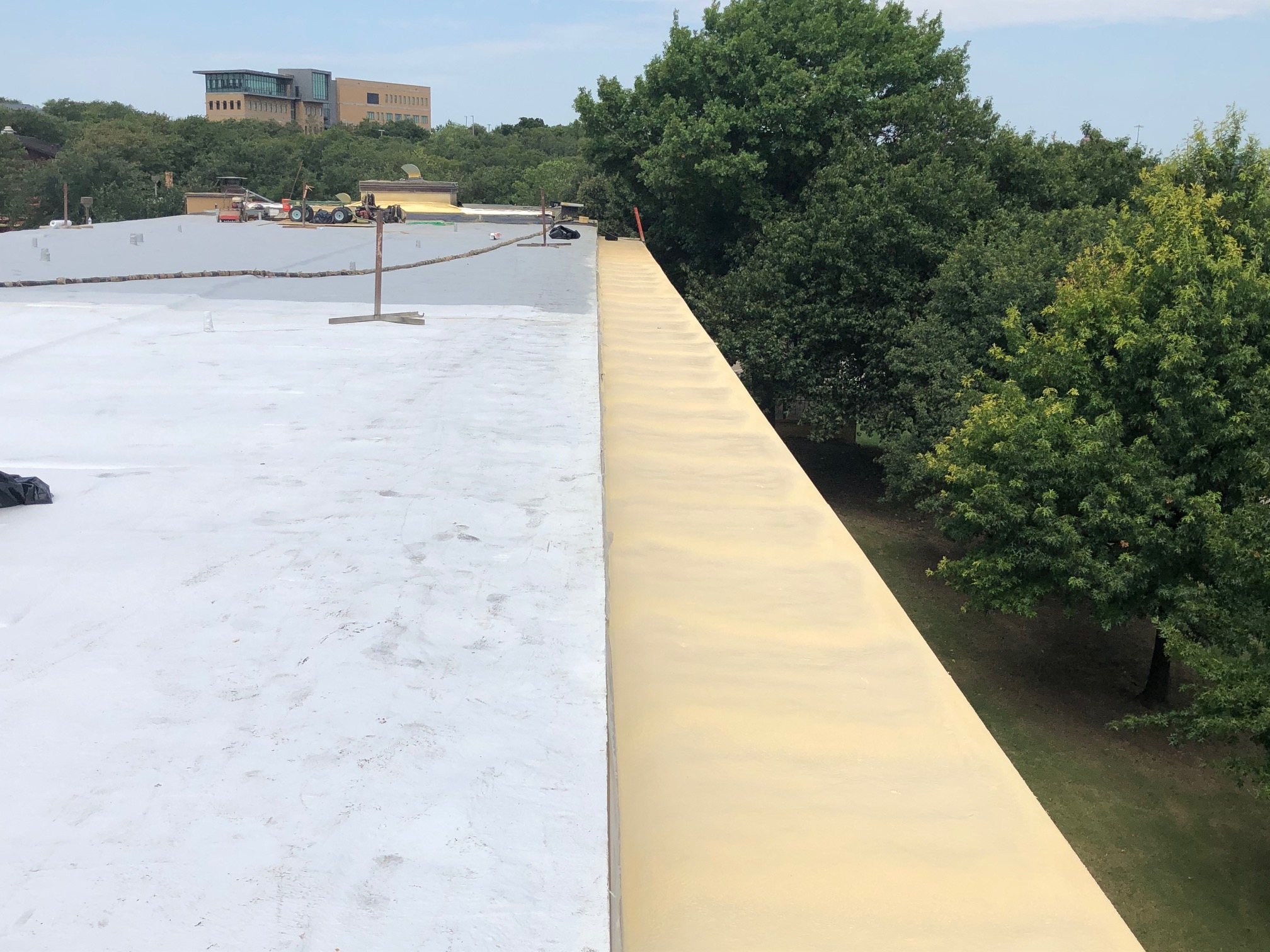
Need help with a hurricane damage roof insurance claim?
Send the building address, known roof age, access notes, and what changed. We will respond with the right next step.