
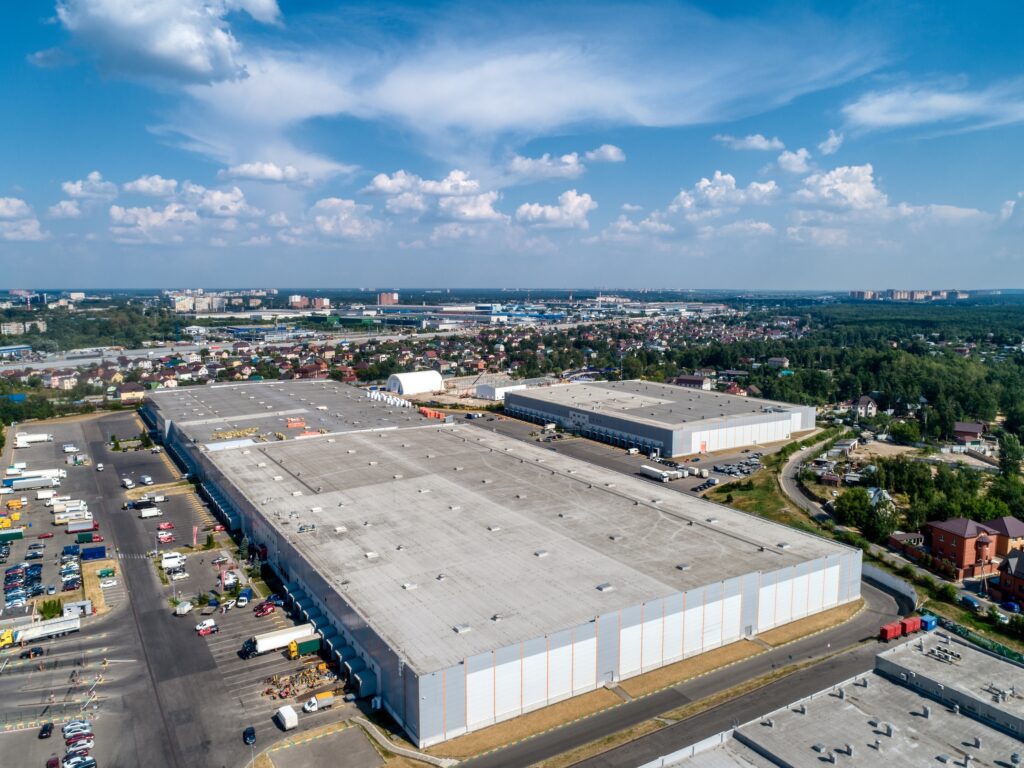
Warehouse and Distribution Center Roofing.
Warehouse and Distribution Center Roofing support in New Orleans, LA, with documented inspections, written scopes, and practical roof planning for commercial properties.
What this roof work solves
Warehouse and Distribution Center Roofing in New Orleans should begin with a documented roof walk. The first job is to identify active water entry, drainage problems, membrane condition, edge details, rooftop equipment conflicts, and weather exposure before a price or schedule is discussed.
For commercial owners, the useful answer is rarely a one-line recommendation. The roof file should explain the work area, the reason for the scope, the access constraints, and the next maintenance decision.
How the scope is built
The scope is based on service scope, building use, roof age, visible defects, and the cost difference between immediate repair and longer-range planning. When repair is enough, the work stays focused. When replacement or recover planning is the responsible move, the reasoning is written plainly.
Each finished project should leave behind before-and-after photos, service notes, and follow-up items so the owner keeps a record for future inspections, budgeting, and vendor conversations.
Commercial roofing for warehouses, distribution centers, and industrial facilities throughout New Orleans, LA. TPO, EPDM, and metal roof systems.
The Amazon robotics fulfillment center in Metairie, serving the greater New Orleans metro, and the massive LCPA/Lineage Logistics cold-storage complex at the Port of New Orleans represent the extremes of warehouse roofing demand in southeast Louisiana. No commercial roofing market in the United States is more ruthlessly tested by weather than the New Orleans basin, where warehouses must survive hurricane-force winds exceeding 140 miles per hour, subtropical rainfall intensities that can reach ten inches in a single afternoon, the corrosive salt-air atmosphere of a tidal estuary, and daytime roof surface temperatures that exceed 180 degrees Fahrenheit in July and August.
Drainage design for New Orleans-area warehouses is an engineering discipline unto itself. The city's below-sea-level topography means that roof drainage cannot rely on gravity flow to a natural outfall: it depends on the New Orleans Sewerage and Water Board's pumping system, which, as Katrina demonstrated, can fail during the weather events that generate the most drainage demand. Every large warehouse roof in Orleans and Jefferson parishes should be designed with primary drains sized for a ten-year event, overflow scuppers cut through the parapet sized for the 100-year event, and a minimum two inches of positive slope from the furthest point on the roof to the nearest drain. Ponded water on a New Orleans warehouse roof is not merely a nuisance: it is a structural hazard because the decks in many older buildings were not designed for the combined load of full ponding and hurricane-force wind.
TPO with heat-welded seams and FM Global-approved wind-uplift assemblies is the correct specification for large New Orleans-area warehouses. The FM RoofNav database should be consulted for assemblies rated to the wind speed applicable to the specific building's coastal location: warehouses in Orleans Parish typically require assemblies rated for 150 mph or higher under the Louisiana State Uniform Construction Code's coastal wind zone requirements. EPDM can be used in this climate but must be specified in a mechanically fastened system, because fully adhered EPDM in the heat and UV of a New Orleans summer has a shorter effective service life than TPO. Ballasted systems are not permitted in hurricane wind zones.
Dock penetrations at New Orleans-area warehouses face the combined challenges of the humid subtropical environment and the salt-air microclimate near the river and the lake. Every metal component in a dock flashing assembly, reglet receivers, canopy anchor plates, compression rings, counter-flashing clips, should be specified in stainless steel or marine-grade aluminum rather than galvanized steel. The average service life of galvanized steel in the direct salt-air zone of the Port of New Orleans is five to seven years before rust-through compromises the flashing integrity. All sealant joints must use a silicone or polyurethane caulk rated for continuous ultraviolet exposure and immersion, applied over a clean, dry surface treated with the manufacturer's bonding primer.
Forklift exhaust management at New Orleans warehouses is complicated by the heat and humidity, which accelerate the biological growth that clogs exhaust fan screens. Mold and algae colonize the stack openings within a single season, reducing airflow and forcing exhaust gases to back-pressure into the warehouse. All rooftop exhaust fan housings should be specified with hinged aluminum louvers rather than fixed screens, and the membrane boot at each exhaust fan curb should be a pre-formed TPO or EPDM boot with a stainless compression ring. Anti-microbial coatings on the rooftop HVAC curbs and equipment pads significantly reduce mold colonization in the New Orleans climate and should be included in the specification for any new warehouse roofing project.
Hurricane wind design is the defining engineering requirement for every New Orleans-area warehouse roof. ASCE 7's 150-mph basic wind speed for Orleans Parish drives fastener densities, attachment point calculations, and parapet height requirements that are substantially more demanding than in any other major logistics market in the United States. Perimeter edge zones on a large warehouse require fastener spacings that can be as close as six inches on center, and corner zones are even tighter. Every re-roofing project should be designed by a Louisiana Professional Engineer of record, and the completed fastening layout should be photographed and documented before cover board or insulation is installed over it. Post-storm insurance claims in New Orleans are frequently denied when the property owner cannot document that the roof was installed to the required assembly.
Energy efficiency considerations for New Orleans warehouses are dominated by cooling load reduction. The long, intensely hot cooling season means that a white TPO membrane at SRI 80 or higher reduces roof surface temperatures by thirty to fifty degrees Fahrenheit compared to a dark membrane, and that reduction translates directly into cooling energy savings for a warehouse running refrigeration loads. Louisiana's commercial energy code requires R-20 minimum above-deck insulation for most warehouse occupancies. Entergy Louisiana offers commercial efficiency rebates for projects that exceed the code minimum, and pairing R-25 or R-30 insulation with a high-SRI membrane typically qualifies for the highest rebate tier.
Scheduling a large warehouse re-roof in the New Orleans area requires avoiding the Atlantic hurricane season, which officially runs June 1 through November 30. The practical construction window is December through May, with January through April being the most reliable months. Late spring projects carry risk from the severe thunderstorm outbreaks that affect southeast Louisiana in April and May. Tear-off sections must be sized so that no exposed deck exceeds what can be covered in a three-hour window, given the unpredictable afternoon convective storm pattern that develops over the Gulf of Mexico and moves onshore with little warning in the spring months.
Choosing a roofing contractor for a New Orleans-area warehouse requires verifying their FM Global approval status, their familiarity with Louisiana's coastal construction licensing requirements, and their post-storm emergency response capability. The Louisiana Contractors Licensing Board requires a separate commercial roofing license, and contractors who operate without this license forfeit the property owner's right to pursue licensing board remedies if the work fails. Request the contractor's FM Global Certificate of Competency and confirm that the proposed assembly carries an FM-approved windstorm rating before signing any contract.
Can you repair a leaking BUR roof on a New Orleans building without full replacement?
Sometimes. If the leak source is an isolated failed flashing at a penetration or parapet, and core cuts show the BUR field plies are otherwise dry and intact: targeted repair is the appropriate scope. If the leak is coming from degraded plies in the roof field, patching the visible wet spot without addressing the ply failure produces another leak nearby within a season or two. In a market where the next tropical rain event may arrive before the targeted repair has time to prove out, that distinction matters more than it does in other markets. We tell you which situation you are in before we propose a scope.
How do you manage gravel removal during BUR tear-off in a dense urban New Orleans location?
Gravel-surfaced BUR tear-off is labor-intensive and generates significant debris volume. On CBD, French Quarter, and Warehouse District buildings with constrained street access, we use rooftop vacuum systems that collect the gravel without staging loose aggregate at the curb. Street-use permits for dumpster placement in the French Quarter and the Downtown Development District require advance coordination with the City of New Orleans: we handle that permitting before mobilization.
Questions to settle early
Where is the risk?
Locate leaks, wet-insulation indicators, open seams, weak flashing, and drainage restrictions across the roof.
What can wait?
Separate immediate work from maintenance items that can be tracked for the next service window.
What should be funded?
Build a practical recommendation for repair, coating, recover, or replacement planning.
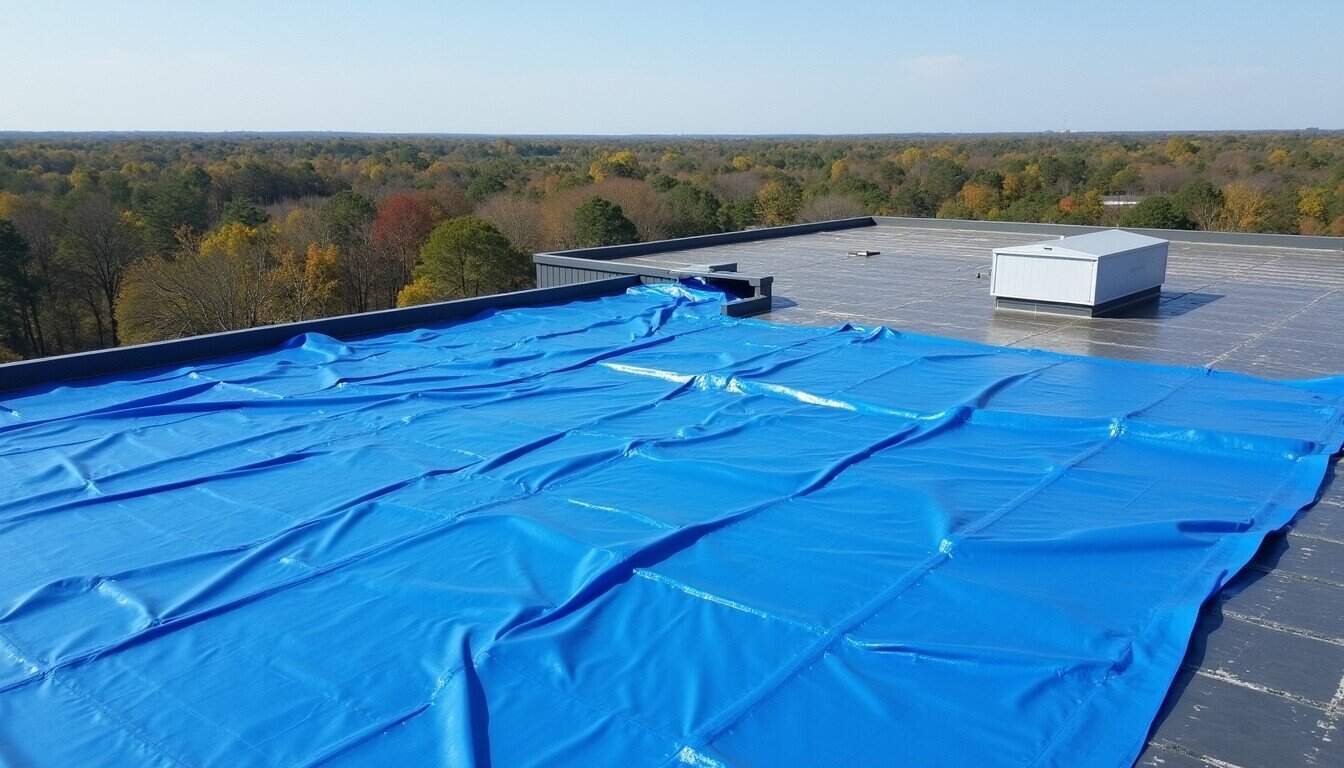
Need help with warehouse and distribution center roofing?
Send the building address, known roof age, access notes, and what changed. We will respond with the right next step.