
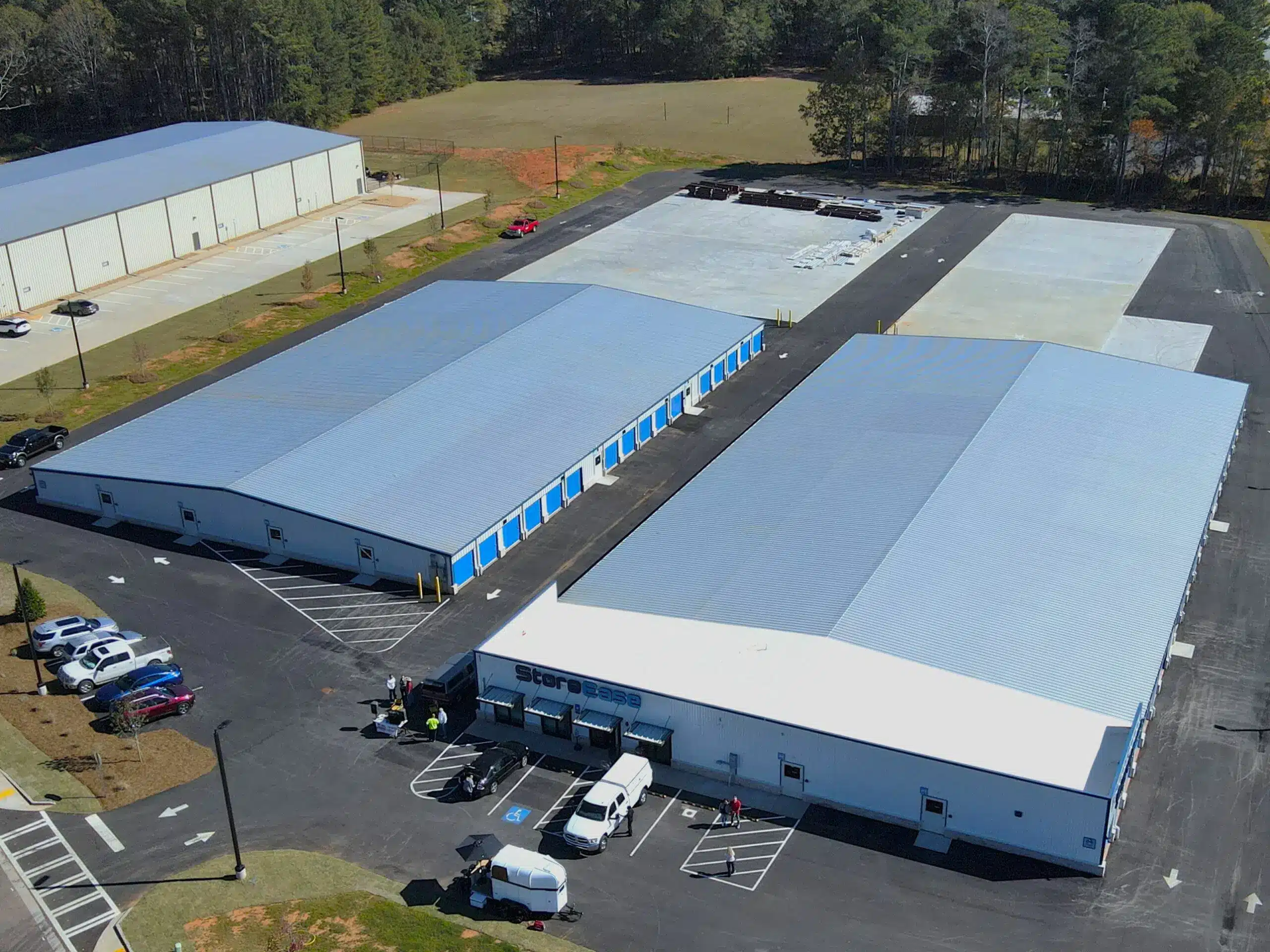
Self-Storage Facility Roofing.
Self-Storage Facility Roofing support in New Orleans, LA, with documented inspections, written scopes, and practical roof planning for commercial properties.
What this roof work solves
Self-Storage Facility Roofing in New Orleans should begin with a documented roof walk. The first job is to identify active water entry, drainage problems, membrane condition, edge details, rooftop equipment conflicts, and weather exposure before a price or schedule is discussed.
For commercial owners, the useful answer is rarely a one-line recommendation. The roof file should explain the work area, the reason for the scope, the access constraints, and the next maintenance decision.
How the scope is built
The scope is based on service scope, building use, roof age, visible defects, and the cost difference between immediate repair and longer-range planning. When repair is enough, the work stays focused. When replacement or recover planning is the responsible move, the reasoning is written plainly.
Each finished project should leave behind before-and-after photos, service notes, and follow-up items so the owner keeps a record for future inspections, budgeting, and vendor conversations.
Commercial roofing for self-storage facilities, mini-storage buildings, and climate-controlled storage properties throughout New Orleans, LA.
CubeSmart Self Storage on Earhart Boulevard in New Orleans, Louisiana operates facilities that must meet a risk profile found virtually nowhere else in the continental United States. The combination of hurricane wind loads, repetitive flood inundation risk, and extreme subtropical humidity creates a roofing challenge that is in a category of its own. Post-Katrina construction codes adopted in New Orleans are among the most stringent in the country for wind resistance, and any contractor who does not work from those standards as a baseline is not qualified to work on New Orleans storage facilities.
Elevated construction is one of the most important lessons applied to New Orleans commercial buildings after Katrina, and while roofs obviously cannot be elevated, the mechanical and electrical systems they support can be. When we re-roof a New Orleans storage facility, we evaluate whether any rooftop equipment, HVAC units, panel disconnects, condensate systems, can be moved to higher elevations or better-protected locations that reduce the vulnerability profile of the whole building. This is a value-added service specific to our New Orleans practice, and it has proven meaningful for operators whose buildings flooded during Hurricane Ida in 2021.
The design wind speed for New Orleans under ASCE 7 is 160 mph at the coastal exposure, and buildings within the urban core must be designed to resist the resulting uplift pressures at corners, perimeters, and field zones. Self-storage buildings, long, low, flat-roofed structures with large uninterrupted roof areas, are particularly vulnerable to progressive uplift failure, where a corner seam fails under peak gust pressure, releases the membrane, and the resulting flap peels back a large section of roof in seconds. Fully adhered assemblies with tested uplift ratings are the only acceptable system for New Orleans self-storage.
FEMA flood zone designations cover much of New Orleans, and self-storage operators in AE and VE zones must understand how roof condition interacts with flood insurance calculations. A building with a well-maintained roof and documented condition reports presents better loss history to flood insurers than one with deferred maintenance and prior water intrusion claims. We provide post-installation condition reports with photographs that storage operators can include in their flood insurance renewal packages.
Humidity management is a year-round concern in New Orleans. Even storage buildings that are not climate-controlled can develop condensation problems on roof decking when exterior humidity is high and interior temperatures are lower. This condensation contributes to corrosion of metal decking and fasteners, and it can saturate insulation without any corresponding roof leak. Vapor retarder placement in the insulation assembly is critical: it must be on the warm side of the insulation, which in New Orleans means the interior side, not the exterior side as it would be in a northern climate.
The roofing labor market in New Orleans is tight, and shortcuts taken by undercapitalized contractors are common in the post-storm rebuilding environment that has characterized the city since 2005. We see jobs that used incorrect adhesive for the climate, seams that were hot-welded without proper surface preparation, and flashings that were fabricated in the field from cut membrane pieces instead of proper prefabricated boots. These shortcuts fail within one to three storm seasons and leave owners with warranty claims denied for improper installation. We document every step of our New Orleans installations against manufacturer requirements.
Tenant protection in a New Orleans storage environment includes communicating storm preparedness information along with re-roofing notices. Our project communication packages for New Orleans storage clients include information about the hurricane preparedness protocols that will be in effect for the new roof, including the maintenance steps the facility should take before a named storm approaches. Tenants in a post-Katrina city pay attention to this information, and a facility that communicates it proactively earns loyalty that pricing alone cannot buy.
The drainage environment in New Orleans is unique because the city sits below sea level and relies entirely on the Sewerage and Water Board pump system for stormwater removal. A single-family neighborhood can tolerate a power outage during a storm; a drainage system that depends on electric pumps cannot. Self-storage buildings must have maximum positive drainage to remove water as fast as possible from the roof surface and into the system before pump failures produce standing conditions. We specify high-capacity drains and dual overflow paths on every New Orleans storage job.
The recovery and rebuilding that New Orleans has undertaken since Katrina has created a commercial real estate market that rewards resilience. Storage operators with buildings that are properly elevated, properly waterproofed, and properly documented for insurance purposes are capturing a premium in a market that has seen its share of storm-related property value write-downs. A well-executed commercial roof in New Orleans is not just a maintenance item: it is a statement about the long-term viability of the facility.
Can you repair a leaking BUR roof on a New Orleans building without full replacement?
Sometimes. If the leak source is an isolated failed flashing at a penetration or parapet, and core cuts show the BUR field plies are otherwise dry and intact: targeted repair is the appropriate scope. If the leak is coming from degraded plies in the roof field, patching the visible wet spot without addressing the ply failure produces another leak nearby within a season or two. In a market where the next tropical rain event may arrive before the targeted repair has time to prove out, that distinction matters more than it does in other markets. We tell you which situation you are in before we propose a scope.
How do you manage gravel removal during BUR tear-off in a dense urban New Orleans location?
Gravel-surfaced BUR tear-off is labor-intensive and generates significant debris volume. On CBD, French Quarter, and Warehouse District buildings with constrained street access, we use rooftop vacuum systems that collect the gravel without staging loose aggregate at the curb. Street-use permits for dumpster placement in the French Quarter and the Downtown Development District require advance coordination with the City of New Orleans: we handle that permitting before mobilization.
Questions to settle early
Where is the risk?
Locate leaks, wet-insulation indicators, open seams, weak flashing, and drainage restrictions across the roof.
What can wait?
Separate immediate work from maintenance items that can be tracked for the next service window.
What should be funded?
Build a practical recommendation for repair, coating, recover, or replacement planning.
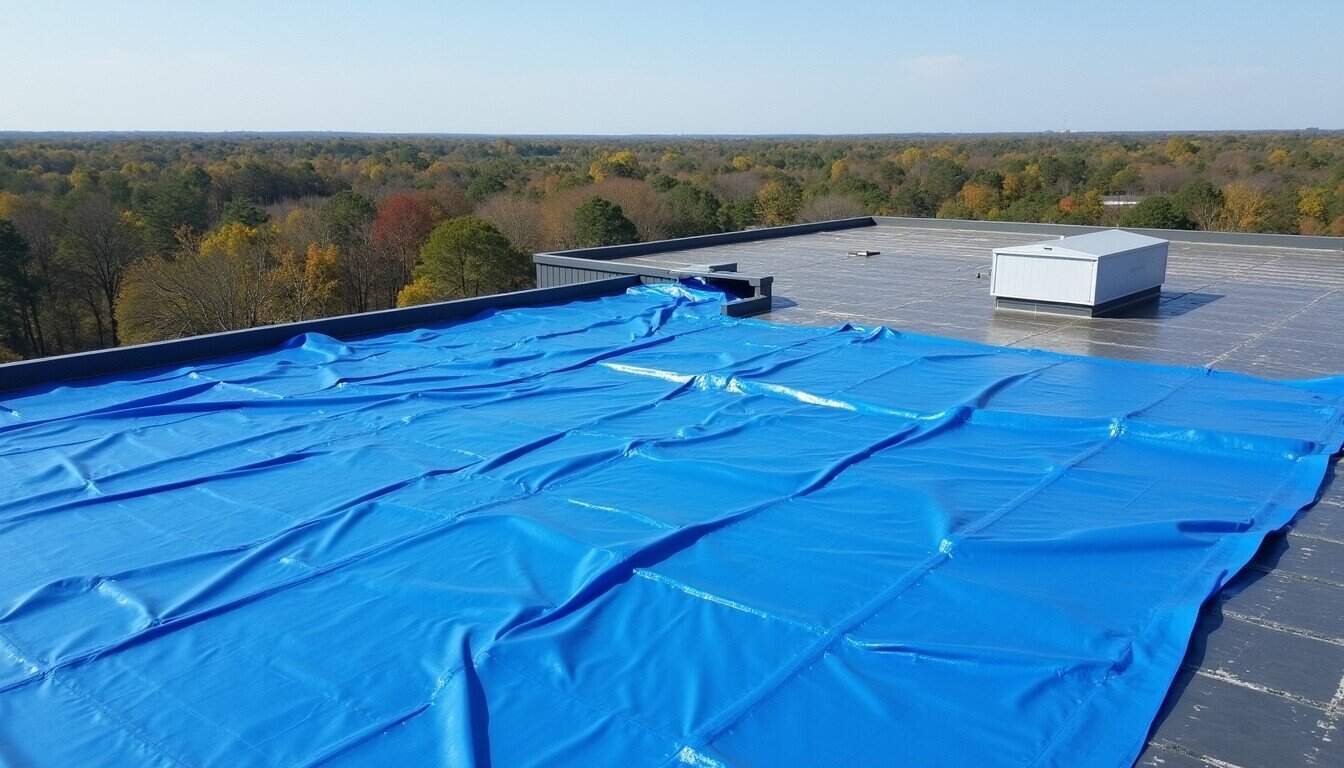
Need help with self-storage facility roofing?
Send the building address, known roof age, access notes, and what changed. We will respond with the right next step.