
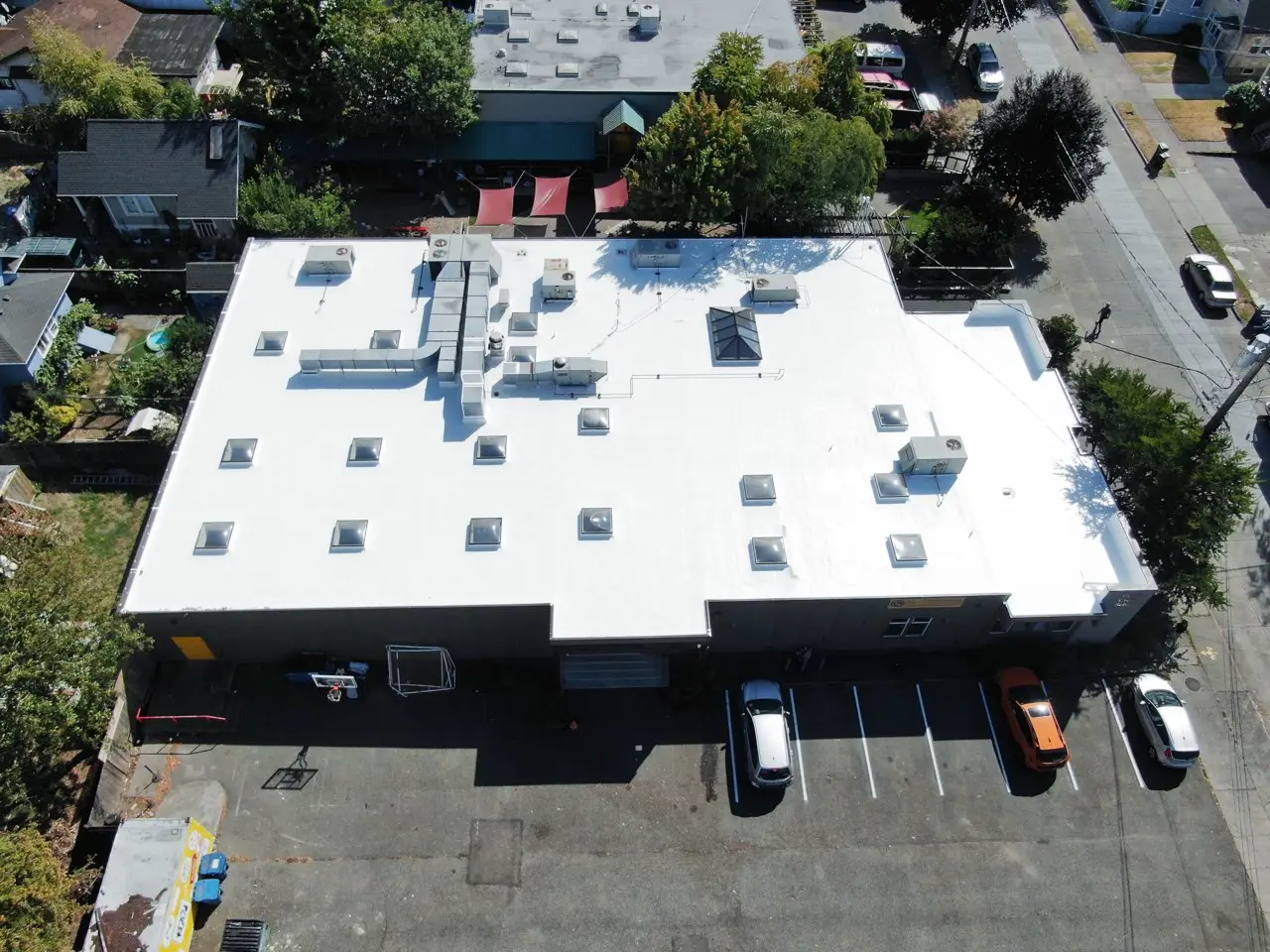
School and K-12 Educational Building Roofing.
School and K-12 Educational Building Roofing support in New Orleans, LA, with documented inspections, written scopes, and practical roof planning for commercial properties.
What this roof work solves
School and K-12 Educational Building Roofing in New Orleans should begin with a documented roof walk. The first job is to identify active water entry, drainage problems, membrane condition, edge details, rooftop equipment conflicts, and weather exposure before a price or schedule is discussed.
For commercial owners, the useful answer is rarely a one-line recommendation. The roof file should explain the work area, the reason for the scope, the access constraints, and the next maintenance decision.
How the scope is built
The scope is based on service scope, building use, roof age, visible defects, and the cost difference between immediate repair and longer-range planning. When repair is enough, the work stays focused. When replacement or recover planning is the responsible move, the reasoning is written plainly.
Each finished project should leave behind before-and-after photos, service notes, and follow-up items so the owner keeps a record for future inspections, budgeting, and vendor conversations.
Commercial roofing for public and private schools, K-12 campuses, and educational facilities throughout New Orleans, LA.
Orleans Parish School Board, which oversees the district-operated schools in New Orleans alongside the city's extensive charter school network, manages a facility portfolio that is unlike any other school district in the country: a building inventory shaped by the destruction and rebuilding of Hurricane Katrina, a subtropical climate that is among the most demanding roofing environments in the United States, and a city with active historic preservation requirements that apply to many of its oldest school buildings. Our commercial roofing team has specialized in K-12 institutional roofing throughout the greater New Orleans area since the post-Katrina reconstruction era and we understand this market's specific demands from the ground up.
Hurricane recovery and resilience are not historical footnotes for New Orleans schools: they are active design parameters for every roofing project in this district. The post-Katrina reconstruction produced a generation of school buildings designed to meet updated Louisiana Building Code wind speed requirements, but those buildings are now aging and their roofing systems require maintenance and replacement. Meanwhile, storms like Ida in 2021 demonstrated that even newer buildings can sustain significant roofing damage when a major hurricane makes landfall in the immediate area. We design every system for maximum wind resistance and we pay particular attention to edge metal, perimeter fastening, and parapet details where storm damage most commonly begins.
Summer scheduling in New Orleans schools is shaped by both the academic calendar and the hurricane season calendar. The district's school year typically ends in late May and begins again in early August, and the June through November Atlantic hurricane season overlaps entirely with the available construction window. We monitor tropical weather actively during summer projects and we have clear storm preparation protocols for securing work in progress when a threat develops. We do not leave exposed decking or open penetrations unprotected when a storm is approaching the Gulf Coast.
Louisiana's subtropical climate demands roofing systems designed for intense UV exposure, sustained high humidity, biological growth, and rainfall totals that exceed 60 inches per year in the New Orleans area. We specify reinforced white TPO, modified bitumen with APP modifiers, and other systems proven in this specific climate rather than applying national standard specifications without regard for what New Orleans' environment actually demands. Roofing systems that perform well in moderate climates often show premature degradation in Louisiana conditions.
Budget cycles and funding sources for New Orleans school roofing are complex. The district and charter network both draw on FEMA Public Assistance funding for storm-related damage, Louisiana Department of Education capital grants, and local funding sources. We are experienced with FEMA PA documentation requirements, having worked on post-Katrina and post-Ida roofing projects that required precise damage documentation, scope justification, and cost documentation in the formats that federal reimbursement programs demand. Getting that documentation right is essential to maximizing recovery.
Safety on New Orleans school construction sites requires the same active management as any active urban building, but with the additional consideration of extreme summer heat that creates occupational health risks for workers during the long hot days of a Louisiana summer. We schedule our heaviest outdoor work for morning hours, provide adequate shade, hydration stations, and rest periods for crews working in New Orleans' summer heat, and we monitor weather index conditions throughout the day. Worker health in this climate is a serious operational matter, not a compliance checkbox.
Historic preservation requirements apply to many of New Orleans' older school buildings, particularly those in historic districts or with individual landmark designations. The city's rich architectural heritage includes school buildings of significant historic character that cannot simply be re-roofed with modern materials without regard for preservation guidelines. We work within the SHPO and local historic commission requirements that apply to each building and we help district facilities teams navigate those requirements efficiently.
The biological growth that thrives in New Orleans' subtropical conditions, algae, mold, lichen, affects school roofs as aggressively as any building type in the city. We specify algae-resistant membrane formulations, design drainage to minimize standing water, and include cleaning protocols in our maintenance recommendations. A clean, well-drained roof surface is both healthier for the building and healthier for the students and staff who occupy it.
From the newer post-Katrina school buildings of Gentilly and New Orleans East to the historic school buildings of Uptown and Mid-City to the charter campuses distributed across every neighborhood in the city, our team serves the full diversity of the New Orleans school market with the specialized expertise and institutional knowledge that this unique city demands.
Can you repair a leaking BUR roof on a New Orleans building without full replacement?
Sometimes. If the leak source is an isolated failed flashing at a penetration or parapet, and core cuts show the BUR field plies are otherwise dry and intact: targeted repair is the appropriate scope. If the leak is coming from degraded plies in the roof field, patching the visible wet spot without addressing the ply failure produces another leak nearby within a season or two. In a market where the next tropical rain event may arrive before the targeted repair has time to prove out, that distinction matters more than it does in other markets. We tell you which situation you are in before we propose a scope.
How do you manage gravel removal during BUR tear-off in a dense urban New Orleans location?
Gravel-surfaced BUR tear-off is labor-intensive and generates significant debris volume. On CBD, French Quarter, and Warehouse District buildings with constrained street access, we use rooftop vacuum systems that collect the gravel without staging loose aggregate at the curb. Street-use permits for dumpster placement in the French Quarter and the Downtown Development District require advance coordination with the City of New Orleans: we handle that permitting before mobilization.
Questions to settle early
Where is the risk?
Locate leaks, wet-insulation indicators, open seams, weak flashing, and drainage restrictions across the roof.
What can wait?
Separate immediate work from maintenance items that can be tracked for the next service window.
What should be funded?
Build a practical recommendation for repair, coating, recover, or replacement planning.
Need help with school and k-12 educational building roofing?
Send the building address, known roof age, access notes, and what changed. We will respond with the right next step.