
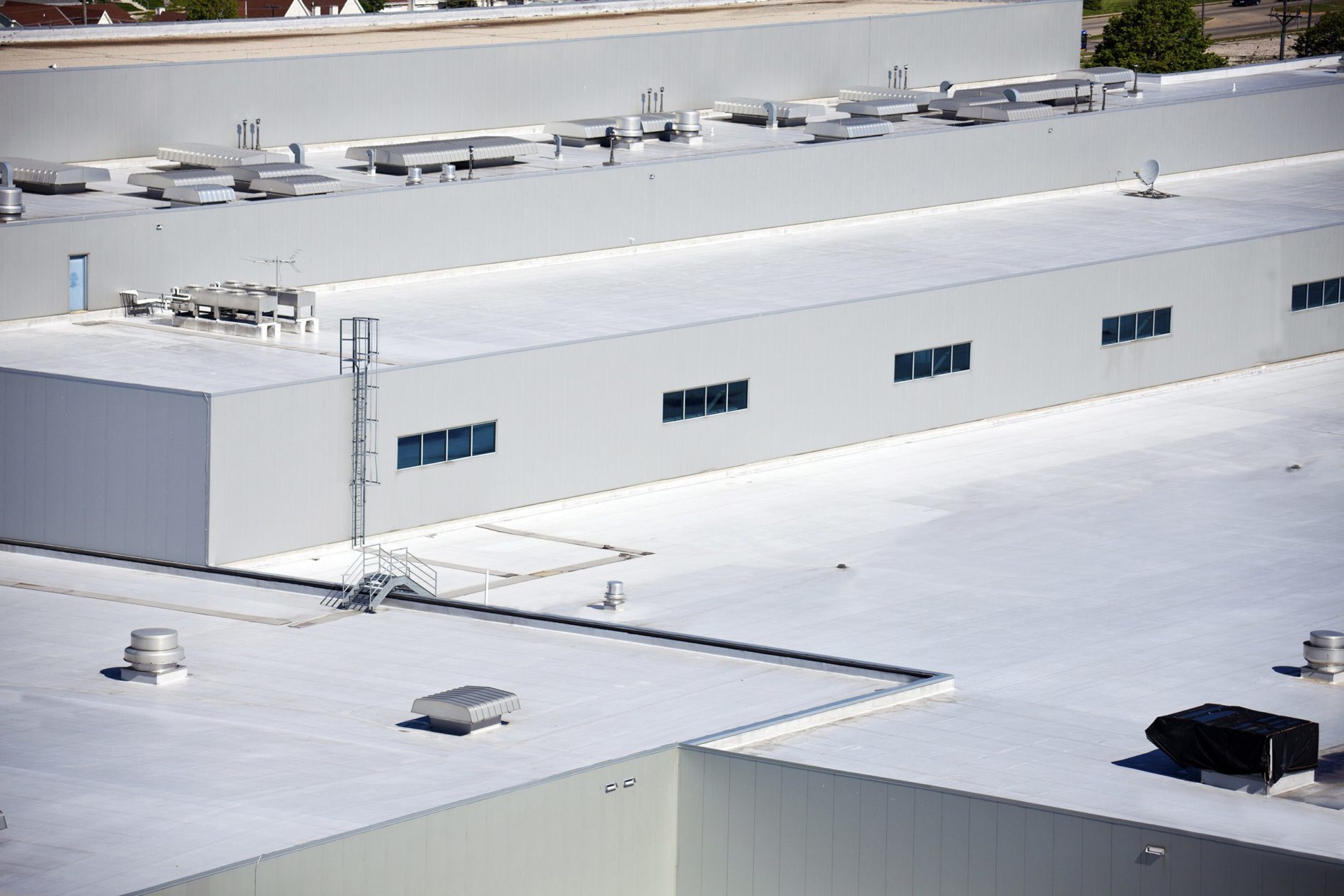
Manufacturing Facility Roofing.
Manufacturing Facility Roofing support in New Orleans, LA, with documented inspections, written scopes, and practical roof planning for commercial properties.
What this roof work solves
Manufacturing Facility Roofing in New Orleans should begin with a documented roof walk. The first job is to identify active water entry, drainage problems, membrane condition, edge details, rooftop equipment conflicts, and weather exposure before a price or schedule is discussed.
For commercial owners, the useful answer is rarely a one-line recommendation. The roof file should explain the work area, the reason for the scope, the access constraints, and the next maintenance decision.
How the scope is built
The scope is based on service scope, building use, roof age, visible defects, and the cost difference between immediate repair and longer-range planning. When repair is enough, the work stays focused. When replacement or recover planning is the responsible move, the reasoning is written plainly.
Each finished project should leave behind before-and-after photos, service notes, and follow-up items so the owner keeps a record for future inspections, budgeting, and vendor conversations.
Commercial roofing for manufacturing plants, assembly facilities, and industrial buildings throughout New Orleans, LA.
Valero's St. Charles refinery and the petrochemical complex along the River Road corridor west of New Orleans create some of the most demanding commercial roofing environments in Louisiana. The concentration of refineries, chemical plants, and industrial gas facilities along the Mississippi River from New Orleans to Baton Rouge means that a significant percentage of New Orleans-area commercial roofing contractors have developed deep expertise in hydrocarbon-resistant roofing systems, corrosion protection at penetrations, and the specialized safety protocols required to work on or near operating process facilities. This expertise transfers directly to the broader New Orleans manufacturing sector, which includes food processing, maritime equipment fabrication, and offshore oil and gas equipment manufacturing spread across Algiers, Westwego, and the Westbank industrial corridor.
The petrochemical environment along the New Orleans River Road creates roofing chemistry challenges that go beyond what most commercial roofing guidelines address. Sulfur dioxide, hydrogen sulfide, and hydrocarbon vapors in the ambient air surrounding these facilities degrade standard roofing adhesives and sealants measurably faster than in clean-air environments. Roofing contractors serving facilities in this corridor have shifted toward mechanically fastened or fully-adhered systems that eliminate solvent-based contact adhesives wherever possible, and they specify sealants with documented resistance to the specific chemical profile of the facility's operating environment rather than relying on general-purpose products.
Coastal humidity and the near-constant risk of hurricane-force winds are the two most persistent climate challenges for manufacturing roofs in the New Orleans area. Relative humidity above 80 percent is the norm for nine months of the year, creating conditions that accelerate the growth of biological organisms on roof surfaces, promote corrosion at metal components, and drive moisture into insulation assemblies at any gap in the vapor barrier. New Orleans industrial roofing teams use closed-cell foam insulation, stainless steel or hot-dipped galvanized fasteners, and biocide-impregnated coatings as standard practice on manufacturing facilities because the cost premium for these upgrades is modest compared to the cost of premature failure in this climate.
Hurricane preparedness is not an abstract concern for manufacturing facility operators in the New Orleans metro. Post-Katrina facility upgrades along the Westbank and in East New Orleans have made wind uplift resistance a primary design criterion for any roof system installed in the area. FM Global's 1-90 rating has become the baseline expectation, and facilities in exposed locations or with high business interruption value are increasingly specified to 1-120 or 1-135. Achieving these ratings requires attention to perimeter and corner fastening patterns, parapet flashing design, and the performance of every edge metal component, not just the field membrane, because many Katrina-related roof failures originated at edge conditions rather than field areas.
Manufacturing facilities in the New Orleans food processing sector, which includes seafood processing operations on the Westbank and grain handling facilities at the Port of New Orleans: require roofing systems and sealants that meet food safety standards throughout. This constraint eliminates several common commercial roofing products that contain biocides or chemical additives not approved for food-contact environments, and it requires that all roof penetrations be designed to prevent condensate drip into the building. Inspectors from the FDA and the USDA periodically review facility maintenance records including roofing, and facilities with documented roof leak histories in production areas can face compliance actions that interrupt operations.
Vibration from maritime equipment manufacturing in Algiers and the industrial equipment fabrication shops along the Westbank transmits through concrete and steel structures in ways that test roofing system durability differently than lighter manufacturing environments. Heavy equipment assembly, cranes, offshore platform components, and ship repair equipment, requires powerful machinery whose vibration signature is both high-amplitude and low-frequency, which is more damaging to mechanically fastened roofing systems than the high-frequency vibration produced by lighter stamping or machining operations. Contractors serving these facilities document vibration levels at the deck before specifying a fastening system, and they often recommend hybrid approaches that use mechanical fastening in low-vibration areas and adhesive bonding near heavy equipment bays.
Skylights in New Orleans manufacturing buildings serve an important function: natural light reduces cooling costs by limiting artificial lighting heat gain, but they represent a vulnerability during hurricane events. Hurricane-rated skylight systems with impact-resistant glazing and reinforced curb assemblies are required on new construction, but the existing stock of manufacturing buildings in the New Orleans area contains many non-rated skylights installed before current standards. Re-roofing projects at these facilities should include skylight evaluation and, where the existing units are not hurricane-rated, replacement with compliant systems as part of the re-roofing scope.
The proximity of New Orleans manufacturing facilities to the Mississippi River and its associated levee infrastructure creates unique drainage design constraints. Roof drainage from industrial facilities cannot discharge in ways that would compromise levee integrity or violate Louisiana Department of Environmental Quality stormwater regulations, and the engineered drainage systems required to meet these constraints add cost and complexity to roofing projects. Contractors experienced in the New Orleans industrial market work with civil engineers familiar with the local drainage regulations from the start of project design rather than discovering compliance requirements late in the process.
Maintenance program value is particularly high for manufacturing roofs in the New Orleans climate. The combination of UV intensity, humidity, heat, biological growth, and hurricane exposure means that a roof without regular maintenance will reach end of functional life significantly faster than the manufacturer's published service life would suggest. Annual maintenance contracts that include inspection, drain cleaning, biocide treatment, seam re-inspection, and minor repair typically cost between $0.08 and $0.15 per square foot per year: a modest expense that consistently extends membrane service life by four to seven years on well-documented programs.
Can you repair a leaking BUR roof on a New Orleans building without full replacement?
Sometimes. If the leak source is an isolated failed flashing at a penetration or parapet, and core cuts show the BUR field plies are otherwise dry and intact: targeted repair is the appropriate scope. If the leak is coming from degraded plies in the roof field, patching the visible wet spot without addressing the ply failure produces another leak nearby within a season or two. In a market where the next tropical rain event may arrive before the targeted repair has time to prove out, that distinction matters more than it does in other markets. We tell you which situation you are in before we propose a scope.
How do you manage gravel removal during BUR tear-off in a dense urban New Orleans location?
Gravel-surfaced BUR tear-off is labor-intensive and generates significant debris volume. On CBD, French Quarter, and Warehouse District buildings with constrained street access, we use rooftop vacuum systems that collect the gravel without staging loose aggregate at the curb. Street-use permits for dumpster placement in the French Quarter and the Downtown Development District require advance coordination with the City of New Orleans: we handle that permitting before mobilization.
Questions to settle early
Where is the risk?
Locate leaks, wet-insulation indicators, open seams, weak flashing, and drainage restrictions across the roof.
What can wait?
Separate immediate work from maintenance items that can be tracked for the next service window.
What should be funded?
Build a practical recommendation for repair, coating, recover, or replacement planning.
Need help with manufacturing facility roofing?
Send the building address, known roof age, access notes, and what changed. We will respond with the right next step.