Roof Capital Planning Support.
Roof Capital Planning Support support in New Orleans, LA, with documented inspections, written scopes, and practical roof planning for commercial properties.
What this roof work solves
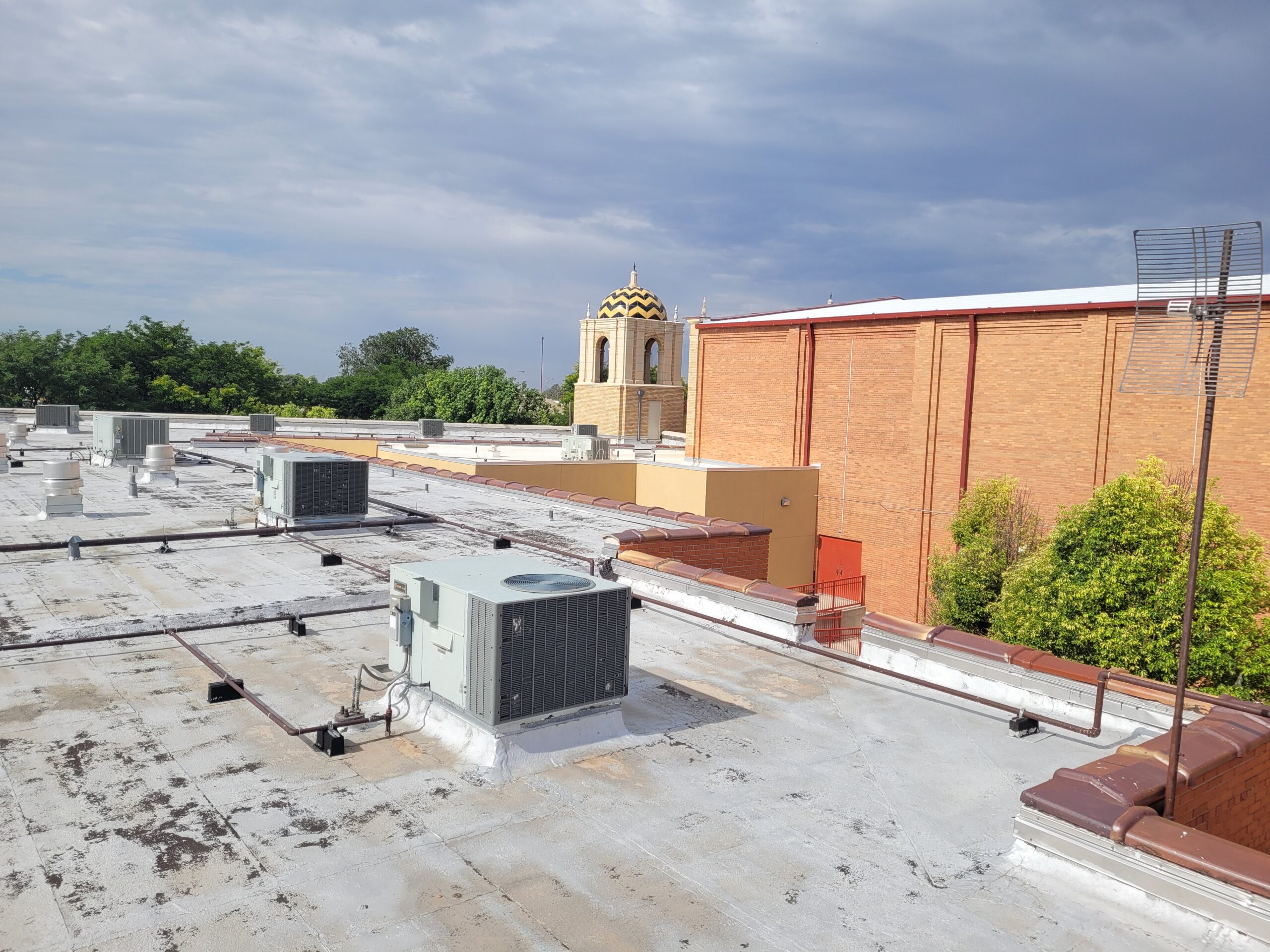
Roof Capital Planning Support in New Orleans should begin with a documented roof walk. The first job is to identify active water entry, drainage problems, membrane condition, edge details, rooftop equipment conflicts, and weather exposure before a price or schedule is discussed.
For commercial owners, the useful answer is rarely a one-line recommendation. The roof file should explain the work area, the reason for the scope, the access constraints, and the next maintenance decision.
How the scope is built
The scope is based on service scope, building use, roof age, visible defects, and the cost difference between immediate repair and longer-range planning. When repair is enough, the work stays focused. When replacement or recover planning is the responsible move, the reasoning is written plainly.
Each finished project should leave behind before-and-after photos, service notes, and follow-up items so the owner keeps a record for future inspections, budgeting, and vendor conversations.
Capital planning for commercial roofs in New Orleans is not the same as getting a replacement bid. It is a forward-looking financial model built on documented condition data, Gulf Coast storm-season acceleration factors, realistic construction cost assumptions, and a sequencing strategy that matches buildings' actual replacement urgency to the owner's capital availability across hurricane seasons.
The roof capital planning conversation in most New Orleans commercial portfolios happens in one of two modes: proactive; ownership wants to understand what the roofs will cost over the next 5-10 years before those costs hit the P&L without warning, or reactive, when a building fails during a storm season and ownership is asking why it was not in last year's capital budget. We support both modes, but the proactive version is worth significantly more to a portfolio owner in a market where storm-season events can move multiple buildings from Watch to Immediate status simultaneously.
Our capital planning support service takes the condition data from our ongoing inspection program, or from a fresh portfolio audit if no prior condition data exists, and builds it into a multi-year CapEx forecast: which buildings need replacement in which year, what the estimated replacement cost is per building, how that estimate should be escalated for Gulf Coast construction cost trends, and how the replacement sequence should be prioritized when multiple buildings are competing for limited capital in the same year or the same storm season.
The output is a financial planning document: formatted for the owner's CFO, their lender, or an investor committee, not a sales proposal. It is built on physical inspection findings and documented condition data, not on assumptions about buildings we have not inspected. A capital forecast built on assumed conditions is a guess, not a planning tool.
How We Build the Multi-Year CapEx Forecast
The forecast starts with a documented condition baseline for every building in the portfolio. For buildings we have inspected under our asset management program, we use the most recent condition record and the updated remaining-life estimate from that inspection cycle. For buildings we have not previously inspected, we schedule inspection visits before building the forecast: the alternative is a capital model built on unknowns, which is not a planning tool any responsible lender or investor will accept.
Each building's remaining-life estimate produces a replacement window: a 2-3 year range in which replacement is projected based on current condition, degradation trend, and the manufacturer's service life benchmark for the installed system type. In the New Orleans market, the degradation trend includes a storm-season acceleration factor based on the building's exposure category and its storm history: a building in an open-terrain lakefront exposure zone that experienced two Category 3 storm events may be tracking ahead of its manufacturer-projected degradation curve, and the capital forecast reflects that rather than defaulting to the published service life.
Cost estimates for each building's replacement are built from square footage, system specification assumptions based on the existing system's logical replacement path and the building's hurricane wind-uplift requirements, and current New Orleans commercial roofing labor and material costs. We apply a 3-5% annual cost escalation assumption to future-year estimates based on Gulf Coast commercial construction cost trends. The result is a year-by-year CapEx table: each building, the recommended replacement system, the estimated installed cost, and the projected replacement year.
Sequencing When Multiple Buildings Compete for the Same Capital Year
The capital planning challenge that appears most often in New Orleans multi-building portfolios: several buildings enter their replacement window in the same 2-3 year period, but the owner's annual CapEx capacity cannot fund all of them simultaneously. The sequencing question, which buildings get capital first, which wait, and what is the cost of each deferral: is where the capital planning work adds the most direct value.
We prioritize sequencing on four factors: current condition urgency (buildings rated Poor or Failed move to the front regardless of cost), hurricane-season exposure risk (buildings with perimeter attachment deficiencies or compromised parapet flashings move up before hurricane season opens, not after), active warranty status relative to lease obligations (a building with a major tenant lease renewal in year 2 needs a solved roof story before that renewal conversation), and mobilization efficiency opportunities (buildings in the same geographic corridor, say, three properties along Veterans Boulevard in Metairie or two warehouse buildings in the New Orleans East industrial zone, can share mobilization costs and achieve material volume discounts that reduce per-building installed cost by 8-12%).
For portfolio owners with buildings across multiple parishes: Orleans Parish commercial properties, Jefferson Parish medical-office and industrial buildings, and St. Tammany Parish office assets: we model the sequencing by parish to account for the different permitting timelines, permit authority requirements, and contractor mobilization patterns that apply in each jurisdiction.
Supporting the Capital Ask to Ownership and Lenders
The capital forecast is only useful if it gets the capital approved. The approval conversation, whether it is a property manager presenting to a private ownership group, a REIT asset manager presenting to an investment committee, or a borrower presenting to a Louisiana commercial lender, requires documentation that goes beyond a roofing contractor's bid. It requires condition evidence, lifecycle cost modeling, and a clear answer to the question that ownership always asks: why this year, at this cost, rather than waiting?
Questions to settle early
Where is the risk?
Locate leaks, wet-insulation indicators, open seams, weak flashing, and drainage restrictions across the roof.
What can wait?
Separate immediate work from maintenance items that can be tracked for the next service window.
What should be funded?
Build a practical recommendation for repair, coating, recover, or replacement planning.
Need help with roof capital planning support?
Send the building address, known roof age, access notes, and what changed. We will respond with the right next step.