
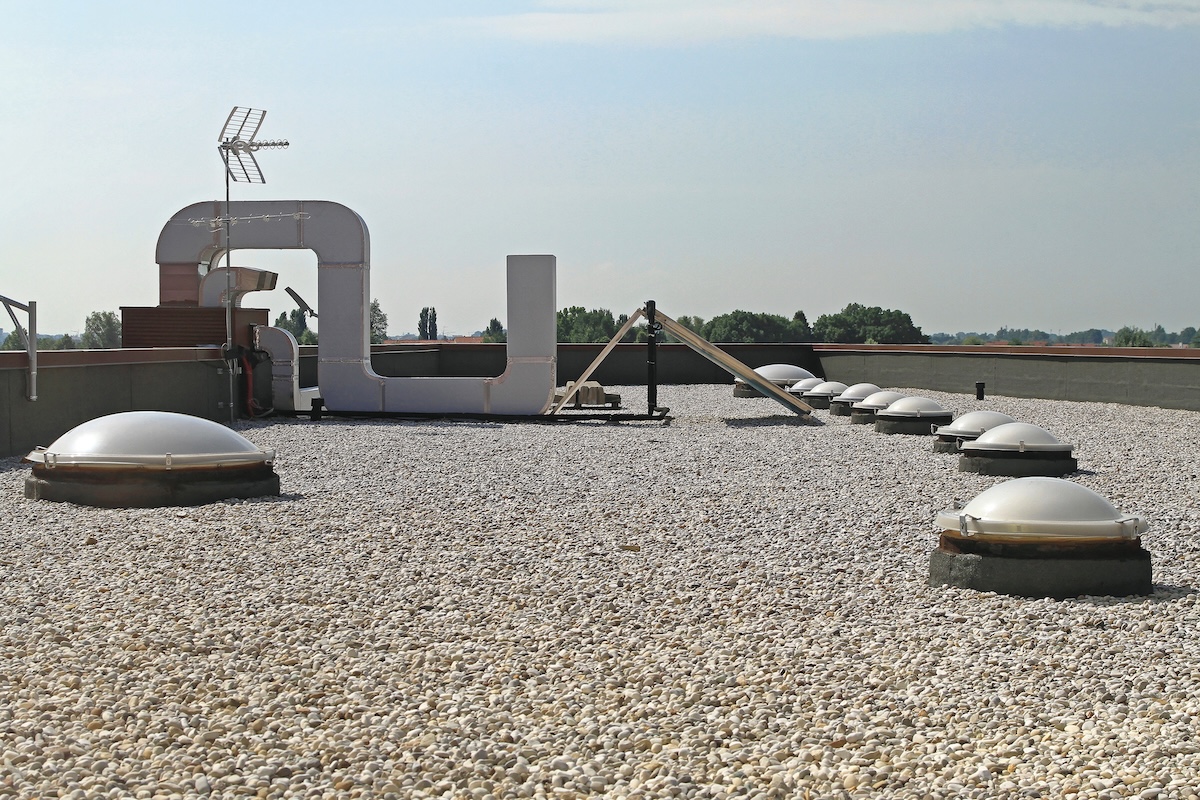
Built Up Roofing.
Built Up Roofing support in New Orleans, LA, with documented inspections, written scopes, and practical roof planning for commercial properties.
What this roof work solves
Built Up Roofing in New Orleans should begin with a documented roof walk. The first job is to identify active water entry, drainage problems, membrane condition, edge details, rooftop equipment conflicts, and weather exposure before a price or schedule is discussed.
For commercial owners, the useful answer is rarely a one-line recommendation. The roof file should explain the work area, the reason for the scope, the access constraints, and the next maintenance decision.
How the scope is built
The scope is based on service scope, building use, roof age, visible defects, and the cost difference between immediate repair and longer-range planning. When repair is enough, the work stays focused. When replacement or recover planning is the responsible move, the reasoning is written plainly.
Each finished project should leave behind before-and-after photos, service notes, and follow-up items so the owner keeps a record for future inspections, budgeting, and vendor conversations.
New Orleans carries a significant inventory of aging built-up roofing: concentrated on the pre-Katrina CBD office towers along Poydras Street, on the older hospitality and retail buildings in the French Quarter, and across the institutional building stock that was rebuilt hastily after 2005. We assess BUR honestly: sometimes replacement is the only defensible scope, sometimes a targeted recover extends the asset through another hurricane cycle at a fraction of the replacement cost.
Built-up roofing, alternating layers of bitumen and reinforcing felt, finished with a mineral surface or gravel cap, was the dominant commercial flat roofing system installed in New Orleans from the postwar era through the early 1990s. The buildings that carried those original systems are in late-cycle or past-life condition today, shaped not only by age but by the storm events that accelerated their degradation. The Poydras Street tower corridor, the older Warehouse District buildings, the pre-Katrina hospitality stock in the French Quarter, and the 1970s-1980s commercial buildings along Veterans Boulevard in Metairie all represent segments of the regional BUR inventory we regularly assess.
We approach BUR in two modes. The first is honest assessment: we walk the roof, pull core cuts, map blister and alligatoring patterns, and tell the owner whether the BUR has life remaining or whether the degradation has passed the point where recovery is defensible. The second is replacement when the system is genuinely end-of-life: we scope the correct replacement membrane for the building's use, capital horizon, and wind-uplift requirements, and we perform the tear-off and replacement with the same quality controls we apply to new construction.
In this market, BUR assessment cannot ignore the storm history. A BUR roof that was in marginal condition before Hurricane Ida in August 2021 may have received enough saturating rainfall and mechanical stress during the event to change the diagnostic picture entirely. We look at storm exposure history as part of every BUR assessment on buildings constructed before 2010.
What BUR Failure Looks Like, and What It Does Not
Alligatoring, the cracked, scaly surface pattern that develops as surface bitumen oxidizes and loses elasticity, is the most visually alarming BUR condition and also one of the least diagnostically decisive. Alligatoring develops on every aging BUR surface and does not by itself determine replacement urgency. What it does indicate is that the surface oxidation stage has passed, and the diagnostic attention should shift to blistering, moisture infiltration, and ply condition below the surface.
Blistering presents differently on New Orleans BUR than on roofs in drier markets. The high ambient humidity and regular saturation events in this climate create blistering from moisture vapor trapped between plies, from condensation cycles in the high-dew-point summer months, and from storm-event water infiltration that did not fully drain before the next humid period trapped it. We distinguish between closed, stable blisters that can be monitored and open or actively growing blisters that indicate ongoing moisture migration: the distinction drives whether the finding is Watch, Near-Term, or Immediate in our written report.
Core cuts are the definitive diagnostic on any BUR system we assess. We pull 3-inch plugs at representative locations, minimum one per 4,000-5,000 sq ft, choosing locations that sample every roof zone including areas near drains, parapet corners, and any points where storm exposure or reported leaks suggest elevated moisture risk. In New Orleans, the area within 10 feet of every drain is always a core location: the drain-area BUR plies accumulate moisture faster than field areas in this climate, and drain condition is a critical failure vector.
BUR Replacement: When It Is the Right Scope
Clear replacement indicators on New Orleans BUR roofs: more than 25% of core pulls reading wet, active leak points that have recurred after repair, gravel cap sheet with broken contact to the underlying bitumen across more than a third of the field, or deck deterioration found during core investigation. In this market, light-gauge metal deck corrosion from sustained moisture exposure is a more common deck finding than in drier climates: we inspect under wet-core locations for deck integrity before specifying any new system.
When we scope BUR replacement on a CBD tower building or a pre-Katrina French Quarter commercial property, the replacement system selection is the first major decision. Modified bitumen, SBS or APP, is the standard choice for buildings where the owner wants a proven Gulf Coast performer with better mechanical resistance than single-ply and compatible behavior with the existing drain layouts. TPO or PVC is the choice when reflectivity, energy code compliance in Climate Zone 2A, and a 20-year NDL warranty path are priorities. Both paths require hurricane wind-uplift engineering specific to the building's exposure category.
Deck findings on pre-Katrina buildings sometimes reveal corrosion-damaged sections that must be addressed before a new membrane goes on. We build deck investigation into every BUR replacement scope on buildings over 25 years old and stop work to document any deck problems found after tear-off begins: the owner needs to understand the full scope before proceeding, not after the discovery mid-project.
BUR Recover vs. Full Tear-Off in the New Orleans Market
If core cuts come back dry and the BUR surface is in fair condition, no open blistering, no broken gravel-to-cap contact across large field areas, a recover system can extend the asset significantly at roughly half the tear-off cost. The typical recover path on a New Orleans BUR roof is a clean-and-prime sequence, followed by a modified bitumen cap sheet or a fluid-applied silicone coating over the prepared BUR surface, extending the roof life 10-20 years depending on the recovery system and its manufacturer warranty.
Questions to settle early
Where is the risk?
Locate leaks, wet-insulation indicators, open seams, weak flashing, and drainage restrictions across the roof.
What can wait?
Separate immediate work from maintenance items that can be tracked for the next service window.
What should be funded?
Build a practical recommendation for repair, coating, recover, or replacement planning.
Need help with built up roofing?
Send the building address, known roof age, access notes, and what changed. We will respond with the right next step.