
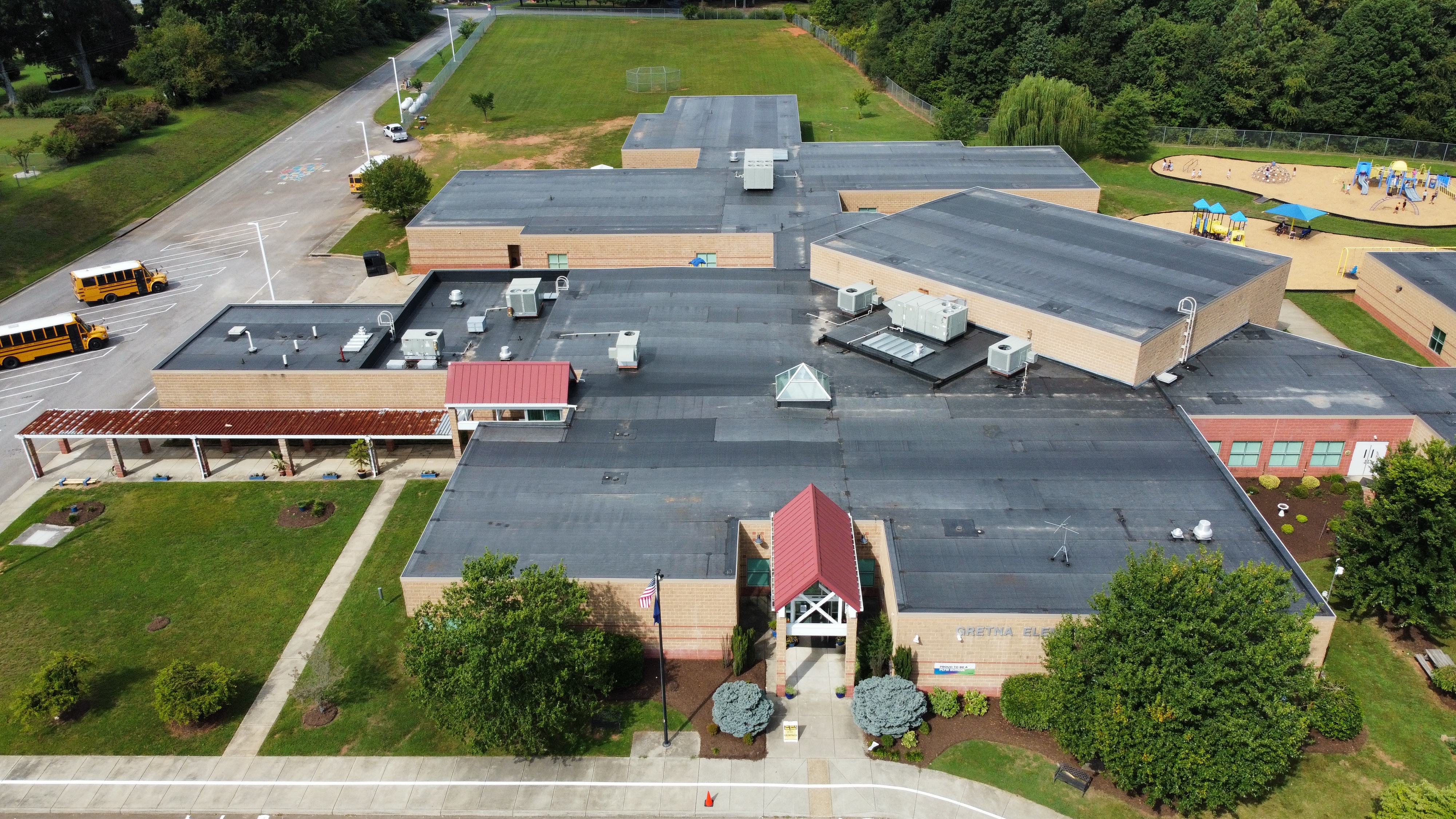
School Roofing.
School Roofing support in New Orleans, LA, with documented inspections, written scopes, and practical roof planning for commercial properties.
What this roof work solves
School Roofing in New Orleans should begin with a documented roof walk. The first job is to identify active water entry, drainage problems, membrane condition, edge details, rooftop equipment conflicts, and weather exposure before a price or schedule is discussed.
For commercial owners, the useful answer is rarely a one-line recommendation. The roof file should explain the work area, the reason for the scope, the access constraints, and the next maintenance decision.
How the scope is built
The scope is geared to building use, roof age, visible defects, and the cost difference between immediate repair and longer-range planning. When repair is enough, the work stays focused. When replacement or recover planning is the responsible move, the reasoning is written plainly.
Each finished project should leave behind before-and-after photos, service notes, and follow-up items so the owner keeps a record for future inspections, budgeting, and vendor conversations.
Orleans Parish and Jefferson Parish public school campuses, St. Bernard Parish schools recovering from repeated flood damage, and the university corridor along Freret Street: Tulane, Loyola, Xavier University, and UNO across the lake. School roofing in New Orleans runs on an academic calendar and a hurricane-season constraint that combine into a production window that is narrower than most other commercial roofing markets.
School roofing in the New Orleans metro operates within a production window defined by two competing constraints: the academic calendar, which gives us June through early August for major replacement work on occupied school buildings, and the hurricane season, which peaks in the same June through November window. The overlap between summer break and peak hurricane season in New Orleans is not a coincidence: the Gulf Coast subtropical climate drives both patterns. Managing school roofing projects in this market requires accepting that the primary production window is also the highest-risk weather period of the year.
Orleans Parish schools represent one of the most complex public-sector roofing inventories in the South. The post-Katrina rebuild of the New Orleans public school system produced a large volume of new construction, modular and traditional, between 2007 and 2015. Many of these buildings are now entering their first major roofing maintenance cycle. Jefferson Parish schools in the Metairie and Kenner corridors represent a parallel inventory at a similar lifecycle point, with the added dimension of Jefferson Parish's more rigorous post-Katrina wind-uplift code adoption.
Tulane University's Uptown campus, Loyola University on St. Charles Avenue, Xavier University in Mid-City, and the University of New Orleans across Lake Pontchartrain in New Orleans East represent the four major university roofing accounts in the metro. University facilities departments manage roofing capital programs through formal bid processes and multi-year capital planning cycles that are distinct from public-school procurement in timing and documentation requirements.
The Summer Production Window and Hurricane-Season Protocol
School roofing production in New Orleans concentrates in the June 15 through August 1 window: after the last school day and before teachers return for pre-service orientation in early August. On a standard single-story school building with 50,000 to 80,000 sq ft of flat roof, a 45-day window is workable for most replacement projects if mobilization and permit work is completed before the last school day. We begin the permit process for school projects in April to ensure permit receipt by early June.
The hurricane-season production protocol applies to every school project that runs in the June through August window. Daily Gulf outlook monitoring, same-day dry-in on every section regardless of the current forecast, and standing rapid dry-in crew on every school project for the duration of the hurricane-season production period. We have completed school roofing projects in New Orleans in June and July without interior water damage by maintaining this discipline: we do not relax same-day dry-in protocol for schedule-convenience reasons during hurricane season.
Risk Category III Wind-Uplift Requirements for New Orleans Schools
Schools above 250-person student occupancy are classified as Risk Category III under ASCE 7-22: the same hardened category that applies to hospitals and emergency-operations facilities in Louisiana's hurricane-prone-region designation. This classification drives a full-adhered system specification on most Orleans and Jefferson Parish school buildings. The post-Katrina Louisiana building code amendments for Risk Category III facilities in hurricane-prone regions are among the most stringent in the country, and they apply to every replacement system installed on a New Orleans-area school building.
Jefferson Parish schools carry an additional local code consideration: Jefferson Parish adopted post-Katrina building code amendments that require documentation of the wind-uplift design calculation in the permit application package. We produce the ASCE 7 wind-uplift design calculation as part of the Jefferson Parish permit submission, and we document the approved attachment design in the project closeout file. Orleans Parish school projects require the same calculation: we provide it as part of the closeout package regardless of whether the permit reviewer requested it.
University Campus Roofing: Tulane, Loyola, Xavier, and UNO
University campus roofing in New Orleans involves a different procurement and coordination environment than K-12 school roofing. Tulane University's facilities management group on the Uptown campus operates a formal capital-projects bid process with pre-qualification, specification review, and post-bid interview stages. Loyola's campus, immediately adjacent on St. Charles Avenue, operates a similar process. Xavier University's Mid-City campus and the University of New Orleans's lakefront campus have larger proportions of post-Katrina construction in their building inventory, with corresponding documentation of original construction and warranty status.
University campus production scheduling runs year-round: unlike K-12, most university buildings have some population throughout the summer. We schedule university replacement projects in building zones tied to summer occupancy calendars provided by the facilities office, and we maintain the same same-day dry-in protocol regardless of the academic calendar phase. University research buildings at LSU Health Sciences Center and Tulane's Primate Research Center require additional contamination-protocol coordination before any roof work that could affect exhaust and ventilation paths from research-grade facilities.
How do you manage the hurricane-season overlap with the summer school roofing window?
Questions to settle early
Where is the risk?
Locate leaks, wet-insulation indicators, open seams, weak flashing, and drainage restrictions across the roof.
What can wait?
Separate immediate work from maintenance items that can be tracked for the next service window.
What should be funded?
Build a practical recommendation for repair, coating, recover, or replacement planning.
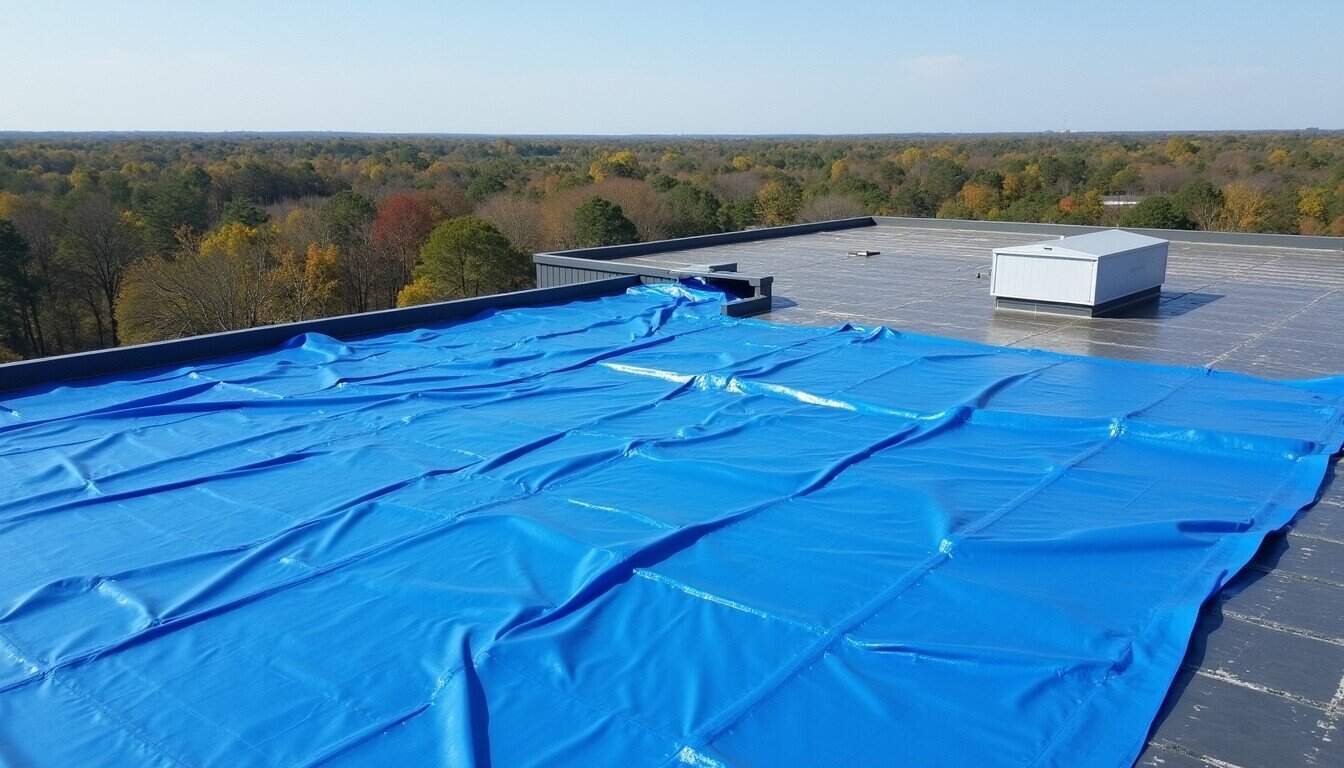
Need help with school roofing?
Send the building address, known roof age, access notes, and what changed. We will respond with the right next step.