
Car Wash Roofing.
Car Wash Roofing support in New Orleans, LA, with documented inspections, written scopes, and practical roof planning for commercial properties.
What this roof work solves
Car Wash Roofing in New Orleans should begin with a documented roof walk. The first job is to identify active water entry, drainage problems, membrane condition, edge details, rooftop equipment conflicts, and weather exposure before a price or schedule is discussed.
For commercial owners, the useful answer is rarely a one-line recommendation. The roof file should explain the work area, the reason for the scope, the access constraints, and the next maintenance decision.
How the scope is built
The scope is geared to building use, roof age, visible defects, and the cost difference between immediate repair and longer-range planning. When repair is enough, the work stays focused. When replacement or recover planning is the responsible move, the reasoning is written plainly.
Each finished project should leave behind before-and-after photos, service notes, and follow-up items so the owner keeps a record for future inspections, budgeting, and vendor conversations.
Why a car wash roof fails from the inside out in New Orleans
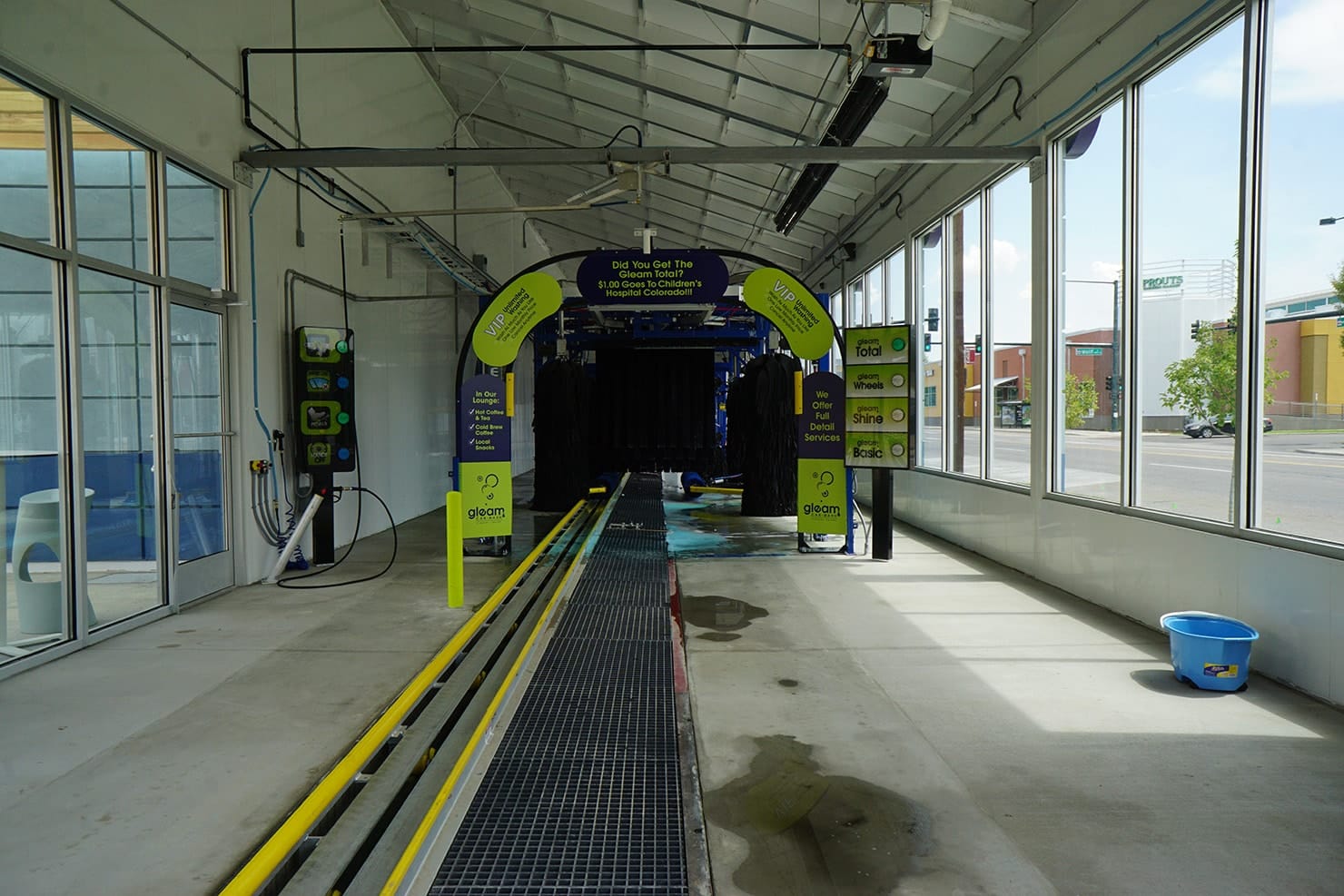
A car wash is one of the few buildings where the roof is attacked harder from below than from above. Inside the tunnel, hot water, detergent foam, tire-shine solvents, wax, and rust inhibitors atomize into a warm fog that never fully clears. In a city where the outdoor air already sits near saturation for most of the summer, that interior vapor has nowhere to escape. It rises, condenses on the underside of the deck, and works its way into seams, fastener penetrations, and insulation. We see corroded fastener heads, rusted deck flutes, and saturated polyiso on wash bays that look perfectly intact from the parking lot. By the time a stain appears on the tunnel ceiling, the assembly above it has usually been deteriorating for a year or more.
We inspect and re-roof car washes across the metro, from the express tunnels along Veterans Memorial Boulevard and Airline Drive in Metairie to the in-bay automatics scattered through Gentilly, Mid-City, and the West Bank. Operators here run hard. A single tunnel near a busy corridor can push several hundred cars on a Saturday, which means the wash equipment, the blowers, and the chemical injection are running almost continuously. The roof never gets a dry rest period the way a retail box or an office building does, so the specification has to assume constant humidity and chemical loading as the baseline condition, not an occasional event.
The wash bay is a different roof than the rest of the building
We treat a car wash as two distinct roofing problems sharing one footprint. The wash bay or tunnel is the aggressive zone. The equipment room, the office, the customer lobby, and the vacuum area are conventional low-slope roofs that happen to be attached to it. Specifying one membrane for the whole building is how operators end up replacing a tunnel roof twice while the office roof is still fine.
Over the tunnel, membrane chemistry matters more than anything else. We generally specify PVC here because its resistance to the alkaline detergents and the petroleum-based tire and wax compounds used in commercial wash menus holds up better over time than TPO or EPDM, both of which can suffer plasticizer migration or surface degradation under sustained chemical fog. We pair that with a fully adhered or fleece-back installation so the membrane is not relying on a fastener field that the corrosive interior environment is actively trying to dissolve. Fewer mechanical penetrations through the deck means fewer pathways for warm interior vapor to reach the insulation.
Controlling vapor before it reaches the deck
Membrane selection alone does not fix a car wash roof. The real fight is vapor drive. Over a wash tunnel we look hard at the deck type and the assembly stackup, because the goal is to keep that warm, chemical-laden interior moisture from condensing inside cold insulation. On metal decks we evaluate the need for an air and vapor barrier at the deck level, sealed penetrations, and adequate, dedicated tunnel exhaust so the building is actually moving the fog out rather than recirculating it. A roof system installed over a tunnel that has undersized or failing exhaust will fail regardless of how good the membrane is. We flag those mechanical problems during the inspection because solving the roof without solving the ventilation just resets the same clock.
Penetrations, exhaust, and the vacuum canopy
Tunnel exhaust fans are the hardest-working penetrations on the building. They run wet and warm, and the curbs around them take constant condensate. We oversize and reflash these curbs rather than reusing the original sheet-metal details, which on most older washes were never designed for continuous chemical exhaust. Every gas line, blower mount, electrical penetration, and dryer stack gets evaluated as its own flashing detail with the operating condition in mind.
The vacuum canopy and any customer-side canopy are a separate scope item. These are usually steel or membrane-clad structures exposed to vehicle exhaust, overspray drift, and full Gulf sun, and the connection between the canopy and the main building is the single most common chronic leak point on express washes here. Canopy gutters, downspout tie-ins, and the canopy-to-wall transition all get inspected and detailed. On New Orleans sites we also check that canopy and rooftop equipment are anchored for hurricane uplift, because a loose canopy panel in a named storm becomes a projectile and a liability.
Car wash operators do not have a slow season here. They have rain days. We schedule tunnel roof work around the early-morning and late-evening close windows, sequence the job so each section is dried in before the next wash cycle, and keep the equipment room and electrical service protected throughout. Exterior building and canopy work can usually proceed during operating hours with traffic control that keeps the wash lane clear. And because we are working a Gulf Coast roof, every open section is dried in the same day. A pop-up afternoon storm is not a maybe in this climate, and we never leave a wash bay deck exposed overnight.
Why does my tunnel roof keep failing when the rest of the building is fine?
Because the tunnel roof lives in a constant fog of warm water and wash chemicals while the rest of the building does not. That interior vapor condenses inside the roof assembly and corrodes fasteners and deck and saturates insulation. The fix is a chemical-resistant membrane, vapor control at the deck, and properly sized exhaust, specified for the tunnel specifically rather than the whole building uniformly.
Questions to settle early
Where is the risk?
Locate leaks, wet-insulation indicators, open seams, weak flashing, and drainage restrictions across the roof.
What can wait?
Separate immediate work from maintenance items that can be tracked for the next service window.
What should be funded?
Build a practical recommendation for repair, coating, recover, or replacement planning.
Need help with car wash roofing?
Send the building address, known roof age, access notes, and what changed. We will respond with the right next step.