
Restaurant Roofing.
Restaurant Roofing support in New Orleans, LA, with documented inspections, written scopes, and practical roof planning for commercial properties.
What this roof work solves
Restaurant Roofing in New Orleans should begin with a documented roof walk. The first job is to identify active water entry, drainage problems, membrane condition, edge details, rooftop equipment conflicts, and weather exposure before a price or schedule is discussed.
For commercial owners, the useful answer is rarely a one-line recommendation. The roof file should explain the work area, the reason for the scope, the access constraints, and the next maintenance decision.
How the scope is built
The scope is geared to building use, roof age, visible defects, and the cost difference between immediate repair and longer-range planning. When repair is enough, the work stays focused. When replacement or recover planning is the responsible move, the reasoning is written plainly.
Each finished project should leave behind before-and-after photos, service notes, and follow-up items so the owner keeps a record for future inspections, budgeting, and vendor conversations.
French Quarter dining institutions, Magazine Street independent restaurants from the Irish Channel to Uptown, Bywater neighborhood restaurants, and Garden District dining rooms. Restaurant roofing in New Orleans runs around the lunch-and-dinner calendar, and the kitchen exhaust systems that penetrate these roofs add a layer of detail work that separates restaurant jobs from standard retail roofing.
New Orleans has one of the most experienced commercial restaurant cultures in the country, and the buildings those restaurants occupy represent a roofing challenge that combines historic building conditions, demanding scheduling constraints, and kitchen-exhaust flashing complexity into a single project type. French Quarter restaurants on Bourbon, Royal, Decatur, and Chartres streets operate in 19th-century masonry buildings with historic parapet conditions, Vieux Carré Commission oversight, and occupancy schedules that run from 11 AM through 2 AM seven days a week. A roof replacement on a French Quarter restaurant requires early-morning production windows, VCC permit management, and historic masonry parapet coordination: all on a building where the owner's primary concern is not disrupting the evening service.
Magazine Street's restaurant corridor, stretching from the Vietnamese and Creole restaurants near the Pontchartrain Expressway through the Uptown dining destination zone near Audubon Park, presents a different version of the same challenge. These buildings range from converted Victorian-era double shotguns to 1970s commercial construction to purpose-built restaurant buildings from the 1990s. The common thread is that they are all single-tenant or owner-operated buildings where the roofing decision is made by the same person who runs the front of house, and where the production schedule has to work around a dining calendar with very limited flexibility.
Kitchen Exhaust Flashing: The Critical Detail on Restaurant Roofs
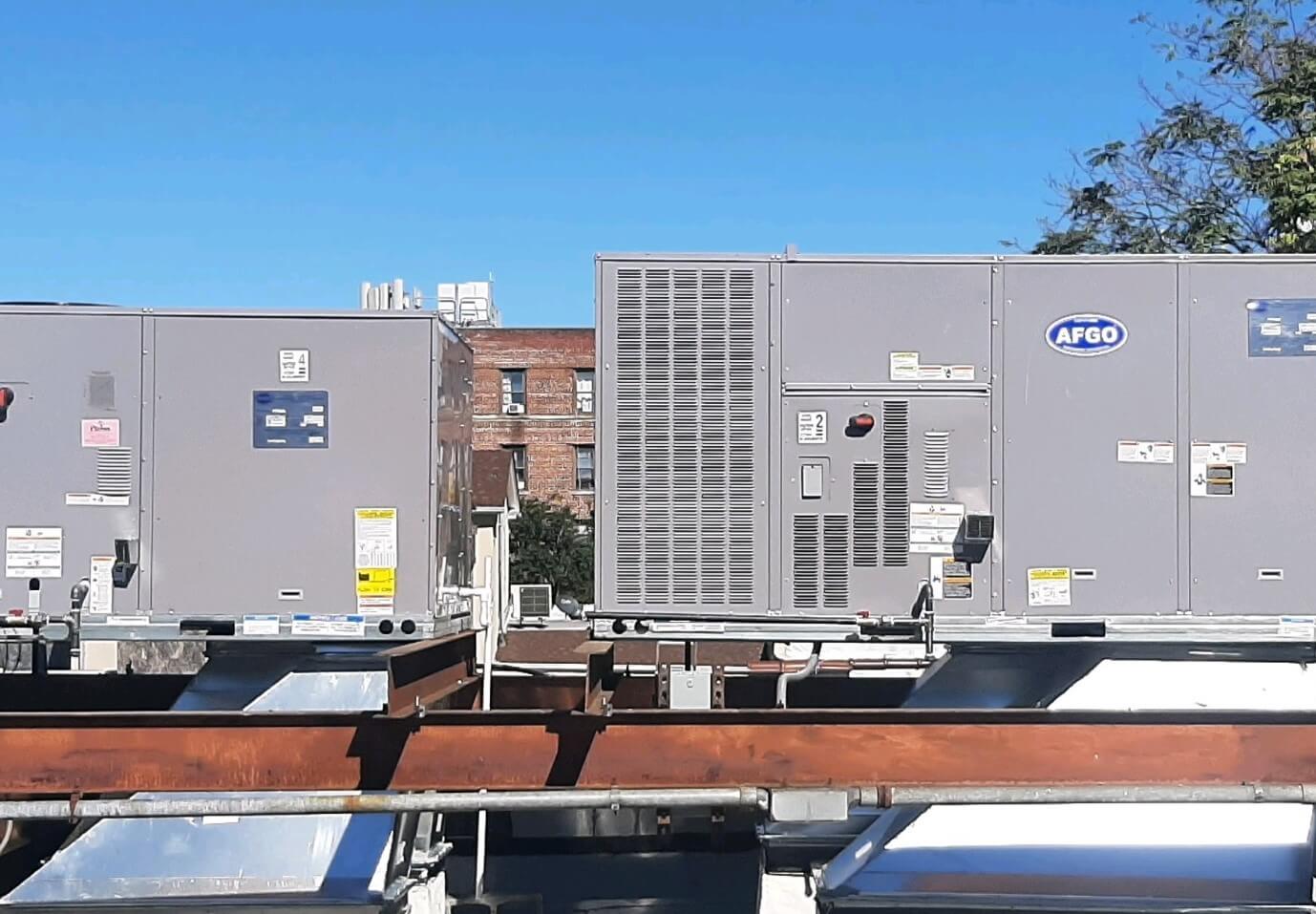
Kitchen exhaust systems on New Orleans restaurants are the most maintenance-intensive flashing condition in the restaurant roofing market. Grease-laden exhaust from commercial hoods deposits grease residue on the roof membrane around exhaust penetrations: grease degrades TPO and modified bitumen membranes faster than any other common environmental exposure. Restaurants with high-volume cooking operations can produce grease accumulation around exhaust penetrations that compromises membrane integrity within two to three years of a new installation if the exhaust flashing and curb detail is not designed to contain and redirect grease runoff.
We specify stainless-steel exhaust curb flashings on restaurant roofs where grease accumulation is a documented concern: standard aluminum or galvanized flashings corrode from grease exposure faster than the membrane warranty period assumes. The area around each exhaust penetration receives a grease-resistant field membrane treatment at installation, and the post-installation maintenance protocol includes a documented exhaust-area inspection with each annual roof inspection.
French Quarter restaurants and the larger Magazine Street operations frequently have multiple kitchen exhaust systems from different renovation phases: original range-hood exhaust, added makeup-air intakes, and supplemental exhaust fans installed as the kitchen configuration changed over the years. Each penetration requires individual assessment and custom flashing detail: there is no generic restaurant exhaust template that fits a French Quarter building that has been modified four times in 80 years.
Off-Hours Production and Service Disruption Avoidance
New Orleans restaurants, particularly in the French Quarter and on Magazine Street, operate on schedules that leave almost no standard working-hours window for roof production. A French Quarter restaurant that opens for lunch at 11 AM and closes after the last table at midnight has a usable pre-service production window of approximately 5 AM to 9:30 AM; roughly four hours before the kitchen prep crew needs quiet and before foot traffic on the surrounding streets makes exterior staging difficult.
We build early-morning production plans as the baseline for every French Quarter and Magazine Street restaurant project, not as an accommodation, but as the standard approach. Equipment is staged the evening before, tear-off begins at 5 AM or at permitted hours, heavy equipment operation finishes by 9:30 AM, and remaining detail work continues through the service day at noise levels and access footprints that do not affect the dining room. Sunday brunch operations in New Orleans are a specific scheduling constraint: Sunday morning is often the highest-revenue window for French Quarter restaurants, and it is always a production blackout.
Historic Masonry Parapet Conditions in the French Quarter and Bywater
French Quarter restaurant buildings carry the same historic masonry parapet conditions as all French Quarter commercial buildings: with the added complication that restaurant owner-operators are less likely than institutional building owners to have maintained a condition record or a repair history for the parapet. We inspect the parapet cap, through-wall flashing, and wall-to-deck transition on every French Quarter and Bywater restaurant before finalizing the scope, because the parapet condition is almost always a variable that affects both the replacement cost and the warranty path.
Through-wall flashing failure at historic masonry parapets is the primary source of chronic interior water damage in French Quarter restaurant buildings: water infiltrates through the parapet cap, travels down the interior masonry face, and appears as ceiling staining in the dining room well below the actual parapet breach. A roof replacement that does not rebuild the through-wall flashing at every parapet location is not a complete replacement on a French Quarter restaurant building.
Can you work on a French Quarter restaurant without disrupting dinner service?
Questions to settle early
Where is the risk?
Locate leaks, wet-insulation indicators, open seams, weak flashing, and drainage restrictions across the roof.
What can wait?
Separate immediate work from maintenance items that can be tracked for the next service window.
What should be funded?
Build a practical recommendation for repair, coating, recover, or replacement planning.
Need help with restaurant roofing?
Send the building address, known roof age, access notes, and what changed. We will respond with the right next step.