
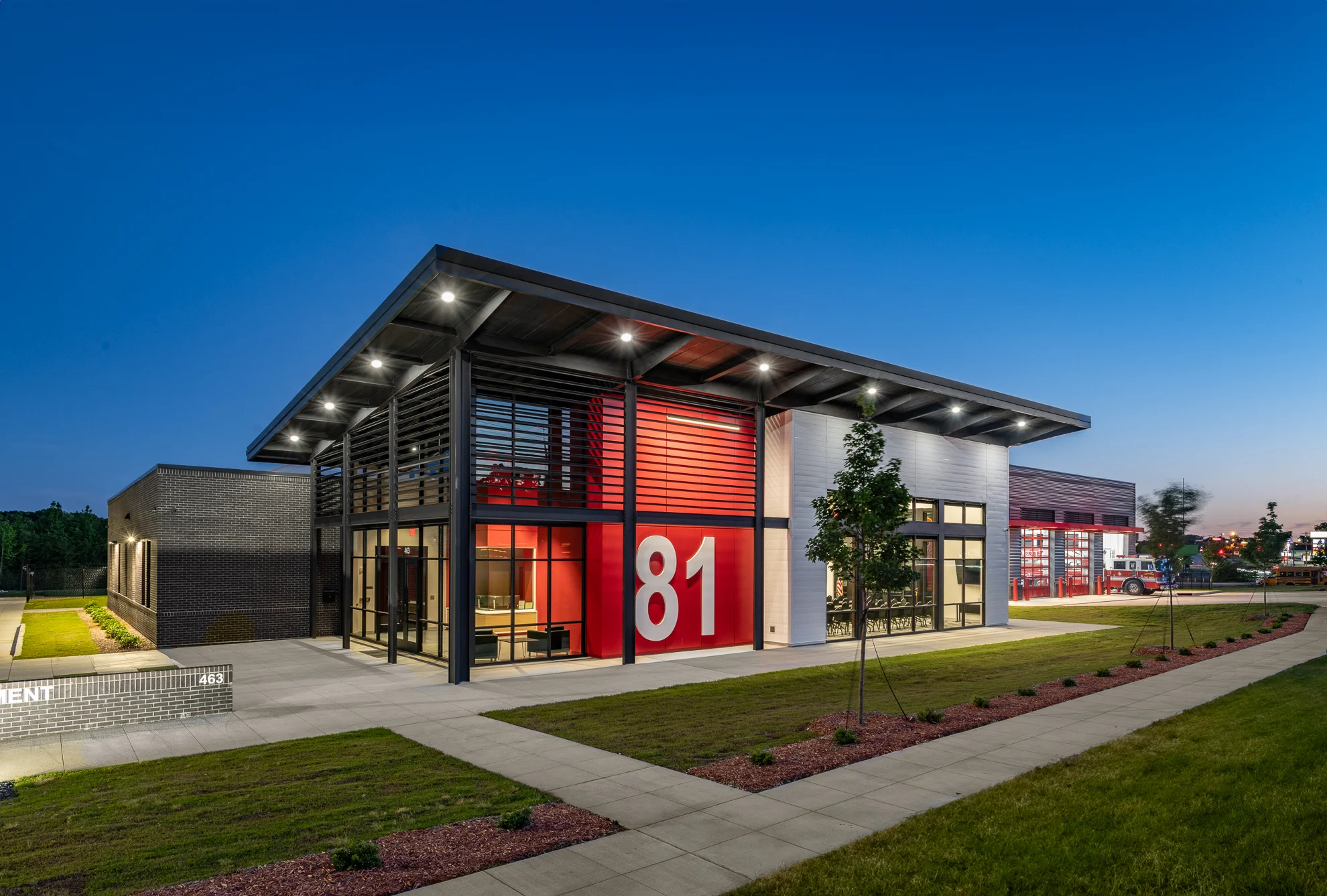
Fire Station & Emergency Services Facility Roofing.
Fire Station & Emergency Services Facility Roofing support in New Orleans, LA, with documented inspections, written scopes, and practical roof planning for commercial properties.
What this roof work solves
Fire Station & Emergency Services Facility Roofing in New Orleans should begin with a documented roof walk. The first job is to identify active water entry, drainage problems, membrane condition, edge details, rooftop equipment conflicts, and weather exposure before a price or schedule is discussed.
For commercial owners, the useful answer is rarely a one-line recommendation. The roof file should explain the work area, the reason for the scope, the access constraints, and the next maintenance decision.
How the scope is built
The scope is geared to building use, roof age, visible defects, and the cost difference between immediate repair and longer-range planning. When repair is enough, the work stays focused. When replacement or recover planning is the responsible move, the reasoning is written plainly.
Each finished project should leave behind before-and-after photos, service notes, and follow-up items so the owner keeps a record for future inspections, budgeting, and vendor conversations.
New Orleans's commercial corridors include the CBD and Warehouse District, the Mid-City and Gentilly commercial belts, the Elmwood industrial park, and the significant port logistics and petrochemical industrial zone along the River. Fire stations in this market are public facilities that require roofing contractors who can work around continuous emergency response operations: apparatus bay access, daily alarm protocols, and apparatus exhaust exposure conditions that affect product selection are all standard pre-conditions for fire station roofing in this jurisdiction.
The apparatus bay roof is the most technically demanding section of a fire station re-roofing project in New Orleans. Large overhead door openings, typically 14-16 feet tall and 12-14 feet wide per bay, create a structural transition at the bay wall that generates significant thermal movement. The bay interior is heated primarily by diesel engine exhaust from apparatus operations, and the repeated thermal cycling from apparatus return and warm-up creates a temperature differential at the bay-to-mezzanine roof transition that exceeds what standard commercial flashing details can accommodate over a 20-year service life. We design the bay transition as an expansion joint, not a standard flashing transition.
Diesel exhaust exposure is a consideration in the apparatus bay roof assembly specification. The underside of the bay roof deck is exposed to diesel combustion products from apparatus start-up and in-bay warm-up operations. Over time, diesel particulate and combustion condensate can degrade certain adhesive formulations and vapor retarder materials. We specify products for the apparatus bay assembly that are rated for exhaust-adjacent environments, not products that are appropriate for a clean-air commercial occupancy but will degrade under diesel exposure.
Historic firehouses in New Orleans, the older stations that have served their neighborhoods for generations, frequently carry architectural roofing systems: slate, clay tile, standing seam copper or terne metal. These materials age on a different timeline from modern commercial roofing systems, and their restoration or replacement requires contractors who understand both the historical material and the Secretary of the Interior's Standards for Rehabilitation that apply to designated landmark buildings. We've worked with preservation architects on historic firehouse roofing projects and have experience sourcing historically compatible materials for buildings where original materials are no longer manufactured.
Fire Station Roofing: Technical Questions
The bay-to-mezzanine transition joint is treated as a structural expansion joint with a joint seal system rated for the calculated movement range at that transition. The movement range is calculated from the bay width: the thermal movement of a 60-foot steel bay roof frame is significantly larger than the movement of a 20-foot office module frame, and from the temperature differential between the diesel-heated bay interior and the ambient exterior. We use a two-part joint cover system, a membrane base with a foam core and a metal cap, that accommodates the calculated movement without fatiguing the membrane bond.
The apparatus bay roof specification must account for the diesel exhaust exposure from below and the thermal movement at the bay transitions. For flat-to-low-slope apparatus bay roofs in New Orleans, a 60-mil or 80-mil mechanically attached TPO system is the appropriate specification: TPO has good resistance to diesel exhaust condensate compared to EPDM, and mechanically attached systems tolerate the long-span deck movement better than fully adhered systems. The bay roof should be considered a separate specification zone from the administrative/crew areas of the station.
Buildings on the National Register or designated as local landmarks require State Historic Preservation Office (SHPO) review before exterior material changes. For a historic firehouse with original slate or tile roofing, the review process requires a documentation submittal showing: existing conditions photography, proposed material specification with historical precedent, and a written narrative explaining why the proposed approach meets the Secretary of the Interior's Standards for Rehabilitation. SHPO review typically takes 30-90 days. We prepare the submittal package and coordinate with the SHPO reviewer as a standard service on historic public safety facility projects.
Fire stations typically have interior drains in the apparatus bay floor area and roof drains on the bay and mezzanine roofs. The roof drainage system at a fire station needs to keep the apparatus apron and bay floor dry: a wet bay floor is a slip hazard for firefighters working around apparatus. We confirm that roof drain outlets discharge away from the apparatus apron and bay door thresholds during the pre-bid inspection. Drain relocations required to keep runoff away from operational areas are included in our scope recommendation, not left as a post-construction observation.
New fire station construction in LA typically uses a TPO or PVC fully adhered system over a tapered polyiso assembly, providing the minimum required insulation under LA's commercial energy code (ASHRAE 90.1 compliance) with positive drainage designed into the tapered assembly. The apparatus bay section uses a separate specification to account for the bay's structural and thermal characteristics. We provide complete re-roofing specifications for both new construction and renovation fire station projects and are familiar with LA's public building procurement requirements for competitive bid projects.
Commercial roofing for fire station & emergency services facility roofing in New Orleans, LA: specifications, scheduling, and project coordination for this building type.
New Orleans's warehouse roofing inventory is defined by two primary corridors. The Port of New Orleans complex, which handles nearly 60 million tons of cargo annually through its riverfront terminals and the associated Napoleon Avenue and Poland Avenue warehouse facilities: represents some of the largest and oldest commercial roofing in the metro. These buildings carry the full exposure load of the Mississippi River corridor: open-terrain ASCE 7 wind designations, near-constant humidity, and the added complexity of port operations that run around the clock every day of the year.
The Elmwood Industrial Park in Jefferson Parish is the second major warehouse corridor in the New Orleans metro. Elmwood's mid-1970s through 1990s industrial buildings house distribution operations, light manufacturing, and storage facilities across millions of square feet of flat-roof inventory. Most of these buildings have been reroofed at least once since Katrina, but the post-Katrina replacement wave from 2006 through 2012 produced a significant volume of warehouse roofing that was installed quickly and not always specified to the post-2005 Louisiana wind-uplift code amendments. Many of those systems are now hitting their first major failure cycle.
The New Orleans East warehouse and distribution corridor along Chef Menteur Highway and the I-10 East industrial zone represents a third major concentration: open-terrain Exposure C buildings that were disproportionately damaged in both Katrina and Ida. Reroofing in this corridor requires the most rigorous wind-uplift engineering of any warehouse zone in the metro.
Questions to settle early
Where is the risk?
Locate leaks, wet-insulation indicators, open seams, weak flashing, and drainage restrictions across the roof.
What can wait?
Separate immediate work from maintenance items that can be tracked for the next service window.
What should be funded?
Build a practical recommendation for repair, coating, recover, or replacement planning.
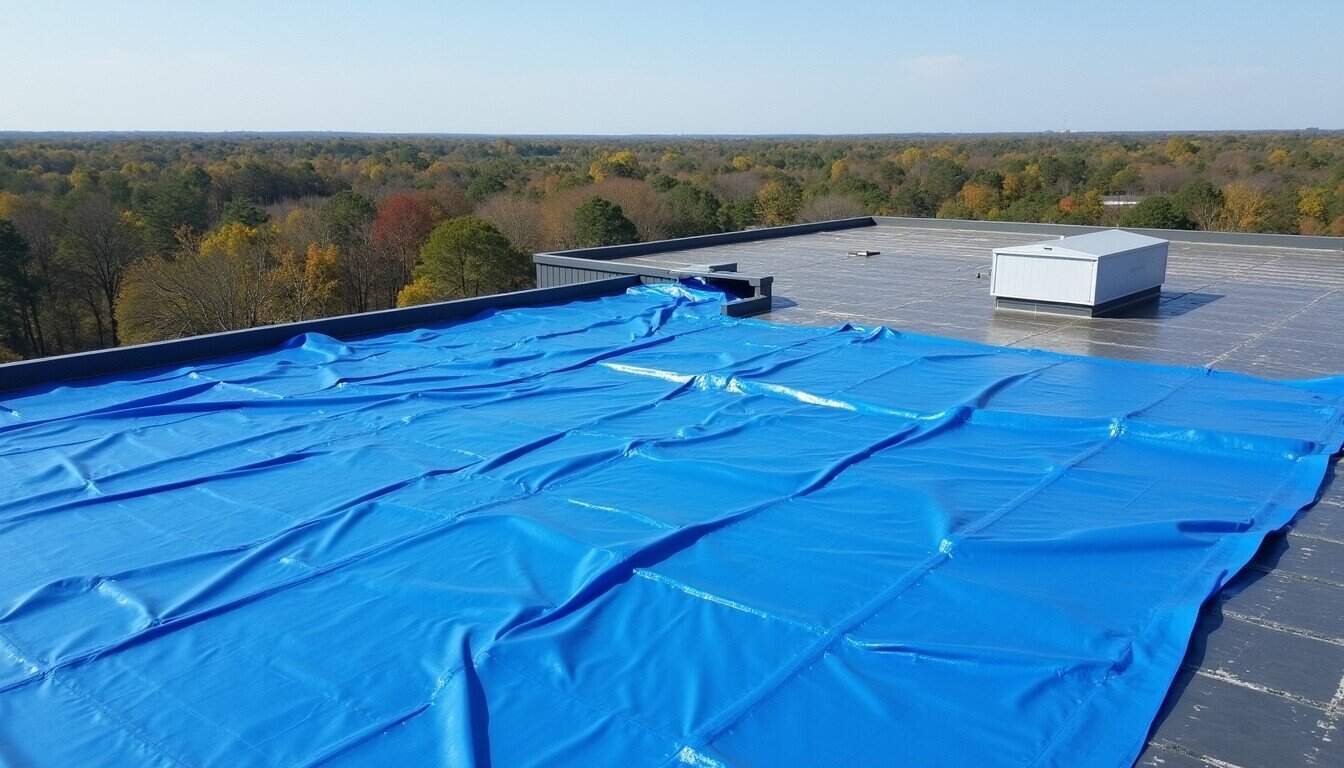
Need help with fire station & emergency services facility roofing?
Send the building address, known roof age, access notes, and what changed. We will respond with the right next step.