
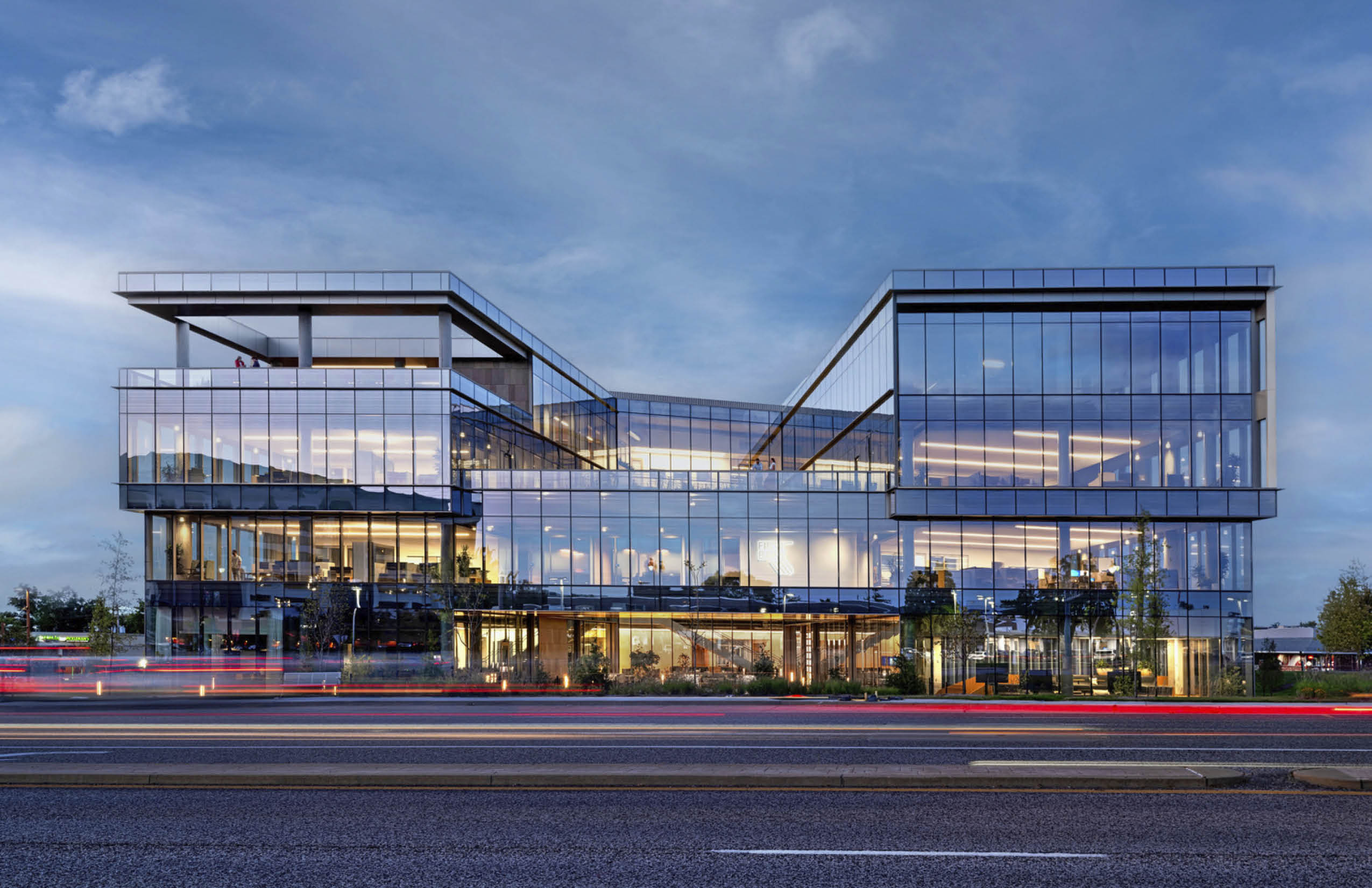
Financial Services Roofing.
Financial Services Roofing support in New Orleans, LA, with documented inspections, written scopes, and practical roof planning for commercial properties.
What this roof work solves
Financial Services Roofing in New Orleans should begin with a documented roof walk. The first job is to identify active water entry, drainage problems, membrane condition, edge details, rooftop equipment conflicts, and weather exposure before a price or schedule is discussed.
For commercial owners, the useful answer is rarely a one-line recommendation. The roof file should explain the work area, the reason for the scope, the access constraints, and the next maintenance decision.
How the scope is built
The scope is matched to operating requirements, building use, roof age, visible defects, and the cost difference between immediate repair and longer-range planning. When repair is enough, the work stays focused. When replacement or recover planning is the responsible move, the reasoning is written plainly.
Each finished project should leave behind before-and-after photos, service notes, and follow-up items so the owner keeps a record for future inspections, budgeting, and vendor conversations.
New Orleans's financial services sector anchors the Poydras Street CBD corridor in a city where a roof failure during hurricane season is not a routine maintenance event: it is a potential business-continuity incident. We structure financial services roofing around server-room moisture protection, branch-continuity scheduling, and ASCE 7 hurricane wind-uplift specifications that the banks here take seriously.
Hancock Whitney Bank is the largest bank headquartered in the Gulf South, with its New Orleans-area operations anchoring the CBD corridor and a significant branch network across Orleans and Jefferson parishes. Iberia Bank, now merged with First Horizon, operated a substantial Louisiana branch network from headquarters in Lafayette with significant New Orleans market presence, and the legacy branch buildings representing that portfolio remain active under new ownership. Capital One's Louisiana presence, which grew from its acquisition of Hibernia National Bank, gives it one of the largest branch footprints of any bank in the Greater New Orleans metro. First NBC Bank, which failed in 2017 in one of the largest Louisiana bank failures in decades, left behind a portfolio of New Orleans commercial real estate: some of which has been reoccupied by financial-sector tenants operating from buildings whose deferred maintenance history is not always well-documented.
Financial services buildings in New Orleans carry the same occupancy constraints as any professional office building, with two additional layers of requirement: the server and data infrastructure that supports branch operations, loan processing, and customer-account systems must be protected from moisture intrusion with the same discipline applied to a dedicated data center; and the regulatory environment for federally insured institutions means that post-storm damage documentation and business-continuity planning are subjects of internal audit and regulatory examination, not just operational preference.
We scope financial services roof projects with an emphasis on the moisture-protection continuity that server infrastructure requires, the business-hours scheduling discipline that active branch buildings demand, and the post-storm documentation standard that supports both business-continuity recovery and regulatory audit review after a hurricane event.
Server Room and Branch Operations Moisture Protection
The data infrastructure supporting a bank branch, servers, networking equipment, vault alarm systems, and ATM processing connections, operates in environments where even minor moisture intrusion can cause failures that affect customer-facing operations. A roof leak above a branch server room during a tropical rain event can take a location offline at the moment when the bank's ATM network is busiest: an operational and customer-service event that branch managers in storm-affected areas know from direct experience. We conduct interior moisture mapping before scoping any replacement on a financial services building to identify existing infiltration zones and sequence production to protect server rooms and data infrastructure areas first.
Hancock Whitney's CBD tower operations at One Hancock Whitney Plaza and its branch network across Orleans and Jefferson parishes represent a range of building vintages: from the downtown tower construction of the 1980s to branch locations in post-Katrina retail strip reconstruction. Each building vintage carries different roofing systems, different deck conditions, and different post-storm histories. We assess each building on its specific condition rather than applying a portfolio-wide specification.
Hurricane Wind-Uplift and Post-Storm Continuity for Financial Buildings
Financial services buildings are classified as Risk Category II under ASCE 7 baseline, but buildings that serve essential community functions during and after a disaster, banks designated as continuity-of-operations sites under Louisiana emergency management plans, may be elevated to Risk Category III. We verify the occupancy classification with the building owner before specifying wind-uplift design, because the difference between Risk Category II and III attachment density is material on a building in Louisiana's hurricane-prone-region designation.
Post-storm documentation for financial services buildings carries regulatory as well as insurance significance. FDIC-supervised institutions document roof and facility condition as part of their disaster recovery planning, and a post-storm condition assessment that distinguishes event-related damage from pre-existing conditions is exactly the documentation that supports both the insurance claim and the regulatory audit. We provide the same adjuster-ready written scope documentation after a storm event for financial services clients that we provide for any other commercial building: dated to the storm event, cross-referenced to NWS records, with a zone-diagram-keyed photo log.
Branch-Hours Scheduling and CBD Tower Coordination
Active bank branches operate on customer-service schedules that define their available work windows. Drive-through lanes cannot be blocked during banking hours. Lobby access cannot be compromised during opening hours. ATM enclosures require continuity of access and electricity regardless of the roofing work schedule above them. We establish the branch's operating-hours constraints in pre-construction and build the production sequence around them: material staging, truck access, and any work directly above the ATM enclosure or lobby entrance are scheduled outside customer-service hours.
CBD office tower projects for financial services tenants follow the multi-tenant building protocol: coordination with the building manager, tenant notification for any work affecting HVAC or electrical systems on occupied floors, and crane-placement and street-use permits coordinated with the Downtown Development District's event calendar for the Poydras and St. Charles Avenue corridor. Financial services tenants in Class A CBD buildings often carry building-standards requirements for contractor insurance, work-hours restrictions, and elevator use that are specified in their lease: we review these requirements in pre-construction to avoid conflicts.
How do you protect a bank branch's server infrastructure during a roofing project?
Questions to settle early
Where is the risk?
Locate leaks, wet-insulation indicators, open seams, weak flashing, and drainage restrictions across the roof.
What can wait?
Separate immediate work from maintenance items that can be tracked for the next service window.
What should be funded?
Build a practical recommendation for repair, coating, recover, or replacement planning.
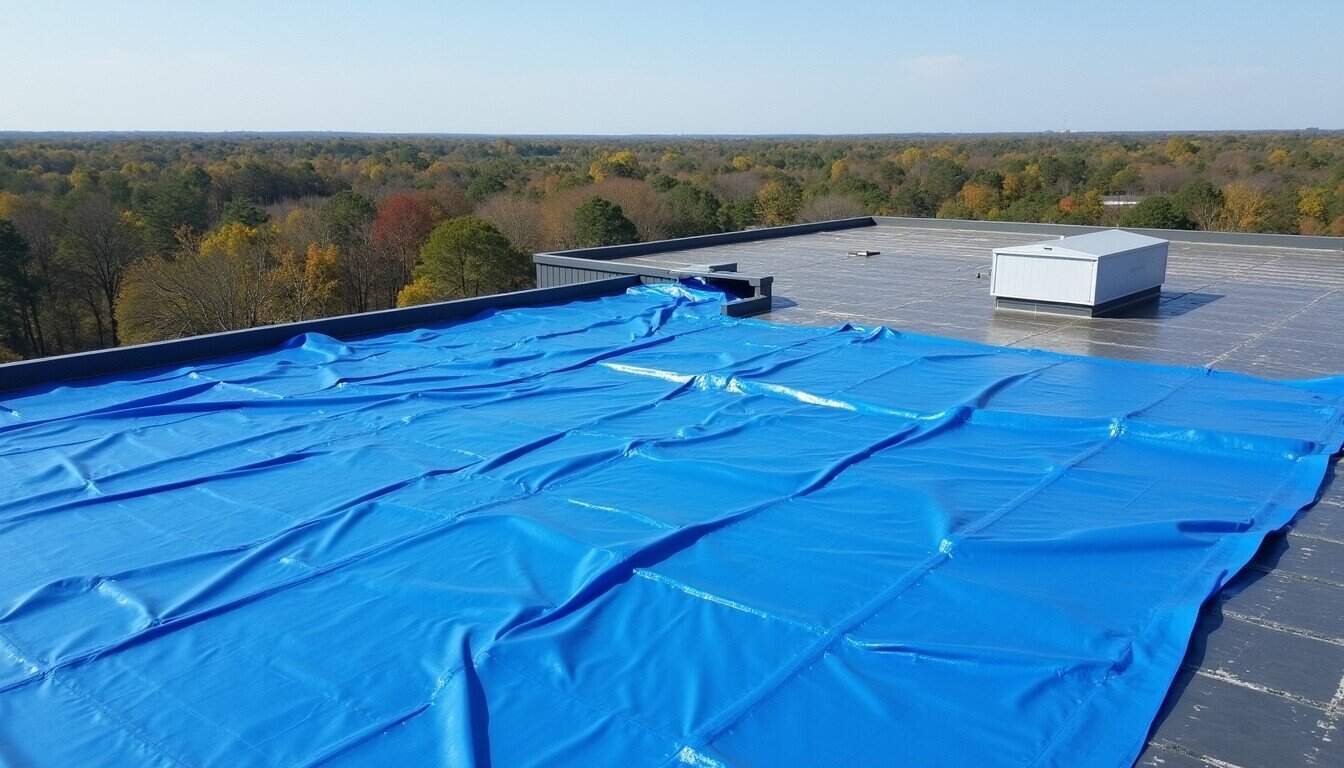
Need help with financial services roofing?
Send the building address, known roof age, access notes, and what changed. We will respond with the right next step.