
Commercial Roofers in Mandeville.
A practical commercial roofing plan for Mandeville. properties separates urgent leak control from repair, coating, maintenance, and replacement decisions supported by photos and condition findings. Commercial Roofers New Orleans provides commercial roof inspections, repairs, maintenance, storm response, and replacement planning in Mandeville, LA.
What this roof work solves
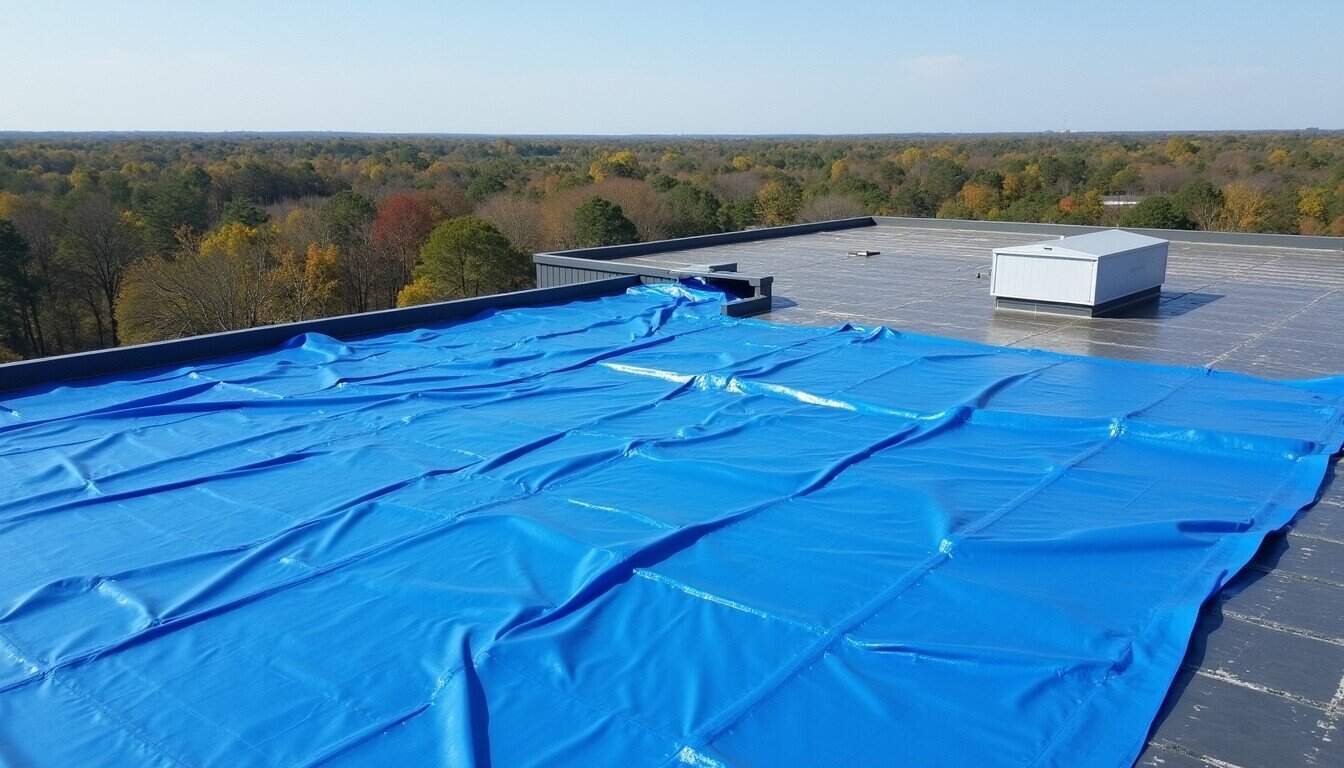
Commercial Roofing in Mandeville in New Orleans should begin with a documented roof walk. The first job is to identify active water entry, drainage problems, membrane condition, edge details, rooftop equipment conflicts, and weather exposure before a price or schedule is discussed.
For commercial owners, the useful answer is rarely a one-line recommendation. The roof file should explain the work area, the reason for the scope, the access constraints, and the next maintenance decision.
How the scope is built
Mandeville roof work is planned around site access, traffic, tenant schedules, drainage, and the weather exposure that shapes that corridor. When repair is enough, the work stays focused. When replacement or recover planning is the responsible move, the reasoning is written plainly.
Each finished project should leave behind before-and-after photos, service notes, and follow-up items so the owner keeps a record for future inspections, budgeting, and vendor conversations.
Mandeville anchors the south end of the Lake Pontchartrain Causeway in St. Tammany Parish. The commercial district around the Causeway north terminal, the Mandeville Trailhead corridor, and the historic downtown on the lakefront represent three distinct inventory types, and the St. Tammany Parish wind-uplift environment adds a hurricane-engineering dimension that Northshore contractors do not always address correctly.
St. Tammany Parish's commercial roof market is geared to a different development pattern than Orleans or Jefferson. Rather than the dense urban fabric of the east bank, Mandeville's commercial inventory is distributed across the US-190 corridor, the Causeway Boulevard commercial zone, and a lakefront historic district with a distinct character from the suburban corridors. The Causeway north terminal zone, the commercial cluster at the foot of the Lake Pontchartrain Causeway on the Mandeville side, is the most active commercial roofing area in the city, with a mix of retail, professional office, and restaurant buildings built predominantly between 1985 and 2005.
From our downtown New Orleans office, Mandeville is approximately . Tammany Parish commercial projects, and our project schedule accounts for the crossing in both crew mobilization and material delivery planning. Emergency response for Mandeville commercial buildings is same-day with the Causeway crossing factored into the dispatch window.
The commercial buildings clustered around the Causeway north terminal, roughly bounded by the lakeshore, Causeway Boulevard, and US-190, represent Mandeville's highest-density commercial zone. Office parks, restaurant and retail buildings, and medical-professional offices built in the 1990s and early 2000s make up the bulk of this inventory. Most of these buildings were reroofed in the years following Hurricane Katrina, using the replacement systems available during the 2006-2010 high-demand period: systems that, in many cases, were installed to minimum specifications rather than the hardened wind-uplift details that St. Tammany Parish's lakefront exposure warrants.
The US-190 corridor west of the Causeway terminal zone carries a newer generation of commercial buildings: the 2005-2020 development wave that followed Katrina's displacement of commercial activity from Orleans and Jefferson parishes to the Northshore. These buildings were built to post-Katrina Louisiana code with updated wind-uplift requirements, but the quality of specification varies. We assess each building individually: post-Katrina code adoption is not a guarantee that the actual installation met the design intent.
Mandeville Lakefront and Historic Downtown
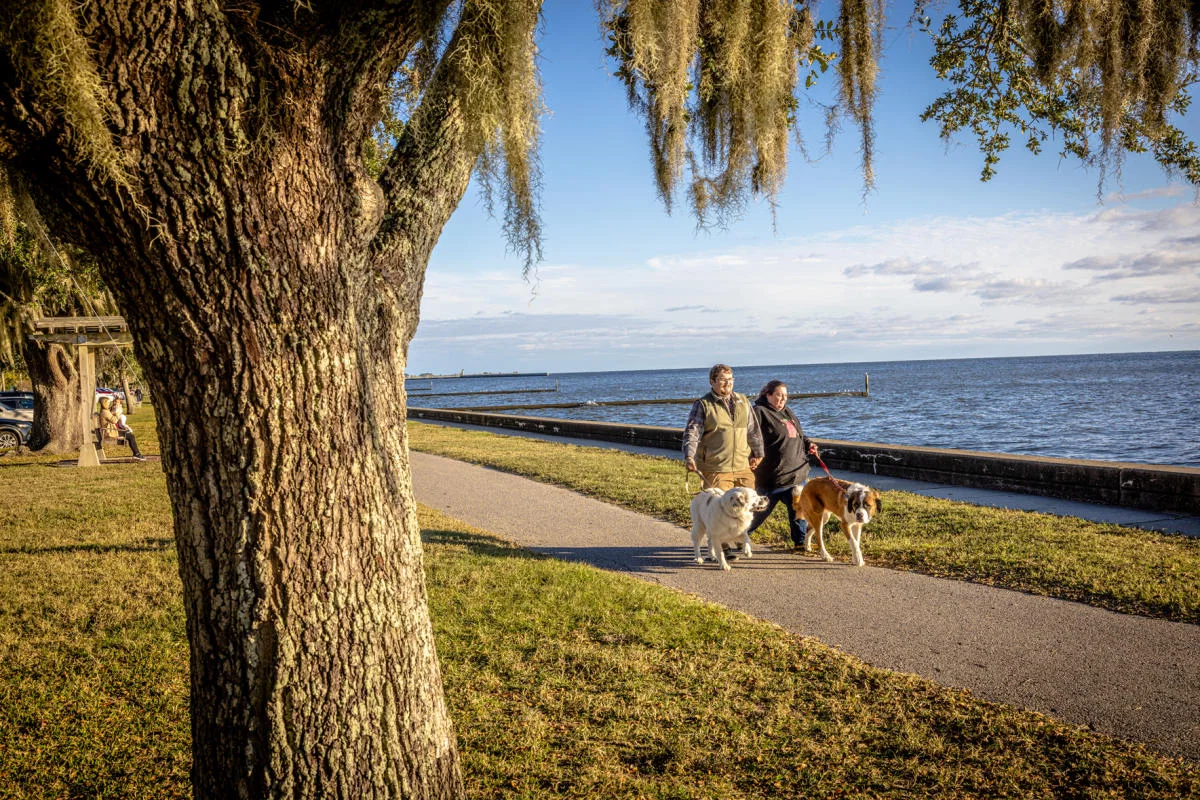
The Mandeville lakefront historic district, the grid of streets between the seawall and Highway 190 in the original Mandeville plat, contains the city's oldest commercial buildings and a concentration of restaurant and retail operations serving the lakefront recreation economy. These buildings carry historic character that matters to the Mandeville community; visible rooftop alterations on contributing structures require coordination with the city's historic preservation review process.
Lakefront exposure on the Mandeville seawall is the most demanding wind environment in St. Tammany Parish for commercial roofing. Open-lake fetch from the south, Lake Pontchartrain is open water for 24 miles south to the New Orleans lakefront, produces wind-pressure profiles on lakefront buildings during hurricane events that are closer to coastal open-terrain conditions than the sheltered suburban corridors further inland. We specify full-adhered membrane systems for lakefront-position buildings in the historic district.
Mandeville Trailhead and Recreational Commercial
The Mandeville Trailhead, the lakefront park and recreational hub at the foot of Causeway Boulevard, anchors a zone of restaurant, retail, and recreation-commercial buildings that serve the Northshore cycling and outdoor recreation economy. These buildings experience the same lakefront exposure as the historic district properties, with the added complexity of seasonal traffic peaks that limit production scheduling during summer and holiday windows.
St. Tammany Parish building permits are filed with the St. Tammany Parish Department of Construction and Inspection rather than the City of New Orleans. We file permits in St. Tammany Parish regularly and maintain working knowledge of the parish's energy code documentation requirements and wind-uplift review process for commercial replacement projects.
How long does a Causeway crossing add to your response time?
The Lake Pontchartrain Causeway crossing takes approximately 25 minutes one-way under normal traffic conditions. From our CBD office, a Mandeville commercial building is approximately 45 to 55 minutes total. We factor the Causeway crossing into Mandeville emergency response dispatch windows and document it in every Mandeville maintenance contract. Pre-staged material deliveries the evening before production starts eliminate the crossing as a morning bottleneck.
Does St. Tammany Parish have different code requirements than Orleans Parish?
Questions to settle early
Where is the risk?
Locate leaks, wet-insulation indicators, open seams, weak flashing, and drainage restrictions across the roof.
What can wait?
Separate immediate work from maintenance items that can be tracked for the next service window.
What should be funded?
Build a practical recommendation for repair, coating, recover, or replacement planning.
Need help with commercial roofing in mandeville?
Send the building address, known roof age, access notes, and what changed. We will respond with the right next step.